

Close Menu
The Politic ReviewThe Politic Review
  • News
  • U.S.
  • World
  • Politics
  • Congress
  • Business
  • Economy
  • Money
  • Tech
  • More Articles
Trending

GOP Rep. Van Orden: Iran Needs to Negotiate ‘in Good Faith, Which They Have Not’

May 27, 2026

Maryland Gov. Wes Moore Signs Glock Ban Into Law

May 27, 2026

Merz’s own party mulls dumping him – media

May 27, 2026
Facebook X (Twitter) Instagram
  • Donald Trump
  • Kamala Harris
  • Elections 2024
  • Elon Musk
  • Israel War
  • Ukraine War
  • Policy
  • Immigration
Facebook X (Twitter) Instagram
The Politic ReviewThe Politic Review
Newsletter
Wednesday, May 27
  • News
  • U.S.
  • World
  • Politics
  • Congress
  • Business
  • Economy
  • Money
  • Tech
  • More Articles
The Politic ReviewThe Politic Review
  • United States
  • World
  • Politics
  • Elections
  • Congress
  • Business
  • Economy
  • Money
  • Tech
Home»Economy»Breitbart Business Digest: Businesses Are Betting on a Boom
Economy

Breitbart Business Digest: Businesses Are Betting on a Boom

Press RoomBy Press RoomMay 27, 2026No Comments6 Mins Read
Share Facebook Twitter Pinterest Copy Link LinkedIn Tumblr Email VKontakte Telegram

Forget the Consumer Surveys, Businesses Say We’re in a Boom

Gloom and doom is everywhere these days — except in the economic data or in business planning meetings.

Surveys of consumers suggest that these are the worst of times. The University of Michigan’s consumer sentiment index keeps hitting all-time lows. The Economist/YouGov poll shows 63 percent of Americans say the economy is getting worse, including a third of Trump voters. Eighty-four percent of Democrats say we are either already in a recession or likely to be in one in the next 12 months.

Businesses aren’t seeing it. The Atlanta Fed released its latest Survey of Business Uncertainty on Tuesday, and the results are worth reading carefully — especially by anyone who has spent the past several months waiting for the American economy to crack under the weight of war, energy costs, and uncertainty. It has not cracked. If anything, the businesses that actually run the economy appear to be betting on something closer to expansion.

The survey’s smoothed index showed firms expecting sales revenue to grow 5.1 percent over the next 12 months in May. That number deserves some historical context. Before COVID, when the economy was humming along through what now looks like a golden era of low inflation and steady growth, the survey averaged 4.5 percent.

During the normalization period of late 2023 through late 2024 — after the post-pandemic boom had faded but before the current run-up — it averaged just 4.1 percent.

The current regime, running from early 2025 (not coincidentally, matching Trump’s return to office) through May, has averaged just under five percent. In other words, businesses are not projecting a return to normal. They are projecting something better than normal. The 5.1 percent May reading matches, almost exactly, the average from the post-COVID expansion boom of 2022 and early 2023.

This is not the survey of an economy bracing for a downturn.

Strong Employment in a Slow-Growing Workforce

Expected employment growth came in at 1.5 percent for the year ahead in May, down from 1.7 percent in April and 2.3 percent at the February peak. Taken at face value that looks like deteriorating hiring intentions. But looks are deceiving here.

The labor market is operating under a constraint that most standard economic indicators were not designed to measure. Dallas Fed economists estimated earlier this year that break-even employment growth — the monthly job gains required to hold the unemployment rate steady — had fallen from roughly 250,000 per month in 2023 to near zero by late 2025. The primary driver was the sharp reduction in labor-force growth that followed the tightening of immigration enforcement. When the inflow of new workers slows dramatically, the economy needs far fewer new hires just to stay even.

That changes what 1.5 percent employment growth means. In 2023, when break-even was around 250,000 a month, expected employment growth of 1.5 percent was treading water at best. Today, when break-even is near zero, 1.5 percent is genuine expansion, showing firms adding workers into a labor pool that is not being replenished from below. This is tight-labor-market hiring, not reluctant hiring.

The sales-employment gap tells the same story from a different angle. In May, firms expected sales to grow 3.6 percentage points faster than employment. That gap has been widening: it was 2.8 points two years ago, 3.1 points a year ago, and it is 3.6 points now. But the widening is not primarily a story about firms pulling back on workers. It is a story about firms expecting revenue to outrun a structurally constrained labor supply.

This should not be a worry for workers. Unemployment is very low and has been holding steady. Jobless claims are at historic lows, indicating a very low level of layoffs despite dire headlines about AI stealing everyone’s jobs and big tech firms reducing headcounts.

Growing Revenue without Growing Headcount

The more striking implication of the survey is what it says about how firms expect to close that gap. They are not projecting that limited hiring will limit their sales. They appear to believe they can expand revenue without a comparable expansion in payrolls. How? The survey does not ask firms to explain themselves, but the options are not mysterious. Higher prices account for some of it. We’re still suffering from the inflationary conflagration sparked by President Biden’s reckless spending. But productivity gains account for more. Firms are investing in automation, software, and the more intensive use of existing workers. The tight labor market itself may also be a factor: when workers are scarce, firms tend to allocate them more efficiently rather than hiring to cover inefficiencies.

The realized data supports the forward-looking picture. Firms reported actual sales growth of 4.8 percent over the prior year in May, up from 3.9 percent in April. Reported employment growth came in at 2.5 percent. Businesses are growing sales much faster than headcount.

Absorbing Costs without Blinking

The survey also tracks what firms expect to happen to their own costs and prices. In May, businesses expected their costs to grow 3.8 percent over the coming year while expecting their prices to rise only 3.0 percent. The gap means firms anticipate absorbing roughly 80 basis points of cost growth that they will not pass on to customers.

They have been absorbing a similar spread for more than a year. The average cost-price gap over the past six months runs about 84 basis points negative.

This is being presented in some quarters as evidence of margin compression, and in a narrow accounting sense it is. But the broader picture does not support a gloomy narrative. Corporate profits reached a record high as a share of GDP in the first quarter of 2026. Labor’s share of output fell to 54.1 percent, its lowest level since 1947. Firms have been absorbing elevated costs for over a year, and their profits have never been larger relative to the size of the economy. This is one reason the stock market keeps hitting record highs.

Sales growth expectations are running at expansion levels. Businesses are reading the same depressed consumer surveys you are and concluding that the results are unlikely to be replicated in actual consumer behavior. The employment picture, properly translated through the labor-scarcity lens, is firmer than the headline suggests. Firms see no meaningful obstacle to revenue growth from the constrained labor supply. And despite absorbing cost pressures that would have triggered profit warnings in a less robust environment, corporate profitability has never been higher relative to the size of the economy.

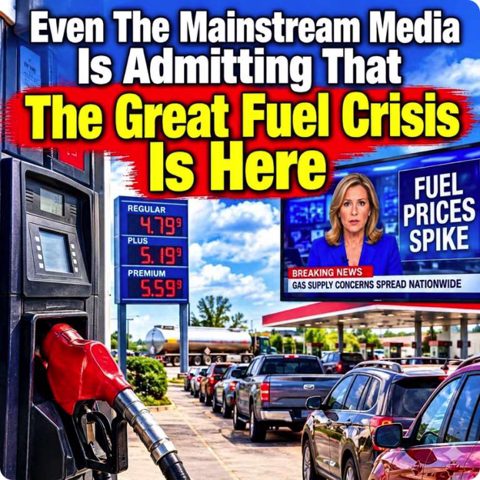
Yes, gas prices are still too high. So, it’s probably uncouth to mention that this looks a lot like a golden era for the U.S. economy.

Read the full article here

Share. Facebook Twitter Pinterest LinkedIn Tumblr Email Telegram Copy Link

Related Articles

Economy

Zohran Mamdani Avoids Question on Ken Griffin After Walking Back Attacks Against Billionaire

May 27, 2026
Economy

Gloom Narrative Disrupted: Businesses See Strong Sales Growth Ahead

May 27, 2026
Economy

OpenAI’s Sam Altman and Anthropic’s Dario Amodei Reverse Predictions on AI Job Displacement as IPOs Loom

May 27, 2026
Economy

‘Head-Exploding Moment’: Uber Executive Questions Value of Company’s AI Investment

May 27, 2026
Economy

China Brags About Dominating U.S. World Cup Knickknack Manufacturing

May 27, 2026
Economy

The Empire of Debt: How America’s Financial Machine Became More Dangerous Than Its Enemies

May 27, 2026
Add A Comment
Leave A Reply Cancel Reply

Editors Picks

Maryland Gov. Wes Moore Signs Glock Ban Into Law

May 27, 2026

Merz’s own party mulls dumping him – media

May 27, 2026

Ball State U. Staffer Wins $225,000 Settlement After Being Fired for Defending Assassination of Charlie Kirk

May 27, 2026

Dem Sen. Murphy: Iran War Should End ‘Now’ ‘at Any Cost’

May 27, 2026
Latest News

Breitbart Business Digest: Businesses Are Betting on a Boom

May 27, 2026

GOP CA Governor Hopeful Steve Hilton Says He Won’t Freeze Out ICE

May 27, 2026

Spanish police raid ruling party following graft allegations

May 27, 2026

Subscribe to News

Get the latest politics news and updates directly to your inbox.

The Politic Review is your one-stop website for the latest politics news and updates, follow us now to get the news that matters to you.

Facebook X (Twitter) Instagram Pinterest YouTube
Latest Articles

GOP Rep. Van Orden: Iran Needs to Negotiate ‘in Good Faith, Which They Have Not’

May 27, 2026

Maryland Gov. Wes Moore Signs Glock Ban Into Law

May 27, 2026

Merz’s own party mulls dumping him – media

May 27, 2026

Subscribe to Updates

Get the latest politics news and updates directly to your inbox.

© 2026 Prices.com LLC. All Rights Reserved.
  • Privacy Policy
  • Terms of use
  • For Advertisers
  • Contact

Type above and press Enter to search. Press Esc to cancel.