







We Have Nothing to Fear Except Fed Fears of Oil-Driven Inflation
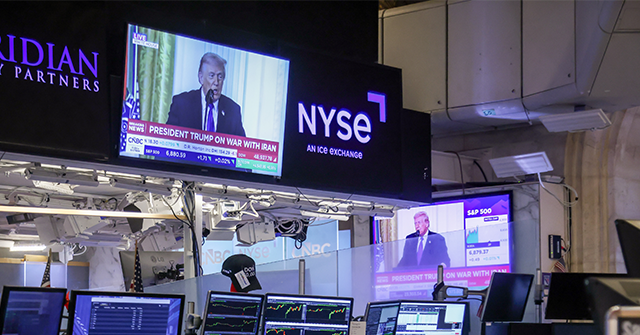
Financial markets on Monday indicated that any damage to the U.S. economy from the military conflict between the U.S. and Iran is likely to be minimal.
After futures quivered in the darkness of negative territory all weekend, the major U.S. stock indexes turned flat to slightly positive on Monday. Oil prices rose but not by very much. Brent crude, the global benchmark, climbed by less than seven percent, ending the day around $77.65 a barrel.
A lot of attention has been on the price of oil, with traders gaming out closure odds for the Strait of Hormuz, potential production losses, and whether missiles will start landing on energy infrastructure.
But the bigger risk to the American economy may not be in the Persian Gulf. It may be in the Eccles Building. If the Federal Reserve misreads a supply shock as an inflation problem that demands a hard policy response, it could turn a manageable disruption into a self-inflicted recession.
American Energy Abundance Changed the Game
Any serious analysis has to start with one structural fact: the United States is no longer the energy-dependent importer it was in the classic oil-shock playbooks. The shale revolution changed the country’s energy position and, with it, the way energy price spikes wash through growth. The United States has been a net total energy exporter since 2019 and became a net petroleum exporter in 2020.
In a 2004 speech at Darton College, Ben Bernanke described the canonical problem: higher oil prices push up headline inflation while draining demand, because a net-importing country sends more income overseas. The result is stagflationary pressure, with prices up and growth down.
That first-round inflation arithmetic is still true today. Households still pay world prices at the pump. But the national-income story has shifted: a larger share of the windfall stays inside the United States, flowing to domestic producers and energy-sector workers, rather than being sent abroad.
The best way to put it is this: we’re less of a net loser in the national accounts, but still a loser in household cash-flow accounts.
The Shock Is Real, But he Baseline Isn’t Automatically Recession-Sized
The “net exporter” shift changes the distribution of the shock. And that distribution matters because spending propensities matter. Working households tend to cut discretionary spending (consumer discretionary stocks were the biggest losers on Monday) quickly when gas prices rise. Energy companies and their shareholders do not recycle windfall income into consumption at the same pace or in the same neighborhoods. The result is that demand drag can persist even when the income transfer is more domestic than foreign.
This is exacerbated by the fact that Bidenflation left the American economy even more lopsided than usual. The bottom half of the income distribution is still absorbing the cumulative inflation damage of the early 2020s with thin buffers. The top of the distribution may see offsetting wealth effects through energy holdings.
These days, most analysts estimate that energy shocks are very visible in headline inflation but typically have more modest effects on core inflation and overall output unless they propagate through expectations, wages, or policy. A useful benchmark comes from recent Fed model work: a supply-driven oil shock that raises the real oil price by 10 percent lifts headline inflation and nudges core higher, but trims the level of GDP by less than one-tenth of one percent at its trough. The shock still happens, but the macro baseline is not automatically recession-sized.
In other words, the recession risk is not a mechanical result of higher oil prices. Instead, what matters is how those prices move through the economy. And the most dangerous propagation mechanism right now is not wages or pricing power. It’s monetary policy itself.
The Capex Engine Is Different This Time
One place the present looks materially better than historical analogies is business investment. The dominant investment engine is the buildout of artificial intelligence infrastructure: data centers, networking gear, specialized chips, and the power systems to run them. Yes, AI uses immense amounts of power, but the investment is being driven by long-horizon competition among hyperscalers and strategic commitments that do not turn on a five-dollar move in Brent.
But being insulated from oil is not the same as being insulated from everything. AI capex is long-duration and financing-sensitive. The mechanism that could reach it isn’t a missile near Kharg Island—it’s a policy mistake in Washington.
The Bernanke Lesson: The Fed Can Be the Recession
A 1997 paper by Bernanke (back when he was a Princeton professor), Mark Gertler, and Mark Watson titled “Systematic Monetary Policy and the Effects of Oil Price Shocks,” tested an uncomfortable idea: maybe oil shocks don’t “cause recessions” as much as they trigger the kind of monetary tightening that causes recessions.
Their study suggested that once you account for the Fed’s systematic response to oil-driven inflation pressure, a substantial portion of what looks like “oil-shock recession” in the historical data is really “policy reaction recession.” The Fed would see prices moving higher, over-tighten out of fear of inflation, and push the economy into a slump.
That is the trap the Fed must avoid now.
In his 2004 speech, Bernanke argued that the right monetary policy response depends on whether inflation expectations are anchored. If they are, the central bank can largely look through the first-round spike, keep policy from turning a supply shock into a demand recession, and focus on preventing second-round effects. If consumers already expect high inflation, however, the Fed needs to guard against perception becoming reality by tightening.
The Credibility Scar and the Risk of Overcorrection
This puts us in a tricky spot now. After misjudging early-2020s inflation as transitory, the Fed carries a credibility scar on precisely the dimension Bernanke identified as central. That creates asymmetric risk. The Fed can easily demonstrate toughness by leaning hawkish into a headline shock. It is much harder to explain why “doing less” may be the economically correct move when gasoline prices are rising and the inflation headlines are screaming.
The tariff episode is instructive. Tariffs are, in standard economic analysis, one-time price level adjustments—contractionary in their demand effects, not inflationary in the sustained sense that monetary policy is designed to address. The correct response is often to look through the price-level adjustment unless it triggers broader propagation. Instead, the Fed treated it primarily as an inflation risk, signaling caution about cuts and allowing financial conditions to remain tighter than the underlying demand dynamics may have warranted. That revealed a reaction function weighted asymmetrically toward inflation risk, precisely the posture that Bernanke’s earlier research warned against.
A good guide is not whether headline inflation prints hotter for a few months. It’s whether the shock is bleeding into core, wages, and medium-term inflation expectations. If those remain contained, the case for “looking through” is strong. If they don’t, the case for tighter policy strengthens. In the meantime, the Fed must guard against convincing the market it is taking a preemptive hawkish stance.
In short, the Fed can still manufacture a recession in response to rising oil prices. The central question in the coming weeks is whether policymakers treat this as a supply shock to be managed or an inflation outbreak to be crushed. If the Fed tightens into it, it risks replaying the historical error that Bernanke’s earlier research warned about.
Iranian missiles and higher oil won’t tank the U.S. economy. A monetary policy bomb from the Fed could.
Read the full article here


