

Chinese customs data reveals that Brazil became the top purchaser of Chinese imported cars this year, a dramatic increase from its sixth-place position year-on-year driven in part by Brazil’s low tariffs for Chinese goods, the South China Morning Post reported on Thursday.

The statistics were shared by Chinese customs officials, showing that Brazil had imported $5.2 billion worth of Chinese cars between January and May of this year. The figure represents an increase of nearly 147 percent in the volume of Chinese automobile imports to Brazil compared to a year ago, according to the newspaper, the vast majority of them electric vehicles (EVs) or hybrids. According to the Post, 87 percent of Brazil’s car imports from China a year ago were EVs or hybrids; the updated figures may show an even larger such percentage.

The Post observed that many Chinese car companies, most specializing in electric or hybrid vehicles, shifted much of their sales to Brazil after European markets began raising tariffs to protect domestic manufacturing from Chinese goods dumping. While countries such as Spain and Hungary have welcomed Chinese car companies, these have cut deals with the Chinese corporations for domestic manufacturing. Elsewhere in the manufacturing heartland of Europe, countries such as Germany have taken protective measures to protect their own companies, icing out Chinese competitors.

The figures appear to have blown through expectations, though most market observers were optimistic that Brazil would allow a massive influx of Chinese vehicles under its socialist President Luiz Inácio Lula da Silva, who has simultaneously sought to increase Brazil-China trade volume while actively antagonizing the government of President Donald Trump in the United States, leading to increased tariffs on Brazilian goods en route to America. In June 2025, Reuters reported that experts predicted a 40 percent increase in Chinese imports of cars to Brazil by the end of the year.

Brazil is one of the world’s few countries enjoying a trade surplus with China as a result of its prodigious agriculture industry. China relies heavily on Brazilian soybeans in particular, and Lula, through cooperation within the anti-American BRICS framework, has attempted to foster greater Chinese involvement in the Brazilian market. Brazil-China trade volume stood at $171 billion in 2025, according to the China-Brazil Business Council. The trade surplus Brazil documented with China at the time stood at $29.1 billion.

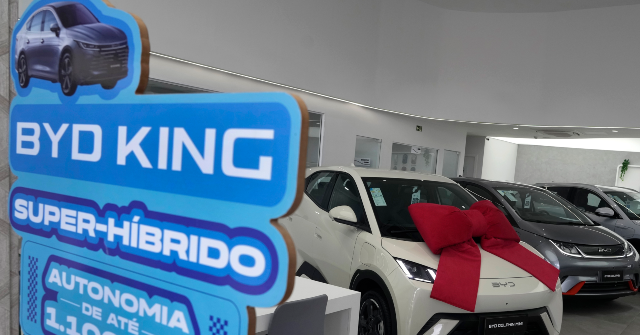
The influx of cheaply built Chinese cars into the Brazilian market has not occurred without significant concern and outrage, particularly on the part of the Brazilian labor sector. Much of the concern centers around Chinese EV giant BYD, the world’s largest EV producer. The Morning Post noted in its report on Thursday that the BYD Dolphin Mini was the best-selling vehicle model of all types in Brazil in February, outpacing comparable cars sold at higher prices.

BYD attracted significant controversy in Brazil after the attempted establishment of a factory in Brazil was abruptly paused when the Brazilian government uncovered evidence that BYD was importing Chinese nationals to be used as slaves in the factory, a former Ford establishment. The Brazilian government stopped the rehabilitation of the factory in 2024 as a result of the revelations but did not slow down imports of BYD vehicles manufactured in China. 

In April, the Brazilian Labor Ministry added BYD to its blacklist of companies using slavery — a move that lasted less than a month after a court overturned the designation. Lula’s government then abruptly fired the head of the National Secretariat of Labor, Luiz Felipe Brandao de Mello, whose agency was in charge of the blacklist. While the government did not officially link the dismissal to the BYD situation, some reports, citing sources with knowledge, claimed that he was explicitly removed for challenging the Chinese EV company.

Many onlookers condemned the Lula government for a move that appeared to prioritize Chinese companies over labor rights — a particularly stinging criticism given Lula’s rise to prominence as a workers’ rights union boss.

“The dismissal of an official for enforcing the law is an extremely grave act,” Rodrigo Carvalho of the Brazilian National Association of Labour Inspectors (Anafitra) said at the time. “It weakens the autonomy of labour inspection and endangers a public policy built over decades.”

Brazil’s auto manufacturer’s association, Anfavea, has been challenging the Lula government’s favorable policies towards BYD for over a year, threatening legal action against reduced duties and tariffs and warning that manufacturing in Brazil could suffer a devastating blow if Chinese imports skyrocket. The attempted takeover of the former Ford plant appeared to be a move to address these concerns, but BYD was caught allegedly importing workers for that factory, rather than hiring Brazilian, and keeping them in forced labor conditions.

The imports of the Chinese cars, Anfavea president Igor Calvet said last year, “favor ready-made imported cars that arrive in Brazil, distorting the logic and natural order of the Brazilian market.”

“It takes away from automakers and their Brazilian workers all the potential they otherwise would have,” he denounced.

Industry leaders began expressing concern with the large volume of Chinese cars, including BYD and other companies, last year as trade barriers went up in Europe and Lula lowered them in the country.

“We support the arrival of new brands in Brazil to produce, promote the components sector, create jobs, and bring new technologies. But from the moment that an excess of imports causes lower investment in production in Brazil, that worries us,” Brazilian auto association head Igor Calvet told Reuters at the time.

Follow Frances Martel on Facebook and Twitter.


Read the full article here

Share.
Leave A Reply

Exit mobile version