


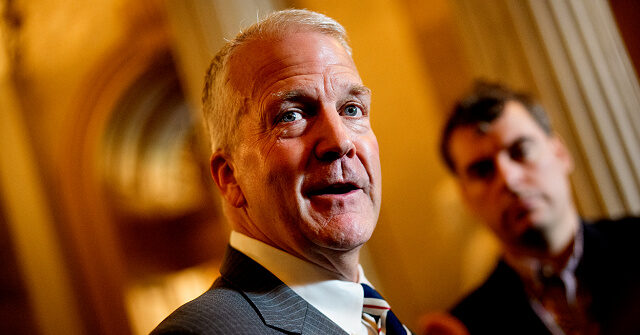
The Alaska Division of Elections has given a preliminary decision regarding the candidacy of Dan J. Sullivan, determining that he will not be eligible to challenge Republican Sen. Dan Sullivan due to evidence that he entered the race to siphon votes by way of their shared names.
“Based on a review of the evidence presented and in the Division’s possession, the Division has determined that the preponderance of evidence does not support your eligibility for the office of United States Senator,” Carol Beecher, director of the Division of Elections, said in a letter to Dan J. Sullivan on Wednesday.
The decision can be appealed by Sullivan before Alaska makes its final decision. As noted by the Anchorage Daily News, the Petersburg native entered the race to unseat the reigning Republican senator last month just before the filing deadline, maintaining that he entered the race on his own accord and has not been coordinating with Democrats. While the Division of Elections did not cite the exact evidence that rendered his candidacy ineligible, they “pointed to two attached complaints filed against his candidacy from the Alaska Republican Party”:
One complaint said his candidacy is improper because his declaration of candidacy stated that he’s affiliated with the Republican Party, though at the time his political affiliation was “undeclared.”
In response to questions about his voter affiliation, the Petersburg Sullivan has maintained he registered as a Republican earlier this year.
National Republican groups and the senator have accused him of being a sham candidate who may have worked with Democrats or their supporters to run as a Republican with the intent of helping the senator’s top challenger, Mary Peltola, a former U.S. representative and a Democrat.
The National Republican Senatorial Committee claimed that a candidate’s name cannot be presented in a way that’s “confusing or misleading to voters or compromises the fairness or neutrality of the ballot,” noting that Sullivan’s campaign materials appeared to mimic the senator’s.
Read the full article here