







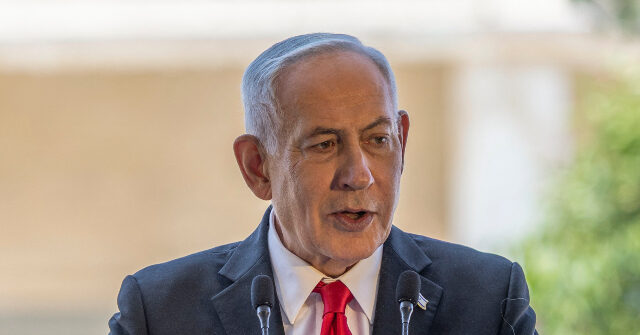
Israeli Prime Minister Benjamin Netanyahu said on Sunday that some Christian villages in Lebanon have “asked to be annexed” by Israel to gain protection from the Iran-backed terrorists of Hezbollah.
“Among the Christian villages in Lebanon, some have even asked to be annexed to Israel, because we protect them from the fanatics of Hezbollah who want to kill them. And we do the same thing with Christians everywhere,” Netanyahu said in a Fox News interview.
“It’s not only the Christians in Lebanon who asked for our protection. It’s the Druze, it’s Muslims, the Sunni Muslims and quite a few of the Shiite Muslims, too,” he added.
Netanyahu did not specify which villages have made such requests to Israel. The mayor of the Christian village of Rmeish, Hanna al-Amil, quickly denied Netanyahu’s claim as “absolutely out of the question” in an interview with Lebanese public television.
“Fifteen Christian towns had issued a statement two days ago denying these allegations,” he said.
Amil was referring to a statement on Friday in which 13 Christian-majority border villages, including Rmeish, reiterated their commitment to the Lebanese government. The statement was issued in response to media rumors that some of these villages had asked Israel for protection.
The signatories said they had “no power, nor the legal right” to request protection from a foreign government. They reaffirmed their “loyalty to their national identity” and “attachment to their Lebanese flag.”
Amil told Arab News on Monday that the loyalty statement from the Christian border villages should be taken as their final word on the subject.
“The border villages have remained committed to the Lebanese state and its legitimacy throughout the war without wavering. Their residents take pride in their national identity and regard Lebanon as their final and permanent homeland, with no alternative on offer,” he said.
“They reject any attempt to twist their position or exploit their suffering in the service of agendas that have nothing to do with them. The fabricated reports serve only one purpose: to damage the reputation of the border communities and sow confusion,” he added.
Some residents of the Lebanese border region made it clear they were not pleased by the actions of Hezbollah, which triggered Israeli airstrikes and a ground invasion, and were not happy with Beirut’s inability to protect them.
“For three years now, we have been suffering because the Lebanese state failed to extend its sovereignty over its own land,” Rmeish civil activist Gaby al-Hajj told Arab News, looking back to hostilities between Hezbollah and Israel during the Gaza War.
“That left us at the mercy of illegal weapons, and we are paying for it now,” al-Hajj said. “The Israelis have us under siege – yet we refused to leave our villages. We have not turned our backs on Lebanon and we will not. We have held on, regardless of the cost.”
Lebanese Parliament Speaker Nabih Berri on Monday praised the loyalty statement from border villages, and warned Lebanese citizens to ignore “Israeli political misinformation” intended to “sow discord among border communities.”
Berri also urged the Beirut government and its allies to halt the “systematic destruction and the ongoing demolition of villages.”
Israel issued evacuation orders to border towns before launching its latest operation against Hezbollah, warning that it could not overlook these villages because Hezbollah operatives were known to hide in them.
As the statement on Friday pointed out, many of the Christian villagers refused to evacuate. The Israel Defense Forces (IDF) have demolished buildings and homes in southern Lebanon that were allegedly used by Hezbollah to hide its fighters and weapons.
Residents of the Marjeyoun district of Lebanon’s southern Nabatieh province said they received text messages from the IDF on Monday, warning them not to allow displaced residents to return to their homes. Israeli forces conducted drone strikes against suspected Hezbollah operatives who tried to enter restricted parts of Nabatieh on Monday.
The IDF has issued periodic warnings to the mayors of Christian villages, telling them not to allow “strangers” who might be Hezbollah fighters into their towns.
The U.N. mission in Lebanon, UNIFIL, said over the weekend that some displaced civilians have begun returning to their villages, and the mission aids them when possible.
“We’re not able to offer support in areas where the situation remains volatile, but we are continuing to remove rubble and unexploded ordnance from roads to allow passage, while supporting municipalities and repairing essential infrastructure such as water and electricity,” said UNIFIL spokeswoman Kandice Ardiel.
“The sooner people can return home, the better for long-term stability,” she said.
The Lebanese Health Ministry has estimated about one-fifth of Lebanon’s population, or more than one million people, have been displaced since Hezbollah launched the conflict by attacking Israel on March 2. Lebanese Social Affairs Minister Haneen El Sayed said on Saturday that about 400,000 displaced persons have returned to their homes.
Israeli Defense Minister Israel Katz said last Wednesday that the IDF “will not withdraw from the security zones” it has created in Lebanon and Syria.
“The Israeli army will remain in the security zones in Lebanon, Syria and Gaza until further notice to protect our residents and communities from jihadist elements,” he said.
Read the full article here


