
Close Menu
The Politic ReviewThe Politic Review
  • News
  • U.S.
  • World
  • Politics
  • Congress
  • Business
  • Economy
  • Money
  • Tech
  • More Articles
Trending

Watch: Donald Trump Meets with French President at G7

June 15, 2026

Josh Hawley Warns that AI Is an Existential Threat that Risks Turning Humans into ‘Raw Material’

June 15, 2026

Trump Celebrates 80th Birthday with Jam-Packed Schedule

June 15, 2026
Facebook X (Twitter) Instagram
  • Donald Trump
  • Kamala Harris
  • Elections 2024
  • Elon Musk
  • Israel War
  • Ukraine War
  • Policy
  • Immigration
Facebook X (Twitter) Instagram
The Politic ReviewThe Politic Review
Newsletter
Monday, June 15
  • News
  • U.S.
  • World
  • Politics
  • Congress
  • Business
  • Economy
  • Money
  • Tech
  • More Articles
The Politic ReviewThe Politic Review
  • United States
  • World
  • Politics
  • Elections
  • Congress
  • Business
  • Economy
  • Money
  • Tech
Home»Economy»Adam Smith’s 1780 Letter Shows He Saw Tariffs as a Tool to Improve Industry
Economy

Adam Smith’s 1780 Letter Shows He Saw Tariffs as a Tool to Improve Industry

Press RoomBy Press RoomMarch 11, 2026No Comments4 Mins Read
Share Facebook Twitter Pinterest Copy Link LinkedIn Tumblr Email VKontakte Telegram

Adam Smith, long treated as the patron saint of free trade, argued in a letter written after The Wealth of Nations that tariffs could help strengthen domestic production by pushing native industry to improve quality.

The January 3, 1780 letter to British politician William Eden complicates the standard picture of Smith as an unqualified opponent of import duties. In the letter, Smith defended “moderate and reasonable duties” while criticizing outright prohibitions on imports.

“A prohibition,” Smith wrote, “can answer no purpose but that of monopoly.” A duty, by contrast, could still allow foreign goods into the market while changing the incentives facing domestic producers.

Although Smith’s letter the Eden has long been included in published collections of his papers, it has received almost no notice by scholars. The 250th anniversary of the publication of The Wealth of Nations has prompted renewed interest in Smith’s work.

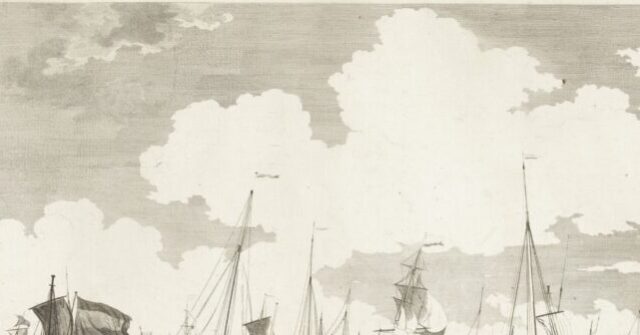
Smith’s example was Dutch cured herrings, which he regarded as superior to the British product. Rather than excluding Dutch herrings altogether, he proposed a duty that would leave them in the market at a higher price. British curers, he wrote, would then try to capture that higher price by improving their own goods through “superior care and cleanliness.” He predicted that the resulting emulation would speed improvement so much that British fisheries could eventually rival the Dutch even in foreign markets.

“The British curers will immediately endeavour to get this high price, and by superior care and cleanliness to raise their goods to an equality with the Dutch, and this emulation will, probably, in five or six years time raise the manufacture to a degree of improvement, which at present I despair of its attaining to in fifty or Sixty years,” Smith wrote. “Our fisheries may then rival the Dutch in forreign Markets, where at present they cannot come into competition with them, and the manufacture may not only be much improved, but greatly extended.”

The passage suggests Smith did not view higher prices as a reason to reject tariffs, even if the cost of tariffs were not only passed through to consumers but also pushed up prices of domestically produced herring. To the contrary, Smith saw this as a feature not a bug: a duty could create the price incentive needed for native producers to improve quality, expand output, and become more competitive.

Smith also argued that duties could be a source of revenue for the British treasury.

That is a more expansive case for tariffs than the one usually associated with Smith. He was not arguing only that tariffs were less harmful than bans. He was arguing that duties could spur domestic producers to improve quality, expand output, and become more competitive.

Another striking feature of the letter is how high a rate Smith regarded as “moderate and reasonable.” In the herring example, the duty he proposed was roughly half the price of a barrel of British cured herring.

The letter’s date makes it difficult to dismiss as an early inconsistency. It was written four years after the publication of The Wealth of Nations in 1776.

Smith’s published work is more mixed. In The Wealth of Nations, he repeatedly attacked prohibitions and high duties as devices of monopoly and criticized policies that protected narrow producer interests at the expense of consumers. But he also allowed retaliatory duties in some cases, and in one discussion of manufactures he said that policies securing a somewhat better price for producers could “really encourage those manufactures” and allow them to employ more labor.

That means the Eden letter does not stand wholly apart from Smith’s broader economics. His default position remained hostile to monopoly, prohibitions, and mercantilist privilege. But the later letter shows he did not view every tariff as equivalent to the restrictions he condemned.

Instead, Smith appears to have drawn a distinction between policies that completely insulated domestic industry from competition and those that preserved competition while giving producers room to improve.

That distinction is likely to surprise many economists and commentators who cite Smith primarily as an authority against tariffs. The 1780 letter suggests a narrower and more complicated position: Smith opposed import prohibitions that created monopoly, but he was willing to argue that tariffs could strengthen domestic industry when they altered price incentives without shutting out competition altogether.

Read the full article here

Share. Facebook Twitter Pinterest LinkedIn Tumblr Email Telegram Copy Link

Related Articles

Economy

Josh Hawley Warns that AI Is an Existential Threat that Risks Turning Humans into ‘Raw Material’

June 15, 2026
Economy

Fox to Acquire Streaming TV Company Roku in $22 Billion Deal

June 15, 2026
Economy

Tech and Defense Manufacturing Drive Industrial Output Higher in May

June 15, 2026
Economy

Lawsuit: Indian H-1B Worker Paid Indian CEO $100K for Job in United States

June 15, 2026
Economy

Brent Crude Falls To Lowest Price Since March 5 on Iran War’s End

June 14, 2026
Economy

Report: Former Employees Face Big Tax Bills After North Carolina Restaurant Allowed Illegals to Steal Social Security Numbers

June 14, 2026
Add A Comment
Leave A Reply Cancel Reply

Editors Picks

Josh Hawley Warns that AI Is an Existential Threat that Risks Turning Humans into ‘Raw Material’

June 15, 2026

Trump Celebrates 80th Birthday with Jam-Packed Schedule

June 15, 2026

The nukes stay: China and North Korea are building something bigger

June 15, 2026

Brazil’s Lula Heads to Uncomfortable G7 amid Trade Tensions with Trump and EU

June 15, 2026
Latest News

VIDEO — Tributes Pour in for President Trump’s 80th Birthday: ‘A Relentless Patriot Who Fights Every Day’

June 15, 2026

Senate to confirm Jay Clayton as soon as Thursday

June 15, 2026

World Cup official probed over ‘white supremacist’ hand signal

June 15, 2026

Subscribe to News

Get the latest politics news and updates directly to your inbox.

The Politic Review is your one-stop website for the latest politics news and updates, follow us now to get the news that matters to you.

Facebook X (Twitter) Instagram Pinterest YouTube
Latest Articles

Watch: Donald Trump Meets with French President at G7

June 15, 2026

Josh Hawley Warns that AI Is an Existential Threat that Risks Turning Humans into ‘Raw Material’

June 15, 2026

Trump Celebrates 80th Birthday with Jam-Packed Schedule

June 15, 2026

Subscribe to Updates

Get the latest politics news and updates directly to your inbox.

© 2026 Prices.com LLC. All Rights Reserved.
  • Privacy Policy
  • Terms of use
  • For Advertisers
  • Contact

Type above and press Enter to search. Press Esc to cancel.