






Connecticut’s Solnit Psychiatric Money Pit: The DCF Mental Institution Beast Wants More Money
Republished with permission from AbleChild.
AbleChild Site Visit to CT DCF Mental Institution two year ago VIDEO
On July 21, 2026, Department of Children and Families (DCF) employees stood on the lawn of the Albert J. Solnit Children’s Center in Middletown asking Connecticut lawmakers for at least $20 million in new taxpayer funding, along with another $3 million every year to improve the facility.
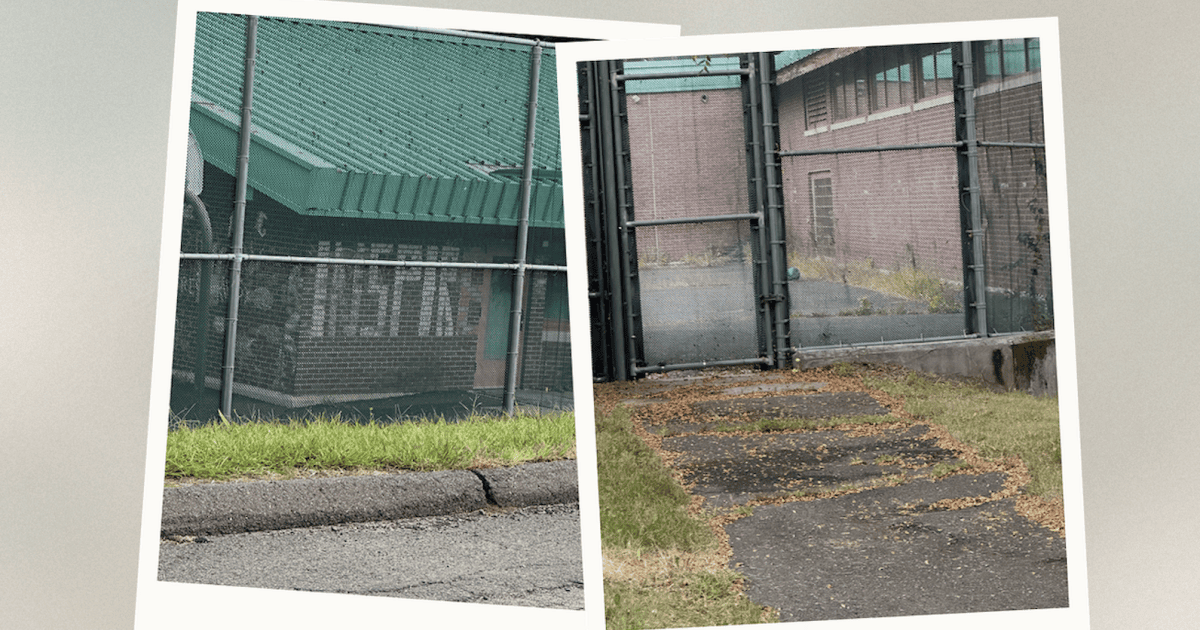
As officials pleaded for more money, the condition of the state-owned psychiatric campus told a different story. Looking across the deteriorating property, taxpayers should be asking one simple question: Where has all mental health and behavioral health money gone?
Looking back over the past fourteen years, AbleChild has consistently investigated, testified, submitted recommendations, filed public inquiries, and exposed the psychiatric drugging of children in Connecticut’s state care, including sharing Medicaid psychiatric prescribing data patterns with behavioral health oversight committee members. Throughout that time, AbleChild has repeatedly urged state officials to replace a failed institutional psychiatric model with approaches that emphasize education, life skills, family and community support, and accountability. Today, despite AbleChild’s warnings and repeated calls for reform, the state has ignored the call for human rights and is once again asking taxpayers for millions more.
A state that routinely inspects private properties should first explain whether one of its own psychiatric facilities has been held to the same standards it expects of everyone else. If millions of taxpayer dollars have already been invested in the Solnit Center, why does the property appear to be in such a state of decline?
Before lawmakers approve another appropriation, they should ask an even more important question: Why should taxpayers invest another $23 million in a system that AbleChild warned was failing fourteen years ago?
AbleChild first raised that warning in 2012 after touring the children’s psychiatric unit at Riverview Hospital. What our nonprofit witnessed was deeply disturbing. Children were confined in locked rooms with curtains covering the windows, hidden from public view. The conditions reflected an institutional model built on isolation, confinement, and psychiatric intervention rather than providing the kind of care Connecticut’s most vulnerable children deserved.
Following that inspection, AbleChild testified before the Connecticut General Assembly, urging lawmakers to shut down the children’s psychiatric program instead of continuing to pour taxpayer dollars into a failing system. AbleChild also provided ABC News’ Diane Sawyer with information concerning the psychiatric drugging of children in Connecticut’s care, helping bring national attention to practices that had received far too little public scrutiny.
Connecticut’s response was to ignore any reform of the program. Instead, it changed its name. The children’s psychiatric facility became the Albert J. Solnit Children’s Center, honoring Yale child psychiatrist Dr. Albert J. Solnit. But changing the name on the building did not change the system.
More than a decade later, AbleChild returned to the campus. What AbleChild found was alarming. Instead of a modern therapeutic environment, the property appeared neglected and deteriorated. Years of taxpayer funding had not produced a campus that reflected healing, safety, or responsible stewardship of public resources. AbleChild raised the same questions: why should the taxpayers continue to trust the behavioral health providers?
Connecticut’s own auditors provide part of the answer. The Department of Children and Families (DCF) has repeatedly failed to properly account for taxpayer-funded property. According to the most recent audit, the agency could not account for nearly $262,000 in state-owned assets, failed to complete required inventories, and maintained inaccurate property records. Even more troubling, auditors found that similar deficiencies have been cited for more than twenty years, demonstrating a pattern of recurring management failures rather than isolated mistakes.
DCF is responsible for more than $274 million in state property and equipment. If the agency cannot accurately account for taxpayer-funded assets or correct problems that auditors have identified decade after decade, taxpayers have every reason to question why the answer is always additional funding.
The Solnit Center has become a symbol of a larger problem. Every few years, Connecticut taxpayers hear the same explanation: the buildings are old, staffing is difficult, and more funding is needed. Yet the same complaints continue while facilities deteriorate, audit findings repeat themselves, and meaningful reform never seems to arrive.
At some point, taxpayers deserve accountability. Children in state care deserve excellent schools, vocational education, apprenticeships, mentoring, life-skills training, recreational opportunities, stable family and community support, and programs that prepare them for adulthood. They deserve every opportunity to build independent, productive lives.
The population also deserve protection from unnecessary exposure to powerful psychiatric drugs. Many psychiatric medications prescribed to children—including several antidepressants—carry FDA boxed warnings about an increased risk of suicidal thoughts and behaviors in children, adolescents, and young adults.
Those warnings should compel the state to provide children with exit ramps to these cocktails of psychiatric drugs or at the very least to use these drugs cautiously, with rigorous oversight, informed consent, and continuous evaluation of safer and more effective alternatives.
Connecticut should open its child welfare system to educators, vocational trainers, mentors, nonprofit organizations, faith-based charities, community groups, and other providers outside the traditional behavioral health industry. Public dollars should follow programs that produce measurable results—educational achievement, employment, independent living, family stability, and successful transitions into adulthood.
For too long, the behavioral health system has largely measured success by services delivered and dollars spent, while taxpayers are given little evidence that children leave the system healthier, more independent, or better prepared for life.
The Solnit Center has had decades to prove its value. Before lawmakers approve another $23 million, they should answer one question that every Connecticut taxpayer deserves to hear: What has all that money bought?
If the answer is deteriorating buildings, repeated audit findings, continued dependence on psychiatric drugs, and another request for millions more, then Connecticut should stop investing in a failed institutional model and start investing in the futures of the children it has a duty to protect.
AbleChild is a 501(3) C nonprofit organization that has recently co-written landmark legislation in Tennessee, setting a national precedent for transparency and accountability in the intersection of mental health, pharmaceutical practices, and public safety.
What you can do. Sign the Petition calling for federal hearings!
Donate! Every dollar you give is a powerful statement, a resounding declaration that the struggles of these families will no longer be ignored. Your generosity today will echo through generations, ensuring that the rights and well-being of children are fiercely guarded. Don’t let another family navigate this journey alone. Donate now and join us in creating a world where every child’s mind is nurtured, respected, and given the opportunity to thrive. As a 501(c)3 organization, your donation to AbleChild is not only an investment in the well-being of vulnerable children but also a tax-deductible contribution to a cause that transcends individual lives.
Read the full article here


