




CHICAGO — Illinois Democrats have a rare opportunity to help send a Black woman to the Senate this year — though it’s an opportunity that may be blocked by a splintering electorate and competing political loyalties.
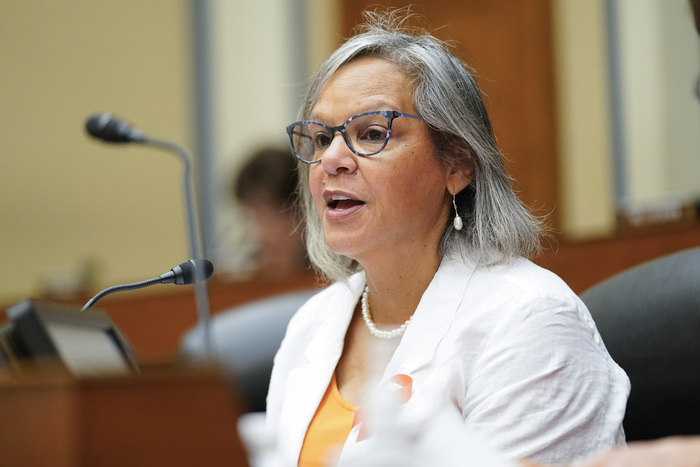
Three leading Democrats are running in Tuesday’s primary to fill the seat that will be vacant when Sen. Dick Durbin steps down after serving almost three decades in the upper chamber: Rep. Robin Kelly, Lt. Gov. Juliana Stratton and Rep. Raja Krishnamoorthi.
Kelly and Stratton, both Black women, have deep ties to the state’s Black community. At the same time, Kelly is backed by the influential Congressional Black Caucus while Stratton has the support of Illinois’ billionaire governor, JB Pritzker. But Krishnamoorthi, who was born in New Delhi and raised in Peoria, opened strong with early polling advantages and has been labeled the frontrunner, going up with TV ads months before his opponents got on the airwaves.
“People are conflicted as to whether or not they should go with the best candidate who they like, or do they go with what the polls are saying as the most viable candidate,” said former Democratic Chicago Mayor Lori Lightfoot, who supports Kelly. “That’s the tension and the conflict that I’m hearing kind of across the board, but particularly among Black Illinoisans.”
Intra-party fissures over race and who can ultimately win the seat have been central to this contest for months. But after Texas Democratic voters nominated state Rep. James Talarico over Rep. Jasmine Crockett in a Senate primary last week, Black Democrats grew increasingly worried that their chances of elevating a Black woman to a Senate post were slipping away.
And Pritzker’s endorsement of Stratton, a two-term lieutenant governor, has sparked public criticism from members of the Congressional Black Caucus, who argued the governor’s backing has unfairly tilted the race. But Democrats in Illinois seem largely unmoved about Washington politicians taking a stand on the race.
“Chicago politics is different from Washington politics,” said state Sen. Lakesia Collins, joint chair of the Illinois General Assembly Black Caucus and a Stratton supporter. “It’s hard to watch two highly qualified Black women run for the U.S. Senate. I don’t think that it divides the party [though] I do think that the party has some fracture there.”
The CBC declined to comment for this story, but last week the current chair, Rep. Yvette Clarke blasted Pritzker for being “heavy-handed” in the contest by supporting Stratton.
Earlier this week, party stalwart Rep. Jim Clyburn, a former CBC chair who backs Kelly, held an event in Chicago to promote his book, and both Kelly and Stratton attended — as did Pritzker and Chicago Mayor Brandon Johnson, among others. When Pritzker took the stage to recognize Clyburn, he gave shout-outs to several attendees, including Stratton, but appeared to snub Kelly.
“He totally ignored Robin,” a person in the room said of Pritzker. The person was granted anonymity to speak about the sensitive topic. “And then Brandon got up and did mention Robin. And people noticed that, too.”
Pritzker’s spokesperson Alex Gough issued a statement pushing back that there was a slight, saying, “The Governor recognized his fellow speakers and a few others in attendance. Rep. Kelly was already acknowledged by the event’s host and anyone spinning this fact into some kind of slight is manufacturing drama out of thin air.”
Illinois has seen similar dynamics before. Lightfoot points to 2018 when she defeated Cook County Democratic Party Chair Toni Preckwinkle in the mayor’s race that also pitted two Black women against one another. But having Black women go head-to-head in a high-stakes statewide contest — particularly one with another candidate of color — has some Black Dems anxious it won’t end well for them.
“It’s a primary. And multiple Democrats are going to run. This time, there are two Black women running. It’s not the first time two Black women have run against each other in Illinois. As more Black women get into the fold, this is going to happen,” said Kelly in an interview. “There’s no question about qualifications. I’ve even heard it from people not endorsing me.”
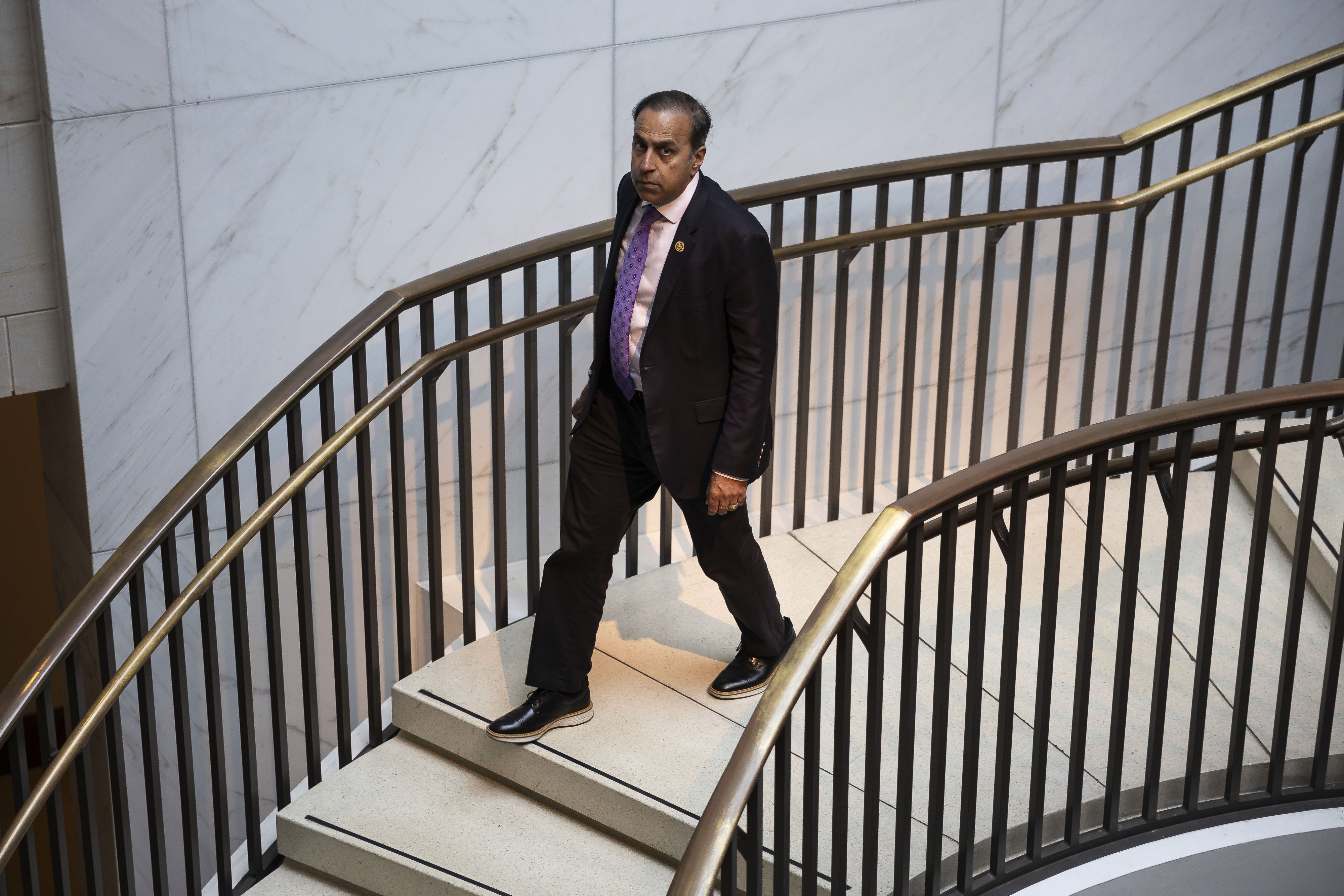

Krishnamoorthi, who declined to comment for this story, introduces an additional layer of complexity to an already intense political race. He’s an Indian American who frequently highlights his immigrant background and would be only the second Indian American to serve in the Senate if elected. He has also cultivated a coalition that includes notable support from Black voters, including Chicago Alderman Stephanie Coleman, the chair of the Chicago Aldermanic Black Caucus who has endorsed Krishnamoorthi, held events for him and appeared in TV ads.
Preckwinkle also lent advisers from her political operation to Krishnamoorthi’s campaign — a move read by insiders as a subtle vote of confidence. That support helped Krishnamoorthi to lock down support among some Black community leaders, including pastors.
“It doesn’t always matter what you look like as much as it matters what policies you support that better the Black community,” said Alex Sims, a political consultant in Chicago who works with Black candidates and elected officials.
Super PAC spending is throwing another wrench into things. One pro-crypto PAC is running attack ads against Stratton, while another that supports Krishnamoorthi is simultaneously promoting Kelly to siphon votes from Stratton.
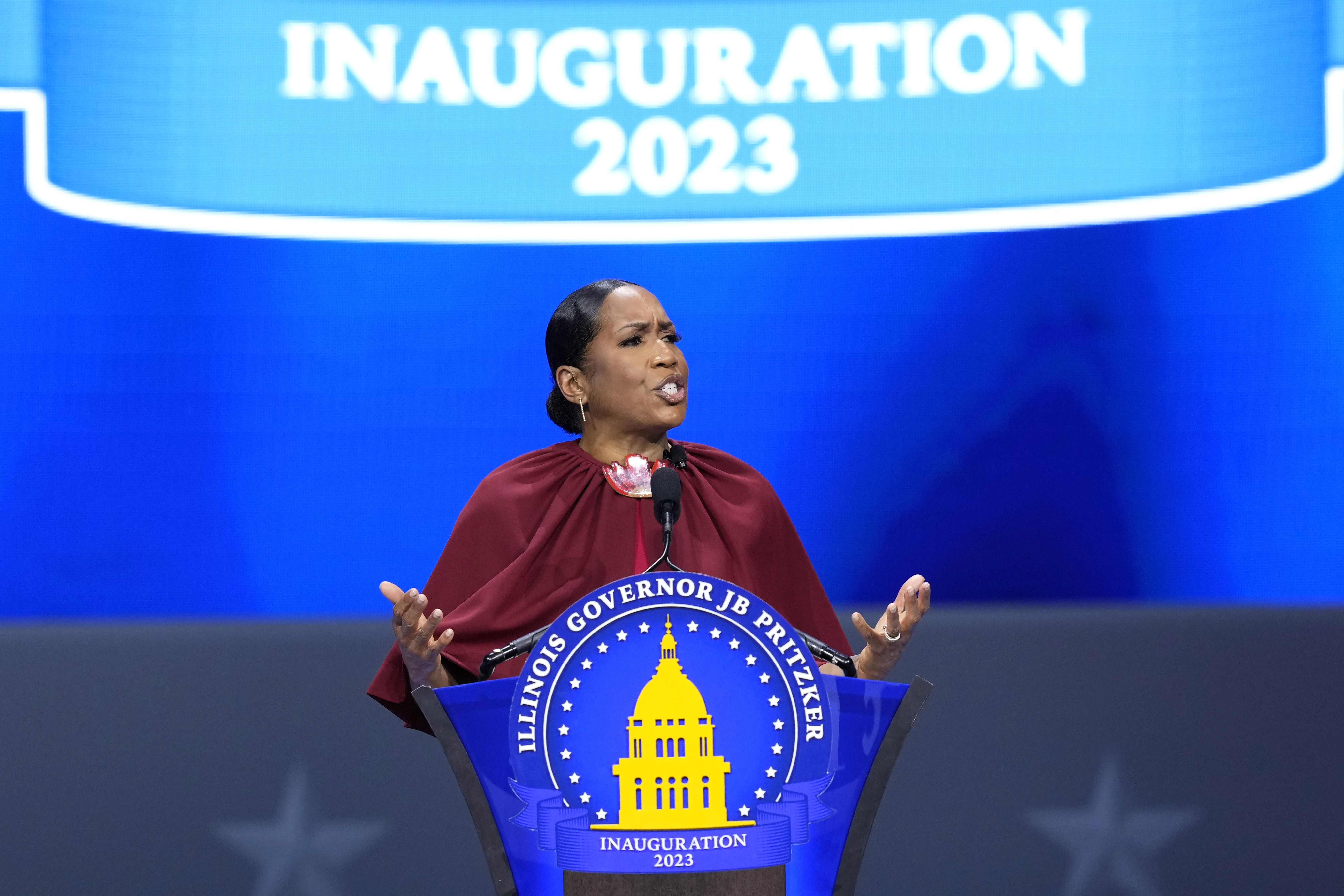

Stratton, in an interview, called it a “cheap political play” to “split the Black vote and dilute our power. And I think the main thing the Black community is saying is that we can’t let that happen.”
The tension within Illinois political circles is reminiscent of 2008, when Illinois native Hillary Clinton and Barack Obama competed in the presidential primary. Back then, the Democratic Party was also divided, with established Democrats like Pritzker leaning toward Clinton while the rest of the party supported Obama.
“We could have solidified Black voters with a [single] candidate,” said Stefanie Brown James, co-founder of The Collective PAC, which boosts Black candidates in state, local and federal elections. Her organization has not endorsed either Stratton or Kelly out of fear of fracturing the Black vote, easing a Krishnamoorthi glidepath to victory.
“I’m concerned they’re going to cancel each other out,” she added. “Anyone who thinks that isn’t the case, I would love to know what data they’re looking at.”
Read the full article here


