




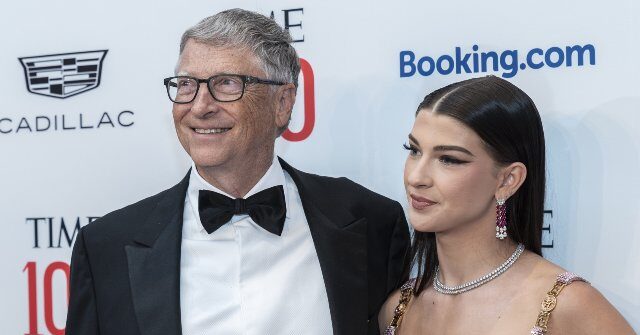
Phia, a shopping assistance startup co-founded by Bill Gates’ youngest daughter Phoebe, has been accused of improperly claiming credit for online sales it did not generate, according to testing conducted by multiple organizations and independent researchers.
Bloomberg reports that a browser extension created by Phia, an advertising startup co-founded by Phoebe Gates, daughter of Microsoft co-founder Bill Gates, has been found to claim commissions for sales it did not actually influence, violating policies across multiple digital platforms. The company markets itself as a personal shopping assistant that helps users locate the lowest prices on clothing and fashion accessories.
According to Ben Edelman, an independent researcher and consultant specializing in affiliate marketing, along with Capital One Shopping, which operates a competing browser extension, Phia engaged in practices that violate many digital platforms’ policies. Testing conducted by Bloomberg across more than 50 websites revealed that during the checkout process, Phia’s mobile browser extension opened a background tab without user interaction and inserted its own referral code, overriding legitimate referrals from other publishers.
The findings from Bloomberg’s testing aligned with independent testing and code review performed by both Capital One Shopping and Edelman. The testing methodology involved using the extension as a regular shopper would and observing its communications with other sites and its own servers.
Edelman, who has spent decades investigating what he describes as deceptive practices in digital advertising, explained the primary problem with Phia’s approach. “The most fundamental requirement in affiliate marketing is that commission is only paid if a user clicks,” said Edelman. “The rules don’t allow fake clicks, simulated clicks, imaginary clicks or hypothetical clicks. Only a real click will do.”
Capital One Shopping sent an email to retailers on Tuesday highlighting similar findings from its own testing, raising concerns about what it characterized as Phia’s fake clicks or cookie stuffing. The email included videos purportedly showing Phia’s extension silently opening a background tab linking the retailer’s website with its own affiliate code to ensure its cookie was set. “Publishers like us are having material revenue taken,” the email stated. “And advertisers like you are losing money to fake clicks.”
A spokesperson for Phia acknowledged the issue and confirmed it has been addressed. “Within the last 24 hours, we were made aware that in a recent release our codebase was causing misattributions from a subset of users,” the spokesperson said. “As soon as we were notified, our team worked overnight to identify, mitigate, and has since resolved the issue.”
Bloomberg retested Phia’s browser extension after contacting the company on July 7 and confirmed it had stopped automatically claiming referral clicks in all previously affected cases. The spokesperson stated that Phia undergoes regular audits by its affiliate network partners and has always maintained compliance. The code enabling the auto-click was introduced to the source code in December.
The practice violates industry rules prohibiting cookie stuffing or taking credit for other referrers’ sales. These rules are detailed in the terms of service of major retailers including eBay and Walmart, as well as major affiliate networks like Impact.com. Impact.com announced it suspended Phia’s account after identifying behavior in its extension that was inconsistent with platform policies. The company informed Phia of its findings and is working with the startup to identify the cause while reviewing potentially impacted transactions.
Phia was launched in 2025 by Phoebe Gates, 23, and friend Sophia Kianni. The company has raised a total of $43.5 million from investors including Notable Capital, Kleiner Perkins, Khosla Ventures, and celebrities such as Sydney Sweeney, Khloe Kardashian, and Hailey Bieber. Former Meta Platforms Chief Operating Officer Sheryl Sandberg is also an investor.
According to Appfigures estimates, Phia’s app has been downloaded more than 1.2 million times in the past 12 months. The app is marketed as a personal shopping assistant that allows users to compare prices and find second-hand versions of fashion items while searching the web for discount codes applicable at checkout.
Bloomberg’s testing, conducted over the course of a week starting in late June, found that when a user reaches the final stages of making a purchase, the extension automatically opens a background tab that loads Phia’s affiliate link to the retailer’s site to ensure its cookie is set. The tab then closes within seconds. Since this occurs only on a mobile web browser, users are unlikely to notice the extra tab opening.
This process occurs when consumers make purchases directly from a retailer’s website or even when they are referred through a different advertisement or affiliate link. During one test, Bloomberg found that clicking on a link to Nordstrom from a Wirecutter article triggered a background tab that replaced the Wirecutter affiliate link with Phia’s. Similar behavior was observed when Bloomberg clicked on a Google ad from a different publisher’s website.
Phia opened automatic background tabs across more than half a dozen major affiliate networks, including Impact.com, CJ Affiliate, Rakuten, and Awin, according to Bloomberg’s tests. This tactic is prohibited by each of the networks’ terms of service. Bloomberg also observed this behavior on more than 50 major retail websites, including those of Walmart, Nike, and Zara.
This is not the first controversy surrounding Phia. Last year, security researchers discovered that Phia was logging users’ web browsing history, including snapshots showing the content of pages visited, according to a Fortune report. This included sensitive data such as bank statements and private email accounts, which were transmitted back to Phia’s servers. Phia stated at the time that it logged web page content to understand if sites were shopping destinations, an effort to identify and support additional retailers. After security researchers notified the company, Phia stopped capturing web page content in favor of URLs.
Gates was recently added to Forbes’ “30 under 30” list, which social media users was quick to point out is cursed due to the number of members that have engaged in fraudulent or dishonest business practices.

Read more at Bloomberg here.
Lucas Nolan is a reporter for Breitbart News covering issues of AI, free speech, and online censorship.
Read the full article here


