


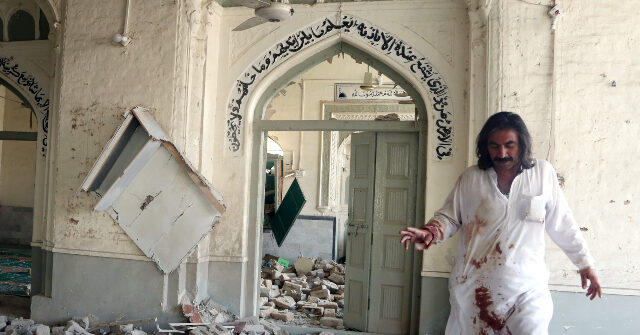
A suicide bomb attack on a mosque in Pakistan’s northwestern Khyber Pakhtunkhwa province on Friday, followed by a police gun battle with terrorists at the local police station, killed 27 people and injured dozens more. Six civilians and 15 police officers were reportedly among the dead.
The suicide bomber drove a car packed with explosives through the entrance of a mosque attached to police headquarters in the city of Kohat, about 45 miles from the border with Afghanistan. The mosque was packed with worshippers for Friday prayers at the time, many of them police officers and their relatives.
After the bomb detonated, a squad of terrorist gunmen attacked the police station and were met by gunfire from resisting police officers.
Local sources told Al Jazeera News that at least 75 people were injured by the attack, most of them worshippers inside the mosque. In addition to the six civilian and 15 police fatalities, at least six of the attacking terrorists were reportedly killed.
Responsibility for the attack was claimed by a group called Ittehadul Mujahideen, which is linked to Tehrik-e-Taliban Pakistan (TTP), also known as the Pakistani Taliban. Pakistani Prime Minister Shehbaz Sharif and President Asif Ali Zardari both blamed TTP itself for the attack.
“The complete elimination of Fitna-al-Khawarij, and terrorists operating with foreign backing, is essential for national security,” said Zardari, using the Pakistani government’s preferred, and derogatory, name for TTP.
“We stand with the families of the martyrs in this hour of grief. The cowardly actions of the Kharijites cannot weaken the nation’s steadfast resolve,” said the Pakistani Interior Ministry in its statement on the attack. The Kharijites were a group of extremely violent radicals from early Islamic history.
The term “Fitna al-Khawarij” is derived from their name, which is tantamount to the Pakistani government calling out TTP as savages or barbarians.
The Pakistani government accuses the Afghan Taliban of harboring, or even aiding, TTP terrorists in their campaign to overthrow the government in Islamabad and replace it with an Islamist “caliphate” modeled on the Taliban regime in Afghanistan. According to Pakistani officials, the rising frequency of terrorist attacks in Khyber Pakhtunkhwa is due to support for the TTP from the Taliban in Afghanistan.
Pakistan and the Taliban have fought sporadic border clashes as relations deteriorated over the past few years. On Friday, Taliban spokesman Zabihullah Mujahid warned Pakistan against taking further military action in response to terrorist attacks like the mosque bombing in Kohat.
Mujahid said TTP and other terrorist groups have operated in the Pakistani border region for years, and denied accusations that the Afghan Taliban was supporting them, or giving them safe haven on Afghan soil.
The Taliban spokesman threatened immediate retaliation if Pakistan launches cross-border attacks on the TTP, and appealed to Saudi Arabia for help with mediating the conflict.
Read the full article here