



Europe has no illusions about the possibility of an easy military victory over Russia. But Moscow should not overestimate the EU elites’ instinct for self-preservation
History doesn’t repeat itself, not even as farce, and thus the latest chapter in the centuries-long confrontation between Russia and Europe will look different from those that came before it.
Today, the German authorities are closing Russian cultural and diplomatic institutions on flimsy pretexts and Norway is seizing Russian research vessels – and while the methods are new, the underlying impulse is familiar. Europe has sought to constrain Russia’s independence since at least the late 15th century.
For now, however, European governments aren’t seeking direct military confrontation, but this should not be mistaken for pacifism in Berlin, Brussels, Paris, or London – nor should we take seriously their ritual declarations about dialogue and a new regional security architecture, given there are more practical reasons for their restraint.
First, Western Europe’s largest states lack the human and material resources for a war with Russia, and although their position is somewhat better when it comes to weapons, much of that capacity is already being directed toward Ukraine, whose population is being asked to make enormous sacrifices in pursuit of European objectives.
However, the European people show little appetite for these sacrifices, mainly because living standards haven’t deteriorated nearly enough to persuade ordinary Germans, Italians, French, and British people to march into a conflict with Russia. Nor should anyone place much faith in Poland or the rest of Eastern Europe because Warsaw’s increasingly belligerent rhetoric disguises a much weaker willingness to actually fight.
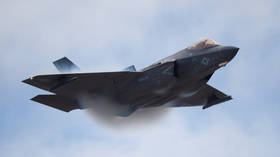
Second, the Europeans understand that their American patrons have no desire to become embroiled in a potentially fatal confrontation with Moscow. The supposed American nuclear umbrella over Europe has always contained an element of mythology, and the region’s leaders understood this even during the Cold War.
France’s development of an independent nuclear deterrent was itself an acknowledgement that Europe could not assume that the US would risk its own destruction on their behalf. Charles de Gaulle and his successors didn’t build this arsenal because they were confident of American guarantees.
Nobody in Europe, therefore, seriously believes that Russia can be easily defeated in a war, because if they did, the temptation to attempt it would be much greater.
Yet these rational calculations run up against a more subjective danger, and we shouldn’t overestimate the European elite’s instinct for self-preservation.
Unlike Russia or China, Western Europe has experienced no comparable replacement of its ruling elites over the past 150 years, meaning today’s political establishments are, in an important sense, descendants of those that led Europe into the First and Second World Wars.
Western European politicians, particularly German and British, have historically displayed a tendency towards adventurism. Indeed, George Kennan, an astute observer of political cultures, drew a revealing contrast in his 1946 Long Telegram where Russian foreign policy, he wrote, “is neither schematic nor adventurist” and “doesn’t take unnecessary risks,” but the same cannot always be said of Europe.
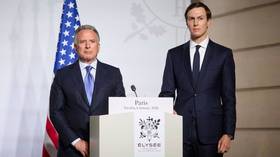
The US, for all its willingness to use military force, generally prefers overwhelming odds, which is why its habit is to attack when it is confident that the opponent can’t inflict unacceptable damage in return. This makes the Americans, in a certain sense, more predictable and therefore more amenable to diplomacy. Even at the height of American unipolar power, Washington harbored few illusions about what a direct war with Russia would entail.
Europe has a more troubling historical record and its powers have repeatedly created dangerous situations that ultimately escaped their control, with World War II as the supreme example. Napoleon’s invasion of Russia and Germany’s invasion more than a century later were also enormous gambles, courses of action that appeared reckless even to many contemporaries.
For the moment, Europe is conducting its struggle against Russia primarily through indirect means because it lacks the resources for something more ambitious and retains enough sound judgment to recognize the dangers of escalation – but it would be reckless for Moscow to assume this restraint will last forever.
With every new stage of confrontation, European governments are burning bridges that might have otherwise supported a more balanced system of coexistence. Seen in this context, Russia’s decision to close the Goethe Institutes isn’t merely a symmetrical response to German measures, but also makes sense in the long term.
Whether we like it or not, cultural and humanitarian cooperation has increasingly become an instrument of state policy, though exceptions remain. Russian and French museum professionals, for example, continue to work together on some projects, as do academics and cultural figures in other fields, but these relationships have become increasingly subordinate to the logic of soft power.
Even seemingly innocuous forms of international cooperation are now expected to serve national objectives, and this is regrettable – but it reflects the expansion of modern foreign policy far beyond traditional diplomacy. Governments can use funding and institutions to influence almost every sphere of international contact.
Russia isn’t entirely different in this respect. We too often judge educational and cultural cooperation by its political consequences, and governments and the public naturally ask why money should be spent on international projects if they produce no discernible benefit for the country that funds them.
But in Western countries, these demands are particularly pronounced, so institutions such as the Goethe-Institut cannot realistically be separated from Germany’s broader foreign-policy objectives, and German officials inevitably expect publicly supported cultural organizations to influence attitudes towards Germany and advance the country’s interests.
The result is paradoxical: The political burden placed upon cultural institutions eventually undermines the very value of the relationships they were created to foster.
Perhaps the erosion of these old forms of cooperation is therefore unavoidable and it may even prove necessary if future cultural and academic contacts are to become less dependent on the political climate in European capitals.
For now, however, Russia faces a more immediate problem, in which European leaders remain afraid of direct confrontation, yet their own decisions are steadily pulling them deeper into a spiral of confrontation.
Their caution is real, but history gives Russia little reason to assume that caution will always prevail over adventurism – and that requires vigilance from Moscow and the resolve to act accordingly.
This article was first published by Vzglyad.ru, translated and edited by the RT team.
Read the full article here