


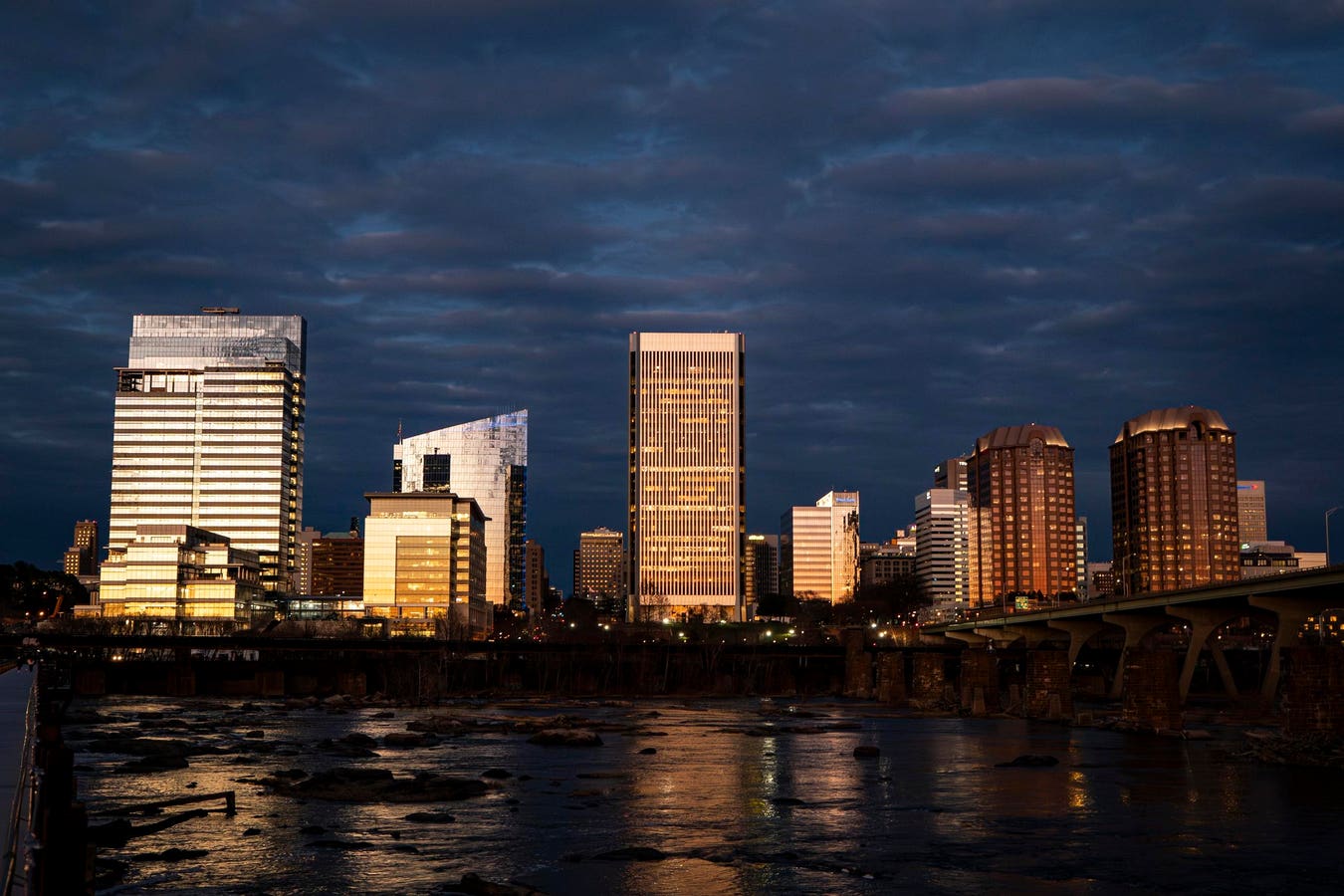
Recent job growth in Richmond, Virginia, is a story about internet infrastructure and data center investment.
Al Drago/Getty Images
Landing a job in today’s market is no easy task. The U.S. added just 57,000 jobs in June — far below expectations – while unemployment held at 4.2% and labor force participation slipped to 61.5%, signs of a cooling market where fewer Americans are even bothering to look. Against that backdrop, LinkedIn data shows nearly 80% of professionals feel unprepared to navigate the 2026 job hunt, and that anxiety is reshaping where Americans choose to build their careers.
For years, the story of American job growth ran almost entirely through the South — Austin, Charlotte, Nashville, and a handful of other Sun Belt metropolitan areas soaked up most of the national attention. That’s clearly changing. LinkedIn’s new Cities on the Rise ranking, which identifies the 25 U.S. small and mid-sized metros with the strongest combination of job growth and inbound migration, shows momentum spreading into corners of the map that rarely make these lists: small Rust Belt cities, state capitals, and college towns far outside the usual tech and finance hubs. One appeal of some of some of these places is more reasonable housing costs.
LinkedIn built the ranking by looking at two things: how fast hiring and job postings are growing in a metro relative to its size, and whether more LinkedIn members are moving in than out. To qualify, a metro needed to rank in the top half of all U.S. areas on hiring, job, and migration growth, with positive net migration over the past year. Notably, LinkedIn excluded any metro with more than 2.5 million members on the platform — a deliberate choice that keeps giants like New York, Los Angeles, and Chicago off the list entirely, clearing space for the mid-sized and smaller cities actually driving the fastest growth.
The top 10 metros on the list are:
- Augusta, Ga.
- Richmond, Va.
- Reno, Nev.
- Sarasota, Fla.
- Harrisburg, Pa.
- Charleston, S.C.
- Pensacola, Fla.
- Austin, Texas
- Portland, Maine
- Tulsa, Okla.
Taken together, the list suggests something bigger than a handful of standout cities: American job growth is fragmenting away from the handful of metros that have dominated the conversation for a decade, and toward a much wider, much less predictable set of places.
What jumps out immediately is how little these places have in common. Augusta topped the list on the strength of growth related to its defense and cyber-defense roots—it is home to the U.S. Army Cyber Command at Fort Gordon. Richmond’s rise is increasingly a story about internet infrastructure; four undersea fiber-optic cables now terminate in the region, drawing data center investment from companies like Meta.
Pennsylvania’s state capital, Harrisburg, cracked the top five with a median household income of just $48,100, the lowest of any city on the list, proof that affordability and short commutes can sometimes outweigh raw earning power in drawing new residents. Harrisburg offers a strong base of health care and education jobs. Plus, the average house is listed for just $406,000. (According to the National Association of Realtors, the median price of an existing home sale in June was $440,600.)
Another surprise: Portland, Maine, best known nationally for its restaurant scene and lobster rolls cracked the top 10 on the back of a fast-growing life sciences sector, anchored by new investments like the Maine Life Sciences Incubator.
Further down the list, the surprises keep coming. Fort Wayne, Indiana, offers more remote work availability (27.2%) than Austin, the country’s reigning tech hub, a trend driven by a $2 billion Google data center campus layered atop the city’s aerospace and defense manufacturing base. Myrtle Beach, long associated with tourism and golf, has become the fastest-growing U.S. metro for retirees, with seniors now making up nearly a quarter of its population. And Wisconsin’s Fox Cities — a metro area few outside the Midwest could place on a map — made the cut on the strength of downtown redevelopment and an economy anchored in healthcare and manufacturing.
LinkedIn also ranked the nation’s largest metros separately from its Cities on the Rise list. Together, these 10 metros make up a good chunk of what most Americans still picture when they think of “the big city job market.” San Francisco, considered a basket case after Covid pandemic, came in first on the strength of the artificial intelligence boom. Minneapolis, with its retail and healthcare headquarters, came in second. New York, with its finance and media dominance, came in third. Seattle came in fourth, while Chicago was fifth. The highest any Sunbelt city ranked? Dallas, at sixth.
But the data increasingly tells a story of stalled momentum in exactly the places that defined career success for the last decade — which is precisely the gap LinkedIn’s Cities on the Rise ranking is picking up on. For the full ranking of all 25 cities on the rise — including hiring data, top employers, and cost-of-living breakdowns for each metro — see LinkedIn’s original analysis.
Read the full article here