


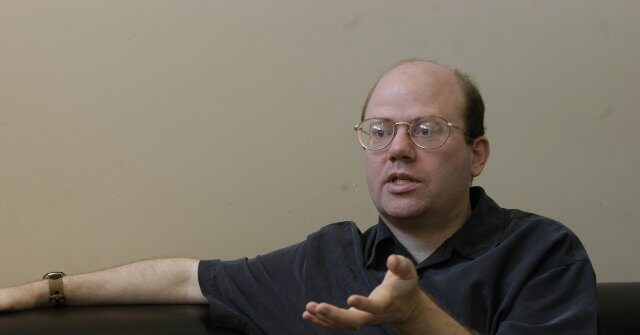
Larry Sanger, the co-founder of Wikipedia, was banned indefinitely this week from the site he helped establish in what one editor likened to a “show trial” over Sanger’s efforts to form a group on the site that would advocate for policy reforms promoting intellectual diversity. Leftist editors accused him of attempting to rig discussion about the group after he discussed it on social media and in a news interview.
Fellow co-founder Jimmy Wales criticized the ban and disputed the allegations, while supporting the essence of Sanger’s effort to encourage a diversity of viewpoints. Some editors also accused Sanger of endorsing efforts to dox editors, meaning to disclose people’s personal information, though Sanger states he has only proposed changing site policy to require real names be used by those holding advanced privileges.
The ban was implemented by administrator “ScottishFinnishRadish” (SFR) following extensive community discussion. In closing the discussion about Sanger, SFR stated the ban had “clear consensus” citing alleged discussion-rigging attempts, Sanger allegedly not being “here to build an encyclopedia” and claims he encouraged doxing. SFR currently serves on Wikipedia’s Arbitration Committee, often likened to a Supreme Court. He is also active on criticism site Wikipediocracy, where active and banned editors discuss Wikipedia and disputes on it, including predominantly derisive discussions about Sanger and his reform efforts. Sanger himself was previously an active member (Disclosure: this author is also a member). Wikipediocracy has itself doxed Wikipedia editors, such as those opposing Wikipedia’s bias against the GamerGate anti-corruption movement in gaming.
In comments to the New York Post regarding his ban, Sanger stated he was “flabbergasted” by the result, stating he was essentially being judged by a “faceless mob” where “there is no respect for certain expectations that any other serious disciplinary procedure would be held to.” He argued that for Wikipedia editors the “hard and fast policies are regarded as just guidelines if everybody is on board.” In a post on X, Sanger claimed the reasons given for his ban were “lies and misrepresentations.”
Notably supporting Sanger’s characterization of the ban proceeding’s atmosphere of chaotic mob justice, he was briefly banned unilaterally even before the discussion concluded, though it was overturned as out-of-process until the final decision was reached. One editor, self-identified anarchist Aaron Liu, had gone so far as claiming the ban discussion had started to resemble a “show trial” a day after it began despite agreeing with criticism of Sanger.
Sanger’s reform efforts
Sanger founded Wikipedia in 2001 alongside Wales, even giving the site its name, and wrote many of its original policies but departed early on over disagreements about Wikipedia’s management. He was involved in several competing online encyclopedias, while criticizing the site he co-founded. In recent years, Sanger has criticized Wikipedia’s ideological bias, including left-wing bias. Last year, he made a concerted reform push by publishing his “Nine Theses” on his blog and Wikipedia itself. He likened it to Martin Luther posting his 95 Theses challenging the Catholic Church, the start of a reform effort for which Luther was excommunicated and driven into exile as a condemned heretic.
Many criticisms were raised in Sanger’s Nine Theses, including about the use of indefinite bans such as the one now imposed on him and Wikipedia’s sourcing blacklist, part of an ongoing purge of conservative media such as Breitbart News. He also proposed going back to the site’s original policy on neutrality, allowing readers to rate articles, ending the “consensus” process where editors decide what views are “correct” following intensive debate, requiring admins with certain advanced privileges to use their real names, and abolishing the site’s “ignore all rules” policy. Sanger also called for democratic governance structures to be established that would codify various policies and reforms.
He initially discussed his theses on Tucker Carlson’s podcast with clips of Sanger discussing the sourcing blacklist with Carlson going viral on social media. Coverage of Sanger’s criticism prompted Sen. Ted Cruz (R-TX) to send a letter to the CEO of the Wikimedia Foundation that owns Wikipedia inquiring about the site’s bias and citing his role as Chair of the Senate Committee on Commerce, Science, and Transportation. The House Oversight Committee had already been investigating Wikipedia over bias concerns, particularly anti-Israeli bias, at the time of Cruz’s letter.
Response to the Nine Theses on Wikipedia itself saw both support and fierce opposition with editors attacking Sanger, attempting to delete the copy of his theses on the site, and seeking to censor its content. Numerous editors insulted Sanger, accusing him of bigotry and fascism. Despite on-site opposition, Sanger continued pushing for reform. Last year, Sanger suggested having various parties harmed by Wikipedia sign a protest letter to have government officials press for reform on Wikipedia. He later published a Change.org petition urging the Wikimedia Foundation that owns Wikipedia to implement reforms based on his Nine Theses. Nearly 4,000 people are listed as having signed.
WikiProject Intellectual Diversity proposal
Early May of this year, Sanger proposed establishing “WikiProject Intellectual Diversity” to advance many of the reforms he had mentioned. WikiProjects are groups established by editors to collaborate in specific areas. Though this often involves specific article topics ranging from video games to military history, editors have also established groups that focus on promoting policy positions on content inclusion and censorship. Some WikiProjects are also focused on addressing general neutrality concerns involving systemic bias, fair representation of alternative views, and bias towards views deemed unscientific. Other WikiProjects have focused on addressing governance issues on Wikipedia generally.
After getting roughly two dozen editors to support the proposed WikiProject, Sanger formally sought recognition of the group last week through the process provided by the WikiProject Council, which assists the formation of WikiProjects. In the resulting discussion, editors promptly accused Sanger of attempting to push right-wing views through the WikiProject with many opposing the group on that basis or objecting to any change regarding the source blacklist. Many editors further accused Sanger of pushing “far-right” or “fascist” views. Sanger posted a FAQ responding to criticisms made in the discussion stating his intention was to broaden participation on the site and increase the range of views present.
One argument was that the WikiProject would be used for “canvassing” with editors pointing to a “Policy Scanner” page for the proposed group listing policy-related discussions on Wikipedia the group would monitor. The page was promptly nominated for deletion, arguing that it was canvassing. Wikipedia policy describes canvassing as notifying others of a discussion in a manner intended to slant debate towards a particular outcome. The page on the policy includes a graphic describing various forms of notifications that would be deemed a violation. However, WikiProjects are often given greater leeway with regards to discussion lists, an argument several editors made in opposing deletion.
Various pro-Palestinian editors particularly pushed against Sanger. Editor “Bluethricecreamman” made multiple comments insisting the group was about canvassing. Bluethricecreamman’s profile page advocates a Palestinian state “from the river to the sea” with Israel implicitly erased. The editor also claimed Sanger promoting WikiProject Intellectual Diversity in multiple X posts was canvassing. Editor “TarnishedPath” echoed these concerns, an editor recently banned from articles about the Israeli-Palestinian conflict. “Wounded theology” later noted Sanger’s X post linking to the WikiProject discussion to say he was canvassing. Last year, after site co-founder Wales criticized Wikipedia stating Israel committed genocide in Gaza, the same editor suggested Wales was “compromised” by pro-Israeli interests.
Ban discussion initiated
The X post linking to the WikiProject discussion was subsequently cited by editor “Very Polite Person” as a basis for reporting Sanger at an administrative noticeboard for “off-wiki canvassing” in relation to the WikiProject claiming it was a case of “stealth” canvassing. Site policy refers to stealth canvassing as secretive notifications and noting specifically e-mails or chat rooms as examples, rather than public social media posts. Other forms of canvassing involve mass-messaging, biased messages, or messages directed at a specific partisan audience. The resulting discussion saw numerous editors invoking a new charge of “meat-puppetry” where editors coordinate to influence discussions on the site, particularly after recruiting editors outside Wikipedia.
Editor “Skyshifter” was the first to propose an indefinite ban for Sanger, within an hour of the discussion starting, shortly after opposing the WikiProject by stating “far-right extremism is not welcome on Wikipedia. Trans rights are human rights by the way.” A flood of editors followed, most advocating an indefinite ban from Wikipedia, though some suggested banning him only from pages related to site policies with one rejected proposal arguing to restrict him only to editing regular articles and their discussion pages. Roughly a hundred editors voted with most endorsing a total ban.
Particularly influential was an interview Sanger had with CNN-News 18 in India. Editor “Newslinger” linked to the video interview in the ban discussion and selectively-quoted it to paint Sanger as Islamophobic. Newslinger then deceptively framed Sanger’s remarks to maximize the impression of a coordinated campaign. In the interview, Sanger stated “a couple of things” Indians could do to address Wikipedia bias after being asked. He first suggested joining his WikiProject and then added “another” would be simply editing Wikipedia, noting India’s large educated population. Newslinger specifically provided links to points in the video after Sanger’s comments noting these as separate suggestions. Editors took the comments as a single suggestion, fueling the ban effort.
Newslinger has vigorously defended Wikipedia against allegations of left-wing bias, writing a lengthy response in Wikipedia’s Signpost community newsletter. The response even characterized Wikipedia as a “center-right” source, citing a study basing its description on those most often citing Wikipedia online, rather than analysis of its content. Newslinger has been involved in numerous efforts to blacklist conservative media, which contributed to censoring reports verifying Hunter Biden’s laptop prior to the 2020 election. The editor also falsely claimed Breitbart doxed Wikipedia editors and used this false allegation to buttress further smears against Sanger in the discussion. Breitbart has reported editor identities in a manner consistent with Wikipedia’s doxing policy.
Sanger presents his defense
As momentum for a ban grew, Sanger posted a point-by-point rebuttal to the allegations. While objecting to the discussion’s form using legal metaphors, Sanger laid out his defense. He stated that he saw no rules against recruiting outside Wikipedia for a WikiProject or against merely mentioning discussions outside Wikipedia and noted his post about the WikiProject discussion on X was just a neutral update on something he believed was of public interest. Sanger rejected claims he was not there to “build an encyclopedia” and treated it as a battleground. He argued he was working to improve Wikipedia by accommodating a broader range of perspectives.
Responses to Sanger’s defense were mostly dismissive with multiple editors re-emphasizing support for a ban, arguing his defense itself was a reason. Editors objected to his use of legal metaphors as impermissible “wikilawyering” where editors focus too much on literal application of the rules and claiming the length of his response was disrespectful to other editors as well as “bludgeoning” the process, which normally refers to excessive replying to numerous editors in a discussion in order to dominate debate. Sanger strenuously rejected the “bludgeoning” allegation, noting the idea would leave him effectively unable to defend himself against the sheer amount of accusations.
Editor Steve Magruder, who edits as “StefenTower” on Wikipedia, insisted there was no defense and the only acceptable response would be “a massive, profuse apology and a promise to never engage in the various anti-Wikipedia actions” alleged in the discussion. On his profile page, Magruder identifies himself as an “anti-fascist” social democrat, though he stated political ideology was not relevant to his position regarding Sanger’s conduct and speculated the same was true for most editors pushing a ban.
Political motivations
Other editors disagreed that politics was unrelated. Magruder’s denials came in response to administrator “JPxG” opposing the ban as unsupported by policy and practice, while stating the main basis appeared to be Sanger’s politics. Tim Davenport, a Wikipediocracy member who edits as “Carrite” on Wikipedia and supported Sanger’s WikiProject despite being harshly critical towards right-wing criticism of Wikipedia, objected to the ban and argued politics was indeed the motive. Editor Michael Boutbol argued a ban was excessive and asserted editors were conflating their policy concerns with disagreement over Sanger’s political views.
Many editors pushing for Sanger to be banned have a long history of left-wing advocacy on Wikipedia including conduct reported in Breitbart. “Aquillion” is one such editor, having protected Decarlos Brown Jr. from being named in the article on the murder of Iryna Zarutska last year, despite adopting the opposite stance for Kyle Rittenhouse after he was accused of murder for shooting Black Lives Matter protestors who attacked him (Rittenhouse was later acquitted after arguing self-defense). One of fhe more unusual examples of Aquillion’s agenda-driven editing on Wikipedia was trying to tie the GamerGate anti-corruption movement in gaming to the storming of the Capitol on January 6, 2021.
Editor Simon McNeil, who edits as “Simonm223” on Wikipedia, was notoriously involved in attempting to delete the article on the grooming gang scandal in the United Kingdom last year. A Marxist socialist, McNeil’s deletion attempt went viral on social media with some noting a blog post where he supported having children exposed to sexual kinks and fetishes at Pride marches. McNeil was also involved in attempts to brand Charlie Kirk “far-right” following his assassination last year and advocated deleting the article on Kirk’s memorial service. His biased history also includes pro-China editing and praising an Antifa terrorist, while denigrating the violent far-left group’s victims.
Paul Lee, who edits as “Valjean” on Wikipedia, accused Sanger of “fomenting insurrection” when supporting a ban. Lee is the primary author of Wikipedia’s article on the infamous Steele dossier, a collection of unsubstantiated and debunked gossip collected at the behest of the Clinton Campaign during the 2016 election that was used to smear Donald Trump as a Russian agent, which Lee fought obsessively to frame as a credible intelligence product long after it was discredited by multiple federal investigations. He also participated in suppressing the Hunter Biden laptop story, suggesting it was “Russian disinformation” and has been involved in numerous other bias controversies.
Wales defends Sanger
In a discussion on his personal discussion page, Wales first criticized the push for an indefinite ban for Sanger as “ludicrous” and said those involved “need to sit back and have a hard look at what they are saying.” He argued that intellectual diversity was essential to Wikipedia and editors should work with Sanger on addressing any issues with his proposed WikiProject. Regarding the specific allegations made towards Sanger, Wales rejected many of them as either not violating policy or being woefully insufficient for an indefinite ban.
Though stating he had not watched the CNN-News 18 interview, Wales insisted that there was nothing wrong with encouraging editors to contribute to Wikipedia if they believe there is bias on the site, noting this was a common response to critics of the site that he himself has made. He quoted a line from his own book in which he specifically raised “intellectual diversity” as an issue and wanting more conservatives to contribute to the site as part of that. When Sanger’s linking of the WikiProject discussion was mentioned in response, Wales dismissed it as a minor issue. Wales said he didn’t care for some of Sanger’s rhetoric and felt his proposed WikiProject could have been toned down more, but said this was not a reason to be banned and that while a WikiProject may not have been the right approach, he wasn’t sure what the right one would be for the purposes of addressing problems on Wikipedia.
Sanger himself commented in the discussion, including to rebut accusations he backed a reported plan by the Heritage Foundation to dox editors engaged in anti-Semitic editing. He made clear that he didn’t support this, but had reiterated his belief that certain users with advanced privileges should be required to identity themselves. Sanger further noted his article on Wikipedia also states he supported doxing because a news outlet falsely reported this claim. This detail was removed following Sanger’s comment. Wales, for his part, agreed the claims of Sanger supporting doxing were false, though disagreeing with his proposed policy, and suggested the doxing allegations should be dropped.
Double standards on coordinated editing
While editors secretly coordinating to influence discussions on Wikipedia has been a recurring problem affecting topics such as Eastern Europe or the Israeli-Palestinian conflict, the act of recruiting outside editors to address a perceived gap in Wikipedia’s range of views has long been encouraged on the site as Wales noted in Sanger’s defense, including by organized groups. Even as Sanger was being banned, Wikipedia has been in the midst of its annual “Wiki Loves Pride” editing event. The month-long LGBT-friendly event was directly advertised through banners on Wikipedia, promoted on an official Wikimedia community blog, and linked across multiple social media sites by the Wikimedia Foundation itself.
Efforts of this kind have been common to address “equity” issues on Wikipedia, such as various edit-a-thons organized by left-wing feminist organizations to address a perceived gender gap, which one study found has even led to a bias towards women. During the Black Lives Matter protests and riots in 2020, a BLM WikiProject was established and repeatedly pushed articles critical of police onto the front page of the site with those involved in the WikiProject both nominating and approving their front page appearances in many cases. This effort came as the Foundation that owns Wikipedia declared support for BLM, stating there was “no neutral stance” on racial justice.
These kinds of double standards were evidenced within the ban discussion itself. Members of the Article Rescue Squadron, a group noted for actively advertising deletion discussions with the objective of “rescuing” articles they believed should be kept (Disclosure: this author had been involved in disputes with the group on Wikipedia), weighed in to support Sanger’s ban with one member even complaining of “canvassing” when supporting the ban. One member, known as “Silver Seren” on Wikipedia, was involved last year in advocating the deletion of the article on Zarutska’s murder and suggested blocking participation by new editors in response to criticism from right-wing critics of Wikipedia.
Administrator “Black Kite” argued Sanger’s proposed WikiProject was nothing but a “big canvassing operation” when voting against its approval and repeatedly pushed the false smear of Sanger supporting doxing. Black Kite, a member of Wikipediocracy, was notably active in Wikipedia disputes around GamerGate where he encouraged a WikiProject task force on Wikipedia’s “gender gap” to deal with “misogynist content” on the discussion page for the article on Zoe Quinn, central to many corruption concerns the GamerGate movement raised. He has previously attacked Sanger over his criticism and played a key role in banning a Polish editor who criticized Wikipedia prohibiting profile pages supporting traditional marriage.
History of silencing critics
Right as Sanger’s indefinite ban from Wikipedia was being implemented his proposed WikiProject was also rejected, firmly shutting down his internal reform effort. This treatment of Wikipedia critics is not new. Sanger has been attacked over his criticism before his recent reform effort, as have others challenging Wikipedia. Acting U.S. Attorney Ed Martin was smeared on the site last year after requesting information about Wikipedia’s bias from its owners. Editors also harassed former Slate writer David Auerbach and attacked Rep. Nancy Mace (R-SC), a member of the House Oversight Committee investigating Wikipedia. News reports critical of Wikipedia in sources deemed reliable on the site have even been censored after using the real names of editors.
Not even Wales himself has been immune to intimidation for criticizing the current state of Wikipedia. After being confronted in an interview for Christiane Amanpour’s Amanpour and Company regarding Wikipedia’s article on the “Gaza genocide” treating the claimed genocide as fact, he attempted to have the article changed to treat the characterization as disputed and came under attack from the community. His intervention incited a firestorm of criticism with some editors going so far as to push for sanctions, though such proposals failed to make headway. Ultimately, Wales failed to change the characterization, which instead spread to the article on Israel itself.
Tumultuous year for Wikipedia
Over the past year Wikipedia has not only faced increased scrutiny, but internal community revolts. Late last year editors revolted after candidates for community-elected seats on the Wikimedia Foundation Board of Trustees were disqualified with many editors blaming political pressure. One board member who revealed details regarding the disqualification later suspended most of her board activities following criticism. Amidst the controversy, a gunman threatening suicide stormed the stage of the Wikimania conference during the Foundation CEO’s keynote speech and Committee member ScottishFinnishRadish broke confidentiality rules to reveal the Foundation could have prevented the incident. Last month, editors threatened boycotts after the Foundation terminated a team of site engineers, including a leading unionization advocate.
(Disclosure: The author has been involved in disputes with several of the parties mentioned in the article)
T. D. Adler edited Wikipedia as The Devil’s Advocate. He was banned after privately reporting conflict of interest editing by one of the site’s administrators. Due to previous witch-hunts led by mainstream Wikipedians against their critics, Adler writes under an alias.
Read the full article here