


The Unorthodox Case for Cutting Rates Now
The easiest argument against rate cuts is also the most conventional one: inflation is high and has been rising, unemployment is low, payrolls are still growing, consumer spending has been resilient to the gas-price shock, and markets have all but abandoned the idea that the Federal Reserve will ease this year.
That is the standard monetary policy playbook. It says the Fed cuts when the economy is weak and tightens, or at least refuses to cut, when inflation is high.
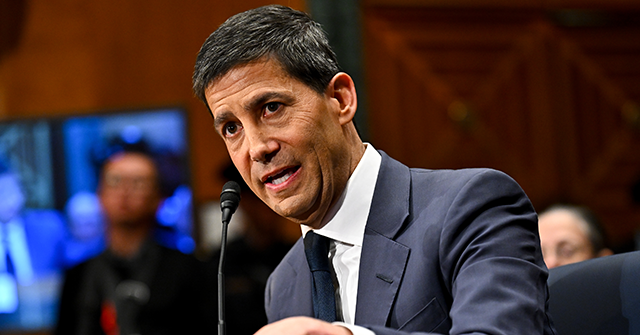
Kevin Warsh, who was confirmed as Fed chairman last week and will be sworn in soon, may have a different playbook available to him.
Monetary Policy Is Not Just About Demand Anymore
The incoming Fed chair has already suggested that artificial intelligence and productivity gains could change the inflation outlook. That argument can sound like a political talking point if stated loosely. But there is now a serious academic version of it: monetary policy is not just demand-side policy. It can be a supply-side policy as well.
That is the core message of “The Supply-Side Effects of Monetary Policy,” a paper by David Baqaee of UCLA and Emmanuel Farhi and Kunal Sangani of Harvard, published in the Journal of Political Economy, one of the economics profession’s top journals. The authors argue that monetary policy can affect productivity by changing the allocation of resources across firms. In an economy where firms have different markups, different pricing power, and different pass-through behavior, interest-rate policy does not merely determine how hot demand runs.
A high-markup firm is one that charges prices well above its marginal cost of production. In plain English, these are firms with pricing power—often because of brand strength, market dominance, network effects, intellectual property, or a lack of close competitors.
That matters because monetary policy can influence which firms expand, which firms contract, and how efficiently labor and capital are used.
The standard Fed debate still treats productivity as something that happens somewhere offstage. The central bank moves demand. Technology, capital formation, entrepreneurship, and competition determine supply. Inflation is then read as a sign that demand has outrun supply.
But what if the Fed itself is affecting supply?
The Baqaee-Farhi-Sangani argument is that easier monetary policy can make the economy more efficient, not just hotter. An easier monetary policy tends to lift nominal spending and wage costs, the typical demand side story. The key insight from Baquee-Farhi-Sangani’s is that firms do not all respond to rising costs in the same way. Firms with thin margins tend to raise prices quickly when costs go up. Firms with fat margins and more pricing power are more likely to absorb some of the cost increase instead of passing it all on to customers.
That changes relative prices. The high-markup firms become cheaper compared with their lower-margin rivals, so customers and resources shift toward them. Because those high-markup firms had been holding back output to preserve their margins, the shift allows the economy to produce more efficiently. Output rises, and measured productivity rises with it.
Lower Rates as a Path to Higher Supply
That is not a small wrinkle in the model. It means a rate cut can produce more output with less inflation than the traditional demand-only model would predict. It also means a rate hike can damage productivity, not merely slow spending.
This is the opening for Warsh.
The case for cutting rates right now does not have to be that the labor market is collapsing. It is not. The unemployment rate remains low. Payroll growth has slowed, but this mostly reflects the slower growth of the labor force. Jobless claims remain historically subdued. The case also does not have to be that headline inflation should be ignored. It should not be.
The case is that the recent inflation problem is not primarily a demand boom. It is an energy shock layered on top of an economy undergoing a major supply-side transformation.
The Iran war has pushed energy prices higher. That mechanically lifts headline inflation and can spill into transportation and production costs. But the Fed cannot pump oil, reopen shipping lanes, or produce diesel. What’s more, the energy price shock likely has contractionary secondary effects because consumers spending more at the gas pump have less income to spend on everything else.
What the Fed can do is decide whether to compound an energy shock with monetary restraint that suppresses capital formation, investment, and productivity growth. That would be the mistake Warsh should try to avoid.
If AI is driving a surge in demand for chips, servers, electrical equipment, cooling systems, data centers, and advanced manufacturing, the economy needs more capital, not less. The April producer price index last week showed prices rising sharply in several AI-adjacent categories, a sign that demand is already pressing against available supply in parts of the tech-manufacturing chain. We need U.S. tech manufacturing firms to expand capacity. The economy needs investment to relieve bottlenecks. A high-rate policy that slows this process may look anti-inflationary in the short run while making the supply side less capable of delivering disinflation over time.
This is where Warsh can turn the standard argument around.
The Fed Should Not Fight the Productivity Boom
The conventional wisdom says the Fed cannot cut because inflation has risen and the labor market has stabilized. The supply-side monetary view says the Fed can cut precisely because the economy’s capacity is expanding and because monetary restraint may be holding that expansion back.
The policy would not be reckless easing. It would be a carefully framed supply-side cut.
Warsh could say the Fed remains alert to energy pass-through and inflation expectations. He could emphasize median and trimmed-mean inflation rather than headline CPI distorted by oil. The BLS said labor’s share of output fell to 54.1 percent in the first quarter, the lowest recorded level since the series began in 1947, meaning productivity gains are not being swallowed up by labor costs. He could argue that low unemployment is not inflationary when firms are expanding productive capacity and when investment is improving the economy’s ability to produce.
The message would be simple: the Fed should not fight a productivity boom.
A 25-basis-point cut this summer would not be a surrender to inflation. It would be a recognition that the economy is not merely a demand machine to be cooled whenever prices rise. It is a productive system whose capacity can be damaged by excessive restraint. As long as inflation remains tame, the Fed could follow up with more cuts this fall and winter.
Warsh’s challenge is political and institutional. Many Fed officials will see a cut after two bad inflation months as a credibility risk. Markets have moved away from expecting cuts. The press will frame easing as obedience to President Trump.
But the stronger answer is not to deny those optics. It is to replace them with a better theory.
Rate cuts are usually defended as insurance against recession. Warsh can defend them as insurance for productivity.
That is a different argument. And right now, it is the one that best describes what the economy needs.
Read the full article here