


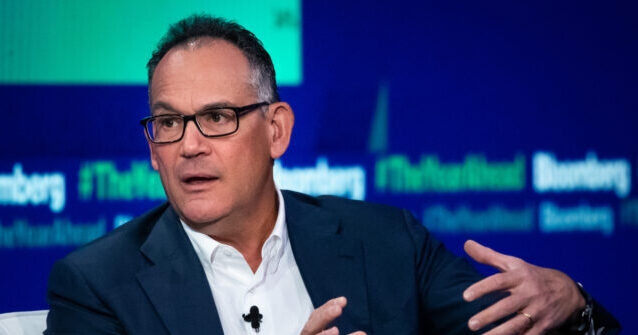
David Simon, who died Sunday at 64 after a battle with pancreatic cancer, was the last of a kind: a builder in an age of talkers, a dealmaker who let the deals speak for themselves, a billionaire who never confused running a great company with saving the world. He built the largest retail real estate empire in the history of American commerce, generated returns of more than 4,500 percent for shareholders, and did it all without signing a single open letter, joining a single CEO coalition, or turning his company into a vehicle for his politics.
In an era when corporate titans competed to out-signal each other — on climate, on racial justice, on elections — Simon was conspicuously absent from the parade. When the 2020 BLM pledge wave swept through corporate America, Simon Property Group sat it out. The company filed no lobbying disclosures. Simon made no headlines for his politics. It appears that he never even went to the World Economic Forum in Davos.
What he made headlines for was deals, and the relentless, almost old-fashioned conviction that if you built something genuinely good, the rest would follow.
That conviction was tested constantly, and for a long time the smart money said he was wrong. The obituary for the American mall has been written and rewritten for the better part of two decades. E-commerce would kill physical retail. Amazon would hollow out the anchor stores. The pandemic would finish off whatever was left.
Commentators who had never negotiated a lease or poured a foundation declared with great confidence that the mall was a dinosaur, that Americans were done browsing, that the future was a warehouse in New Jersey and a cardboard box on your doorstep. Simon never believed it. More importantly, he never stopped acting on his disbelief.
Simon grew up in Indianapolis, the son of Melvin Simon, who along with his brother Herbert had built a regional shopping mall business from the ground up. The family business was in his blood, but Simon took a detour through Wall Street first, earning his MBA from Columbia University and cutting his teeth on mergers and acquisitions during one of the most feverish deal-making periods in American financial history. When he returned to Indianapolis in 1990 to join the family firm as chief financial officer, it was not out of sentiment. The business was cash-poor and debt-heavy, and Simon saw a problem he knew how to solve.
He stabilized the balance sheet, unwound bad partnerships, and in 1993 led the company through an initial public offering that raised nearly a billion dollars — at the time the largest REIT IPO in history. Two years later, at 33, he became CEO. He would hold the job for thirty years, through recessions and pandemics and the endless predictions of his industry’s demise, and he would leave it only when he had no choice.
What followed was three decades of relentless expansion at a moment when conventional wisdom kept insisting the mall was dying. Simon’s answer to the death of the mall was to own more of them, upgrade them, and make them into destinations rather than mere shopping corridors. While others retreated, he invested — adding luxury tenants, high-end restaurants, fitness centers, and entertainment concepts to his properties, betting that Americans still wanted somewhere to go, that experience would draw the foot traffic that pure retail could not. He was right more often than anyone expected, and he was right for longer than anyone predicted.
His acquisition record was staggering. Over his tenure, he spent more than $40 billion buying rivals and assembling a portfolio of 250 properties spanning 206 million square feet across North America, Europe, and Asia. The list of companies he absorbed reads like a history of American retail real estate: DeBartolo Realty, Corporate Property Investors, Chelsea Property Group, the Mills Corporation, Taubman Centers. Each deal was struck on his terms, and several were abandoned when the price wasn’t right — a discipline that saved the company from the fate of competitors who overpaid and eventually collapsed under the debt.
Perhaps the most distinctive element of his strategy was what he did with the retailers themselves. As department stores and mall staples filed for bankruptcy in waves — casualties of e-commerce, changing tastes, and years of underinvestment — Simon did not simply wait for replacements. Along with partners, he acquired the distressed brands outright: Aéropostale, Nautica, Eddie Bauer, J.C. Penney, Forever 21, Lucky Brand, Brooks Brothers. The logic was straightforward and unsentimental. Empty storefronts hurt property values. Owning the tenants meant controlling the vacancies. What looked to some like a lifeline for struggling retailers was, for Simon, a real estate play. It nearly always worked.
His negotiating style was legendary in the industry — fierce, exacting, and not easily forgotten by those on the other side of the table. He was known for his attention to detail, his intolerance for sloppiness, and his ability to walk away from a deal that didn’t meet his terms, however long he had spent pursuing it. He could also be generous and loyal to those who earned his respect. People who worked with him over decades describe someone who was hard to work for and harder to forget. He was, by his own admission, a domineering CEO — and he said it without apology, in the manner of a man who had watched more diplomatic leaders produce worse results.
Through it all, Simon kept his politics to himself. The pressure on major CEOs to take public positions on every cultural and political controversy intensified throughout his tenure, reaching a kind of fever pitch in the years before his death. He appears to have regarded it as a distraction and perhaps even an abdication of fiduciary duty. The company lobbied for nothing. Simon wasn’t a joiner of the causes of the day or a signaler of avant-garde virtues. He wasn’t a Davos man and didn’t show up at the Aspen Ideas Festival. When he attended big events, such as the Milken Global Conference, he talked about his business and defended the viability of brick-and-mortar shopping malls against the perennial doomsayers. When rivals and peers were writing checks to causes and posting earnest statements on corporate websites, Simon was focused on lease rates, anchor tenants, and acquisition targets. It was, in its quiet way, a form of integrity.
His charitable giving reflected personal conviction rather than political positioning. The Simon family foundation donated to higher education, the arts, health causes, and Jewish organizations. When his family announced his death, they directed memorial donations to the Anti-Defamation League, the American Jewish Committee, the UJA Federation of New York, and the Foundation to Combat Antisemitism. The choices said something about what actually mattered to him — and what didn’t.
Simon was diagnosed with pancreatic cancer in 2024 and continued running the company through his treatment, sometimes conducting business from his hospital bed. He had spent years preparing his eldest son Eli, who joined the company in 2019 and took on an expanding role, to succeed him. The board named Eli Simon CEO and president effective the day after his father’s death. The dynasty continues. Whether the type does is less certain.
Since the company’s IPO, Simon Property Group stock has generated total returns of more than 4,500 percent. The malls are still standing. In an age of politically active billionaires and CEOs who seemed to believe their real job was to lecture the rest of us, David Simon spent thirty years building something instead. He seems to have understood, better than almost anyone in his generation, that for a public company CEO, that was enough. That it was, in fact, the whole point.
He is survived by his wife Jackie, their five children — Eli, Rebecca, Hannah, Sam and Noah — and seven grandchildren. He leaves behind 250 properties and 206 million square feet of space where Americans still go to browse, to eat, to gather — proof, stubborn and enduring, that he was right.
Read the full article here