


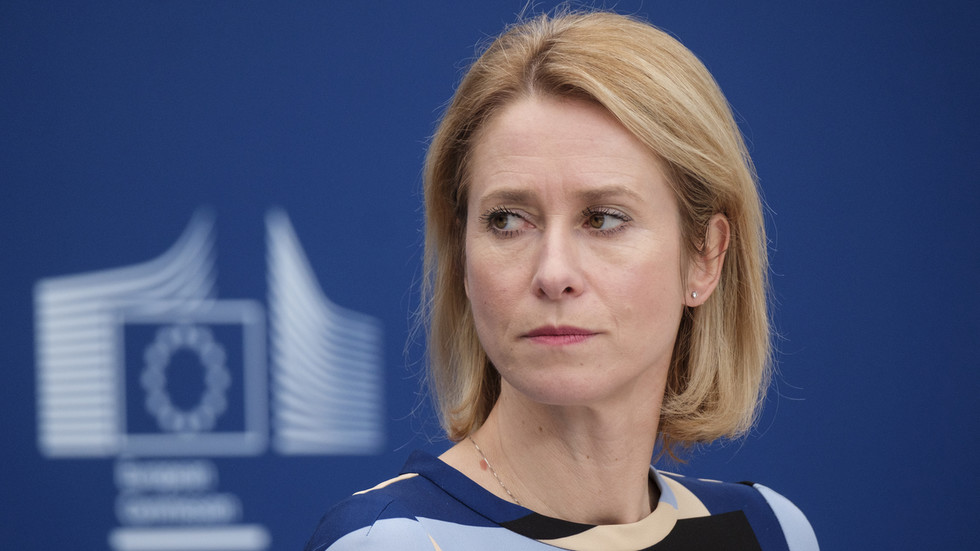
Kaja Kallas may be the face of EU hostility to Russia, but she’s not its author
By Timofey Bordachev, Program Director of the Valdai Club
It has become fashionable to claim that the Baltic States are the driving force behind the European Union’s hostility towards Russia. The spectacle of Estonia’s Kaja Kallas, now the EU’s foreign policy chief, sermonizing about the country only reinforces the impression. Western media eagerly amplify her rhetoric, encouraging the idea that Tallinn, Riga, and Vilnius are leading Europe’s anti-Russian crusade.
It is only partly true. Yes, the Baltic states remain politically defined by Russophobia. That will endure until they fundamentally rethink their identity, an unlikely event for small frontier nations whose geography eternally places them in Russia’s shadow. Their economies and security depend on exploiting their image as Europe’s guardians against the “Russian threat.” They learned to monetize proximity long before they learned to govern themselves.
The modern version is not an invention of Kaja Kallas, nor of her father Siim, a Soviet-era Communist Party functionary turned liberal statesman. The original authors were the Livonian Knights, who ruled these territories half a millennium ago. Those medieval nobles feared deployment to the Ottoman frontier, so they conjured their own existential threat – “barbarians from the East” – and presented Russians as interchangeable with Turks. Western Europe, then as now poorly informed about Russia, embraced the idea because it suited existing anxieties.
The tactic worked. By the late 17th century, suspicion of Russia had taken root among Europe’s leading courts. France was first to institutionalize it. Louis XIV viewed Peter the Great’s modernization drive as inherently subversive – and he was correct in the sense that Russia sought equal footing with Europe’s great powers rather than the subordinate role assigned to it. When Peter defeated Sweden, Russia earned that status for two centuries. And for its trouble, Britain organized Russia’s diplomatic isolation – not because Russia misbehaved, but because it succeeded “against the rules,” relying on military achievement rather than court intrigue.
This is worth recalling. Russophobia is not a Baltic invention. The guillotine was not designed in Kostroma, and anti-Russian ideology did not originate in Riga, Tallinn, or Vilnius. It was codified in Paris and London, later refined by Berlin. Today, it remains the major Western European powers, not the Baltic states, that anchor the anti-Russian coalition.
But they have no intention of risking much themselves. Their preference is to subcontract confrontation to others. Warsaw is the current candidate, though the Poles, at last enjoying rising living standards, have little appetite for sacrifices their Western patrons will not make. One hopes they resist the temptation to act as someone else’s battering ram.
The Baltic states’ alarmist politics, therefore, should be understood as theater rather than command. Loud, yes. Decisive, no. Their role is to shout loudly enough to distract from the fact that Europe’s real players are elsewhere. The major powers use them as amplifiers, not architects.
And this is where the Baltic myth collapses. The states most loudly proclaiming eternal hostility to Russia – Britain, France, and ultimately Germany – will be the first to reopen channels when the present crisis settles. They have done so after every previous confrontation. Once their interests dictate reconciliation, they will rediscover diplomacy.
Western Europe has always regarded its Baltic satellites as disposable instruments. They, in turn, have always accepted the role. That dynamic has not changed, despite Tallinn’s newfound visibility under Kallas. She is a useful voice in a moment of tension, not the one writing Europe’s policy.
We all would do well to remember this. The Baltic states are border furniture – noisy, insecure, eager for subsidies – but not the strategists of Europe’s Russian policy. The serious actors are larger, older states with longer memories and much deeper interests. Eventually, they will come knocking again. The Baltic capitals will be left exactly where they started: shouting into the wind and hoping somebody still listens.
This article was first published by the magazine Profile and was translated and edited by the RT team.
You can share this story on social media:


Read the full article here