


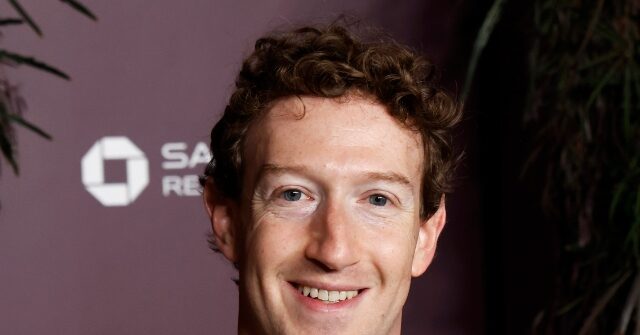
Mark Zuckerberg’s Meta projected that 10 percent of its 2024 revenue, amounting to $16 billion, would come from ads for scams and banned goods, according to internal company documents reviewed by Reuters.
Reuters reports that internal Meta documents reveal that the social media giant has been grappling with a deluge of fraudulent advertisements on its platforms, with the company projecting that it would earn approximately 10 percent of its overall annual revenue — or $16 billion — from running ads for scams and banned goods in 2024. The documents, spanning from 2021 to 2025, show that Meta’s platforms, including Facebook, Instagram, and WhatsApp, have been exposing billions of users to fraudulent e-commerce and investment schemes, illegal online casinos, and the sale of prohibited medical products.
According to one document from December 2024, Meta estimates that it shows its users an average of 15 billion “higher risk” scam advertisements every day. These ads exhibit clear signs of being fraudulent, yet Meta reportedly only bans advertisers if its automated systems predict with at least 95 percent certainty that they are committing fraud. If the company is less certain but still suspects the advertiser is a scammer, it charges higher ad rates as a penalty to dissuade them from placing ads.
The documents also reveal that users who click on scam ads are likely to see more of them due to Meta’s ad-personalization system, which aims to deliver ads based on a user’s interests. This means that victims of fraudulent ads may be more susceptible to encountering additional scams.
In response to the findings, Meta spokesman Andy Stone said that the documents “present a selective view that distorts Meta’s approach to fraud and scams.” His full statement reads:
We aggressively fight fraud and scams because people on our platforms don’t want this content, legitimate advertisers don’t want it and we don’t want it either. Scammers are persistent criminals whose efforts, often driven by ruthless cross-border criminal networks that operate on a global scale, continue to grow in sophistication and complexity. As scam activity becomes more persistent and sophisticated, so do our efforts. Unfortunately, the leaked documents present a selective view that distorts Meta’s approach to fraud and scams by focusing on our efforts to assess the scale of the challenge, not the full range of actions we have taken to address the problem.
Last year, Breitbart News reported that Rep. Tim Walberg (R-MI) slammed Meta for its “unacceptable” answers to questions about ads for both prescription and recreational drugs including cocaine:
Meta, the parent company of social media giants Facebook and Instagram, has come under fire from a Republican congressman for its “unacceptable” response to concerns raised by a bipartisan group of lawmakers about the proliferation of illicit drug advertisements on its platforms. Rep. Tim Walberg expressed his dissatisfaction with Meta’s letter sent to the lawmakers on Monday, claiming that the company failed to address the specific questions they had posed to CEO Mark Zuckerberg in August.
The lawmakers’ questions were prompted by recent reports from the Wall Street Journal and the nonprofit Tech Transparency Project (TTP), which revealed a significant number of Facebook and Instagram ads are directing users to third-party services where they could purchase prescription pills and recreational drugs, such as cocaine. The lawmakers sought to determine the prevalence of these illicit drug ads on Meta’s apps, the number of views and interactions they received, how many minors engaged with them, and the actions Meta has taken against the responsible groups.
In a statement, Walberg criticized Meta’s response, saying, “Meta’s response not only ignores most of the questions posed in our letter, but also refuses to acknowledge that these illicit drug ads were approved and monetized by Meta and allowed to run on their platforms. This is unacceptable. Meta must answer for its negligence and the resulting impact on users, especially children and teens.”
Read more at Reuters here.
Lucas Nolan is a reporter for Breitbart News covering issues of free speech and online censorship.
Read the full article here