







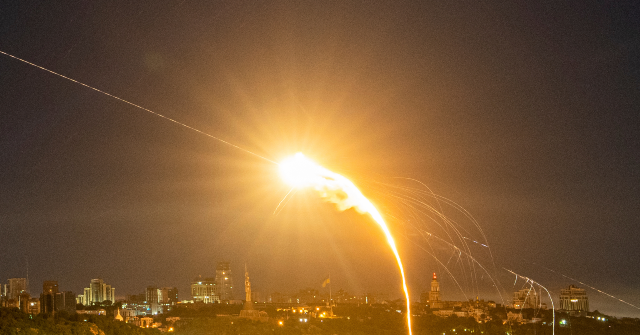
Ukrainian President Volodymyr Zelensky revealed on Wednesday that Ukrainian anti-drone personnel were deployed to the Middle East nations attacked by Iran during Operation Epic Fury and were able to counter Iran’s Shahed drones with their own interceptor technology.
“We sent our military experts to the Middle East, including experts in interceptor drones and experts in electronic warfare, and to some countries we demonstrated how to work with interceptors,” Zelensky said in a post on the Telegram messaging platform.
“Did we destroy Iranian Shaheds? Yes, we did. Did we destroy them in just one country? No, in several. And this, in my opinion, is a success,” he said.
The Shahed is Iran’s series of low-cost one-way “suicide drones” or “kamikaze drones.” Iran has produced Shaheds in vast numbers for itself and allies like Russia, which found the Shaheds so useful on the battlefields of Ukraine that it began producing its own domestic variant after licensing the technology from Iran.
“This is not about a training mission, not about drills, but about support in creating a modern air defense system that can truly work. In those countries that opened their air defense systems to us, our experts were able to very quickly advise how to make their systems stronger,” Zelensky said.
“We also shot down drones with jet engines. This is a very good signal, I think. We have shown that this works. Now it is only a matter of time before we begin mass-producing interceptors that will destroy drones with jet engines,” he added.
Most of Iran’s Shahed drones use propeller engines, but Russia pioneered a jet-powered variant that became known as the Shahed-238 which could fly several times as fast as the original Iranian models and had the ability to track moving targets.
Zelensky said the successful drone interception options in the Middle East added to Ukraine’s national prestige, and could pave the way for “long-term cooperation that really strengthens Ukraine.”
Zelensky said in March that Ukrainian officials had been dispatched to five Middle Eastern countries to bolster their defenses against Iranian drones, but his remarks on Wednesday were his first official confirmation that successful intercepts were performed.
The Ukrainian president also suggested in March that his forces’ expertise at anti-drone warfare could help secure the Strait of Hormuz against Iranian attacks. In return, he has been hoping for increased financial support and more surface-to-air missiles to protect Ukraine against Russian aircraft.
Another Ukrainian official, National Security and Defense Council head Rustem Umerov, said in March that the five countries receiving defensive assistance from Ukraine were Saudi Arabia, Kuwait, Jordan, Qatar, and the United Arab Emirates (UAE).
Reuters reported on Wednesday that the Gulf Arab states are interested in purchasing the remarkably inexpensive Ukrainian-designed interceptor drones produced by Japanese company Terra Drone and Ukrainian startup Amazing Drone.
Iran’s Shahed drones cost as little as $20,000 apiece, and Iran has the capacity to build about 10,000 of them per month. Patriot interceptor missiles cost $4 million each — but Terra Drone’s Terra A1 interceptors cost only about $2,500.
The Terra A1 is a new design that has not been tested in battle yet, but Terra Drone CEO Tokushige Toru said the first shipment of units should be sent to Ukraine for battlefield tests within the next few months.
Tokushige pointed out that Terra Drone already sells surveying drones to Saudi Aramco, Saudi Arabia’s huge state oil company, so it has a presence in the Middle East that could help it quickly distribute Terra A1 interceptors to the Gulf states.
Zelensky said on Friday that Ukraine has “arranged ten-year agreements with three countries” to provide drone defenses in trade for crude oil and diesel. He said these deals were signed in March when the Gulf states came under attack from Iran. The exact details of the agreements have not been revealed to the public.
Read the full article here


