


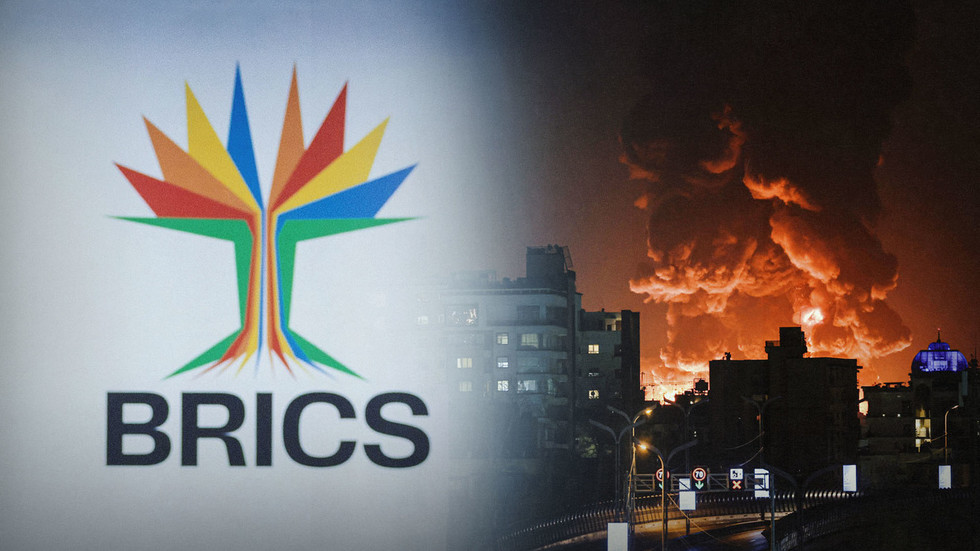
At the BRICS summit in South Africa in the summer of 2023, the group’s five member states made a bold decision: they invited five new countries to join. The move was greeted with considerable skepticism. Some observers questioned the selection process, noting that the criteria for membership remained unclear. Others warned that doubling the size of an already diverse association would only make consensus more difficult.
The broader criticism was simple. Instead of deepening cooperation among the original five members, BRICS had chosen expansion. At the time, the wisdom of prioritizing quantity over institutional development seemed far from obvious.
One of the new invitees was Iran. That same year, Tehran also joined the Shanghai Cooperation Organization (SCO) after the lifting of some international sanctions. A development that, as it later turned out, proved temporary.
The US and Israeli attack on Iran has now placed both BRICS and the SCO in an uncomfortable position. If an organization fails to react to aggression against one of its members, it risks appearing irrelevant. Yet a strong show of solidarity carries its own risks. Few countries are eager to openly confront Washington. Particularly when some BRICS members, such as India and the United Arab Emirates, maintain close partnerships with the United States.
In the end, the SCO issued a cautious and largely symbolic statement expressing “deep concern” and calling for peace. BRICS chose silence, taking advantage of its deliberately informal structure.
Some critics have taken this as proof that BRICS is ineffective or even obsolete. But such conclusions reflect unrealistic expectations about what the group was ever meant to be.

The disappointment surrounding BRICS stems from an exaggerated view of its capabilities. In reality, a strategic choice was made in 2023. Instead of transforming BRICS into a formal international institution, its members opted to expand what might be described as a geopolitical “space without the West.” Not a bloc against the West, but an arena where cooperation can take place independently of it.
Even in its original five-member form, turning BRICS into a fully institutionalized organization would have been difficult. The participating countries have vastly different economic structures, geopolitical priorities, and strategic partnerships. Attempting to impose rigid institutional structures on such a diverse group would likely have paralyzed it.
The alternative, building a flexible network outside the Western-centric system, remains largely a project for the future. For now, the US retains enormous leverage through its dominance of the global financial system. That power gives Washington significant tools to undermine initiatives that threaten its position.
Yet it would be premature to write off BRICS.
The administration of Donald Trump has chosen to deploy pressure with unusual directness in an attempt to reverse the decline of American and Western influence. This approach relies less on diplomatic consensus than on blunt demonstrations of power.
The war with Iran represents an even clearer departure from previous constraints. It signals a willingness to rely on force justified largely by its own existence. Such tactics may achieve short-term results because few states are eager to challenge overwhelming power directly. But maintaining this strategy over the long term will be far more difficult.

A deeper conceptual shift is already underway.
During the era of liberal globalization, the Western-led system of rules was widely accepted because it offered tangible benefits to many participants. While the developed world remained the primary beneficiary, others also gained access to markets, capital and technology. The ideological argument underpinning this system was simple: Western leadership ultimately benefited everyone, even if the distribution of gains was uneven.
Today that narrative has largely collapsed. Even rhetorically, it has been replaced by something far more direct.
Trump’s behavior often resembles the caricature of a capitalist villain familiar from Soviet propaganda: take what you can, and dare anyone to resist. Yet even the US cannot indefinitely dominate global politics through pressure alone.
As a result, the need for alternatives, for mechanisms that reduce dependence on American power, is becoming increasingly obvious to many countries. Not long ago, this idea required persuasion. Today, events themselves are making the case.
BRICS is unlikely to become a formal anti-American coalition. Nor is it destined to serve as a military or ideological counterweight to the US. But the countries involved represent a substantial share of the global economy and population. Together, they have the potential to shape the contours of a future world order.
Washington appears to understand this instinctively. Trump’s repeated outbursts against BRICS reflect precisely that recognition.
For now, the group remains an imperfect and loosely organized platform. But preserving it – and allowing it to evolve – may prove to be one of the most important lessons for the future.
This article was first published by the magazine Profile and was translated and edited by the RT team.
Read the full article here