
Close Menu
The Politic ReviewThe Politic Review
  • News
  • U.S.
  • World
  • Politics
  • Congress
  • Business
  • Economy
  • Money
  • Tech
  • More Articles
Trending

Merz’s own party mulls dumping him – media

May 27, 2026

Ball State U. Staffer Wins $225,000 Settlement After Being Fired for Defending Assassination of Charlie Kirk

May 27, 2026

Dem Sen. Murphy: Iran War Should End ‘Now’ ‘at Any Cost’

May 27, 2026
Facebook X (Twitter) Instagram
  • Donald Trump
  • Kamala Harris
  • Elections 2024
  • Elon Musk
  • Israel War
  • Ukraine War
  • Policy
  • Immigration
Facebook X (Twitter) Instagram
The Politic ReviewThe Politic Review
Newsletter
Wednesday, May 27
  • News
  • U.S.
  • World
  • Politics
  • Congress
  • Business
  • Economy
  • Money
  • Tech
  • More Articles
The Politic ReviewThe Politic Review
  • United States
  • World
  • Politics
  • Elections
  • Congress
  • Business
  • Economy
  • Money
  • Tech
Home»News»War Gaming a Chinese Blockade of Taiwan: The Most Likely Scenario for Conflict
News

War Gaming a Chinese Blockade of Taiwan: The Most Likely Scenario for Conflict

Press RoomBy Press RoomAugust 8, 2025No Comments5 Mins Read
Share Facebook Twitter Pinterest Copy Link LinkedIn Tumblr Email VKontakte Telegram
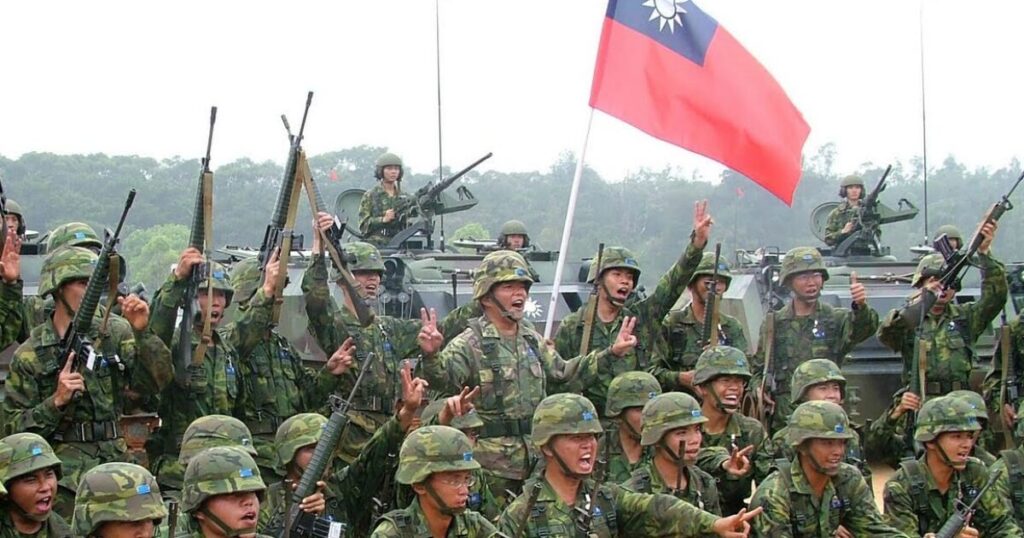
By ​中華民國總統府 – https://www.flickr.com/photos/presidentialoffice/50082394436, CC BY 2.0, https://commons.wikimedia.org/w/index.php?curid=102070625

A conflict over Taiwan has long been viewed as the most likely trigger for war between the United States and China, prompting both sides to study and simulate potential outcomes for decades. Since 2022, attention has increasingly focused on one scenario, the blockade of Taiwan.

Interest surged after China responded to then–U.S. House Speaker Nancy Pelosi’s visit by encircling the island with missile impacts and staging exercises that appeared to simulate a quarantine or blockade. This marked the blockade as a credible and likely operational option in future conflict planning.

A blockade is firmly rooted in Chinese military doctrine as one of five joint campaign types, the “joint blockade campaign” (联合封锁战役). The PLA’s 2006 Science of Campaigns describes it as a coordinated operation involving the Navy, Air Force, Second Artillery, and Army. Strategically, it offers Beijing a way to pressure Taiwan into “reunification” without the risks and heavy losses of an amphibious invasion, while maintaining escalation control.

Analysts believe China may lack the capability for a full invasion but could execute an effective blockade.

The economic stakes are global. A blockade could cripple trade and choke off advanced semiconductor supplies, affecting nearly every country. Since 2022, China has expanded military drills simulating blockades, demonstrating both capability and intent. Uncertainty over how a blockade would unfold continues to drive war gaming to explore potential outcomes.

These simulations draw participants from military planners and think tanks to private-sector analysts, including hedge funds assessing investment risk. Past wargames, such as the Center for Strategic and International Studies’ Taiwan invasion series, played 24 times, demonstrate the value of testing escalation levels, from non-military coast guard actions to full-scale blockades.

The Taiwan blockade scenario endures because it offers a credible “middle option” between the status quo and invasion. China has rehearsed it, and its geopolitical and economic stakes make it vital for governments, militaries, and the private sector to plan for.

In April, a simulated war game in Singapore examined Southeast Asian responses to a hypothetical Chinese blockade of Taiwan. Over two days at a Singapore hotel, about 40 participants, including regional officials, military officers, and security scholars, worked through scenarios to evacuate up to one million Southeast Asian nationals stranded on the island. Initial attempts at a coordinated ASEAN response faltered, but Singapore ultimately emerged as the pivotal player, using its longstanding military training presence in Taiwan to secure airfield access and offer airlifts.

Organized by the International Institute for Strategic Studies, the drill reflected the known positions of nine governments, including Singapore, China, Taiwan, the United States, Indonesia, Vietnam, and the Philippines.

Southeast Asians account for roughly 94% of Taiwan’s foreign population, with Indonesians, Vietnamese, and Filipinos forming the majority. While Singapore denied official involvement, its Project Starlight program has rotated up to 3,000 troops annually through southern Taiwan since 1975, offering valuable training terrain and strategic observation of the Taiwan Strait and South China Sea.

Despite Chinese objections, the arrangement remains central to Singapore’s defense policy. Analysts warn that in a real crisis, Singapore’s forces in Taiwan could be either an asset or a liability, and most ASEAN states still lack the informal military ties to Taipei needed for effective coordination. Experts stress that beyond planning, Southeast Asian nations need real access and relationships with Taiwan’s military to make evacuation plans viable.

In August 2025, the Center for Strategic and International Studies (CSIS) released Lights Out? Wargaming a Chinese Blockade of Taiwan, which found that energy is Taiwan’s greatest vulnerability. The study concluded that a blockade combined with strikes on the electrical grid could cut power generation to just 20 percent of pre-blockade levels, halting all manufacturing.

It also showed that any blockade generates strong escalatory pressures, while most players hesitated to escalate, they often made small moves to signal resolve, prompting counter-escalations.

Casualties were high in nearly all scenarios: even limited escalations caused thousands of deaths, while higher levels cost the United States hundreds of aircraft and dozens of warships. The study determined that Taiwan would require U.S. intervention, as its forces struggled even against a limited Chinese military effort.

The researchers ran 26 iterations, from a blockade using only Chinese nonmilitary forces against a constrained Taiwan to a full-scale war between China and a U.S.-led coalition using all conventional means.

Five were “free play” games, allowing players to escalate, deescalate, or negotiate. Building on CSIS’s 2023 amphibious invasion study, this analysis focused on the blockade as an appealing option for Beijing, one that could pressure Taiwan into “reunification” without the risks of an amphibious assault. The timing is notable, as China has conducted numerous blockade drills since 2022.

During Taiwan’s annual Han Kuang national defense exercise (July 9–18, 2025), the PLA’s Eastern Theatre Command issued daily updates on cross-service drills appearing to mirror Taiwan’s maneuvers. The most significant parallel event occurred in April 2025 with “Strait Thunder-2025A,” which showcased blockade capabilities.

For the first time, “phase two” operations included controlling and blockading maritime traffic to and from Taiwan, along with onboard inspections, unprecedented in the Taiwan Strait. Over 33 hours, 135 aircraft and 38 naval vessels conducted blockade enforcement, precision strikes, and assaults on maritime and ground targets, focusing on key areas and sea lanes.

The PLA drills reinforce the likelihood of a blockade, prompting Taiwan and its allies, particularly the United States, to prepare for this scenario.

Read the full article here

Share. Facebook Twitter Pinterest LinkedIn Tumblr Email Telegram Copy Link

Related Articles

News

Breaking Free of Psyops: Who is Causing the West’s Drug Epidemic?

May 27, 2026
News

It’s Not About “Blood Libel”, It’s About Narrative Control

May 26, 2026
News

War Against The Homeless Continues As Louisiana Cruelly Criminalizes The Unhoused

May 25, 2026
News

Exposing the Iran War Hype: Lessons from a One-Sided Debate with Naomi Wolf

May 24, 2026
News

Be Very Afraid: The Hantavirus and Suicide Dolphins

May 23, 2026
News

Truth Is the First Casualty of War. The Currency Is the Second.

May 23, 2026
Add A Comment
Leave A Reply Cancel Reply

Editors Picks

Ball State U. Staffer Wins $225,000 Settlement After Being Fired for Defending Assassination of Charlie Kirk

May 27, 2026

Dem Sen. Murphy: Iran War Should End ‘Now’ ‘at Any Cost’

May 27, 2026

Breitbart Business Digest: Businesses Are Betting on a Boom

May 27, 2026

GOP CA Governor Hopeful Steve Hilton Says He Won’t Freeze Out ICE

May 27, 2026
Latest News

Spanish police raid ruling party following graft allegations

May 27, 2026

Report: U.S. to Slash Fighter Jets, Strategic Bombers, Warships on Call for NATO in Crisis

May 27, 2026

Federal Court Blocks Alabama Republicans’ Redistricting Plan

May 27, 2026

Subscribe to News

Get the latest politics news and updates directly to your inbox.

The Politic Review is your one-stop website for the latest politics news and updates, follow us now to get the news that matters to you.

Facebook X (Twitter) Instagram Pinterest YouTube
Latest Articles

Merz’s own party mulls dumping him – media

May 27, 2026

Ball State U. Staffer Wins $225,000 Settlement After Being Fired for Defending Assassination of Charlie Kirk

May 27, 2026

Dem Sen. Murphy: Iran War Should End ‘Now’ ‘at Any Cost’

May 27, 2026

Subscribe to Updates

Get the latest politics news and updates directly to your inbox.

© 2026 Prices.com LLC. All Rights Reserved.
  • Privacy Policy
  • Terms of use
  • For Advertisers
  • Contact

Type above and press Enter to search. Press Esc to cancel.