




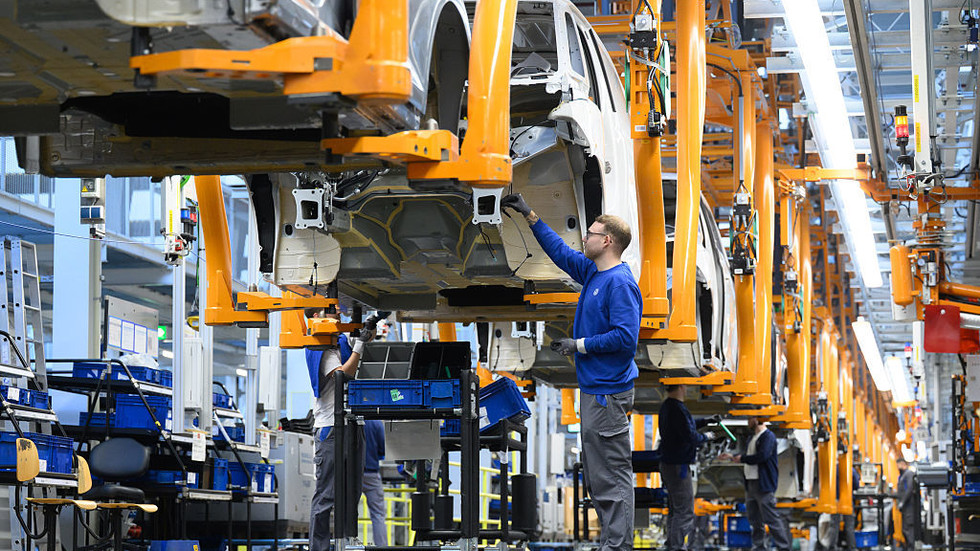
The EU’s largest automaker, Volkswagen (VW), has announced that it will cut about 50,000 jobs in Germany, citing plunging profits, soaring energy costs and mounting trade pressures.
In its annual report on Tuesday, VW said that net income nearly halved in 2025, falling to €6.9 billion (over $8 billion), its weakest result since the 2016 diesel scandal, while revenues slipped to just under €322 billion.
VW will “systematically reduce our costs” in the coming years, executives said, confirming that tens of thousands of positions will be slashed across the group’s German operations by 2030 on top of previously announced headcount reductions. In 2024, the company reached a deal with unions to avoid involuntary redundancies and plant closures at production sites in Germany.
“The year 2025 was characterized by geopolitical tensions, tariffs, and intense competition,” VW’s chief financial officer Arno Antlitz said, adding that 50,000 jobs would be cut by 2030 and that further cost-cutting measures could follow in order to make the automaker more competitive.
Germany’s automotive sector has been struggling amid surging energy prices, sluggish demand in Europe, rising competition from Chinese manufacturers, US tariffs, and a slower than expected transition to electric vehicles. Following the escalation of the Ukraine conflict in 2022, the EU drastically reduced imports of Russian oil and gas, forcing member states to switch to more expensive alternatives. The resulting energy crisis has fueled concerns about the health of the bloc’s largest manufacturing economy and the risk of a further downturn.

Energy markets have faced renewed volatility in recent days following the US-Israeli bombing of Iran and the disruptions to global shipping through the Strait of Hormuz, a key artery for global oil and LNG supplies. Traffic through the straight has reportedly dropped by 80% over the past week. Crude oil and European wholesale gas prices have moved sharply higher, adding further pressure on energy-intensive industries and sparking concerns about the bloc’s energy security.
The situation has prompted some EU politicians to step up calls to reconsider Russia sanctions after President Vladimir Putin warned that Moscow could halt gas supplies ahead of a Brussels’ planned 2027 ban.
The European Commission is reportedly discussing possible emergency measures to shield manufacturers from surging electricity costs, including a review of national energy taxes, grid charges and carbon-pricing mechanisms.
You can share this story on social media:



Read the full article here


