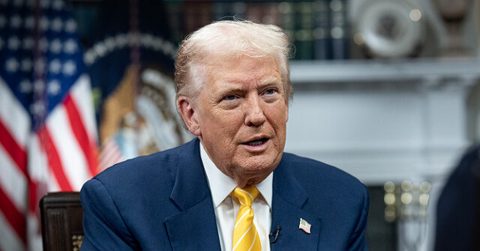

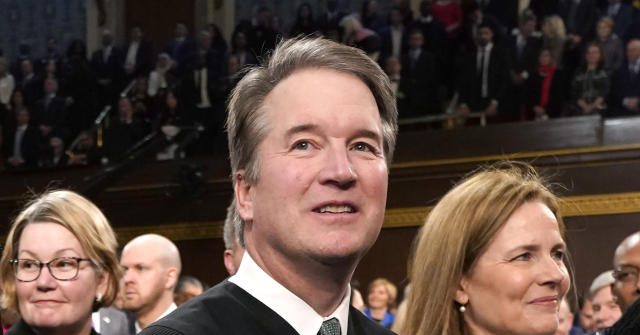
The tariffs that President Donald Trump imposed on 60 countries Thursday night utilize one of the mechanisms that Supreme Court Justice Brett Kavanaugh laid out in the dissent of February’s Supreme Court ruling striking down Trump’s Liberation Day tariffs.
Trump imposed the latest tariffs, ranging from 10-12.5 percent, under Section 301 of the Trade Act of 1974. They follow an investigation under Section 301 finding failure to prevent the importation of goods as a result of forced labor in the respective countries.
Section 301 of the Trade Act of 1974 is one of the pathways forward that Kavanaugh highlighted in the dissent when the Supreme Court struck down Trump’s worldwide International Emergency Economic Powers Act (IEEPA), which he imposed on April 2, 2025.
Kavanaugh wrote:
Although I firmly disagree with the Court’s holding today, the decision might not substantially constrain a President’s ability to order tariffs going forward. That is because numerous other federal statutes authorize the President to impose tariffs and might justify most (if not all) of the tariffs at issue in this case — albeit perhaps with a few additional procedural steps that IEEPA, as an emergency statute, does not require. Those statutes include, for example, the Trade Expansion Act of 1962 (Section 232); the Trade Act of 1974 (Sections 122, 201, and 301); and the Tariff Act of 1930 (Section 338). In essence, the Court today concludes that the President checked the wrong statutory box by relying on IEEPA rather than another statute to impose these tariffs.
The rate for each country is as follows, per Trump’s memorandum:
- Algeria: 12.5 percent
- Angola: 12.5 percent
- Argentina: 10 percent
- Australia: 12.5 percent
- The Bahamas: 12.5 percent
- Bahrain: 12.5 percent
- Bangladesh: 10 percent
- Brazil: 12.5 percent
- Cambodia: 10 percent
- Canada: 10 percent
- Chile: 12.5 percent
- China, People’s Republic of
- Colombia: 12.5 percent
- Costa Rica: 12.5 percent
- Dominican Republic: 12.5 percent
- Ecuador: 10 percent
- Egypt: 12.5 percent
- El Salvador: 10 percent
- European Union: 10-12.5 percent
- Guatemala: 10 percent
- Guyana: 12.5 percent
- Honduras: 10 percent
- Hong Kong, China
- India: 10 percent
- Indonesia: 10 percent
- Iraq: 12.5 percent
- Israel: 12.5 percent
- Japan: 10-12.5 percent
- Jordan: 10 percent
- Kazakhstan: 12.5 percent
- Kuwait: 12.5 percent
- Libya: 12.5 percent
- Malaysia: 10 percent
- Mexico: 10 percent
- Morocco: 12.5 percent
- New Zealand: 12.5 percent
- Nicaragua: 12.5 percent
- Nigeria: 12.5 percent
- Norway: 12.5 percent
- Oman: 12.5 percent
- Pakistan: 10 percent
- Peru: 12.5 percent
- Philippines: 12.5 percent
- Qatar: 12.5 percent
- Russia: 12.5 percent
- Saudi Arabia: 12.5 percent
- Singapore: 12.5 percent
- South Africa: 12.5 percent
- South Korea: 10-12.5 percent
- Sri Lanka: 10 percent
- Switzerland: 10-12.5 percent
- Taiwan: 10-12.5 percent
- Thailand: 12.5 percent
- Trinidad and Tobago: 10 percent
- Türkiye: 12.5 percent
- United Arab Emirates
- United Kingdom: 10 percent
- Uruguay: 12.5 percent
- Venezuela: 12.5 percent
- Vietnam: 12.5 percent
On February 20, hours after the court struck down his IEEPA tariffs, Trump said he would keep all Section 301 and Section 232 tariffs in place and launch additional Section 301 investigations. Those investigations commenced on March 12.
Read the full article here