
Close Menu
The Politic ReviewThe Politic Review
  • News
  • U.S.
  • World
  • Politics
  • Congress
  • Business
  • Economy
  • Money
  • Tech
  • More Articles
Trending

Securing access to Cook Islands’ critical minerals a top priority – new US envoy

July 3, 2026

REPORT: Illegal Alien Truck Driver from Haiti Allegedly Killed PA State Trooper in Crash

July 3, 2026

Red, White, and Boom: 250 Years of American Prosperity

July 3, 2026
Facebook X (Twitter) Instagram
  • Donald Trump
  • Kamala Harris
  • Elections 2024
  • Elon Musk
  • Israel War
  • Ukraine War
  • Policy
  • Immigration
Facebook X (Twitter) Instagram
The Politic ReviewThe Politic Review
Newsletter
Friday, July 3
  • News
  • U.S.
  • World
  • Politics
  • Congress
  • Business
  • Economy
  • Money
  • Tech
  • More Articles
The Politic ReviewThe Politic Review
  • United States
  • World
  • Politics
  • Elections
  • Congress
  • Business
  • Economy
  • Money
  • Tech
Home»World»The next chapter of BRICS has begun
World

The next chapter of BRICS has begun

Press RoomBy Press RoomJuly 3, 2026No Comments6 Mins Read
Share Facebook Twitter Pinterest Copy Link LinkedIn Tumblr Email VKontakte Telegram

The bloc is moving from pure economic cooperation to shaping tomorrow’s security agenda

Not long ago, BRICS was largely seen as an economic acronym – a loose coalition of emerging powers united by their ambition to reshape global finance and give the developing world a stronger voice in international economic governance. Today, that image is rapidly becoming outdated.

As wars spread, supply chains fracture, cyber threats multiply, and established international institutions struggle to keep pace with an increasingly turbulent world, BRICS is expanding its ambitions. What began as an economic partnership is steadily evolving into a platform where major emerging powers discuss not only prosperity, but security.

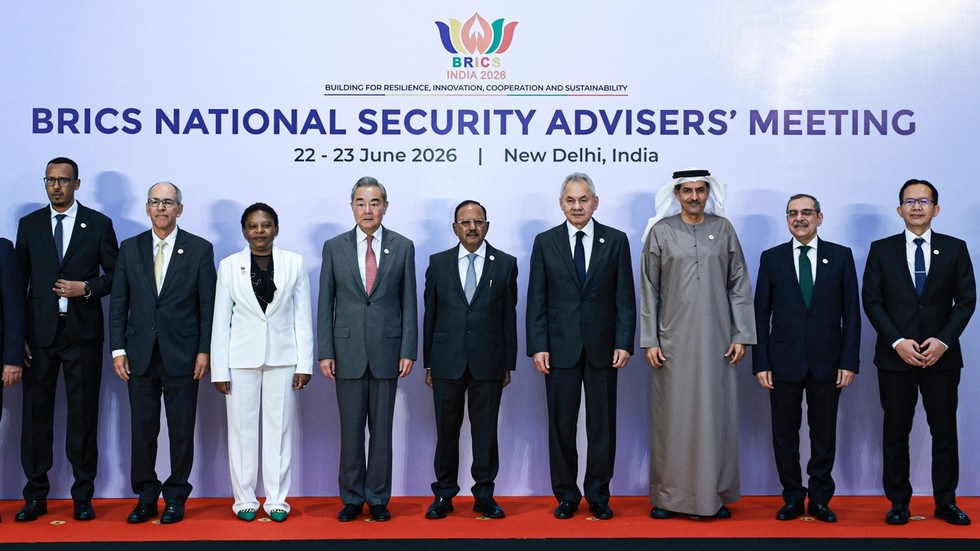
The shift was on full display in New Delhi in late June, where India hosted the 16th BRICS National Security Advisers’ Meeting, one of the flagship events of its 2026 presidency of the group.

The two-day meeting was far more than a routine diplomatic gathering; it offered an early glimpse of what could become a more structured security dimension within the expanded BRICS framework.

It also set the stage for the BRICS Leaders’ Summit this September, where security cooperation is expected to feature more prominently than ever before.

Security beyond battlefields

The timing could hardly have been more consequential. Held in the immediate aftermath of the Iran war, the meeting brought together countries whose priorities do not always align and whose bilateral relationships can be complex. Yet the message emerging from New Delhi was clear: as the international landscape grows more fragmented, security challenges increasingly demand broader channels of consultation and cooperation.


Officially, participants focused on what they described as “non-traditional security challenges confronting the world today.” The agenda extended well beyond conventional military affairs to include energy security, food security, resilient supply chains, cybersecurity, terrorism, emerging technologies exploited by extremist organizations, and the growing effects of climate-related instability.

These priorities illustrate how security itself is being redefined. Economic resilience, technological sovereignty, and critical infrastructure have become inseparable from national defense. For developing economies in particular, disruptions to shipping routes, cyberattacks, or interruptions in food and energy supplies can generate consequences as severe as traditional military conflict.

India’s own priorities reflected these concerns. New Delhi emphasized protecting global supply chains during periods of armed conflict, strengthening counterterrorism cooperation, improving responses to cyber threats, and encouraging discussion of emerging technologies such as drone warfare. These are practical issues affecting every major economy regardless of political alignment.

The meeting concluded with an agreement to deepen information sharing, strengthen institutional capacities, and improve coordination among BRICS law enforcement agencies in addressing terrorism and cyber-risks. Participants also reaffirmed their commitment to combating terrorism in all its forms.

Unity without uniformity

Unsurprisingly, developments in the Middle East served as an important backdrop to discussions, even if they were not always addressed publicly.

BRICS members approached the regional crisis from different perspectives. Russia, China, and Iran generally emphasized questions of external intervention, regional power balances, and sovereignty. India adopted a more cautious position, consistently emphasizing diplomacy, de-escalation, and the economic costs of prolonged instability.


BRICS ‘up and running’: How India will navigate US-Iran conflict and tensions with Trump – C. Uday Bhaskar

This balancing act reflects India’s broader foreign policy. Maintaining productive relationships with Gulf Arab states, Israel, Iran, Western partners, and fellow BRICS members requires careful diplomacy rather than ideological alignment. Such flexibility has become a defining feature of India’s external engagement.

Rather than preventing cooperation, these differences demonstrate one of BRICS’ distinctive characteristics. Unlike military alliances that often require members to adopt common political positions, the group operates primarily through consensus-building among states with diverse interests. Agreement is therefore often narrower but potentially more durable because it emerges through negotiation rather than bloc discipline.

The meeting also provided opportunities for bilateral diplomacy. Indian National Security Adviser Ajit Doval met with Chinese Foreign Minister Wang Yi, while Wang also held discussions with Iranian officials regarding regional developments and the importance of preserving ceasefire arrangements and supporting regional dialogue.

New visions of global security

Opening the meeting, Ajit Doval described a world characterized by military conflicts, geopolitical uncertainty, economic pressures, and rapidly evolving technology. He argued that existing international institutions are finding it increasingly difficult to respond effectively to today’s interconnected challenges, while broader multilateral cooperation has weakened.

Wang Yi similarly argued that territorial integrity and non-interference remain fundamental principles of international relations. He called for a vision of common, comprehensive, and inclusive security rather than one based primarily on exclusive alliances. According to the Chinese perspective, dialogue should address the underlying causes of regional conflicts while taking into account the security concerns of all parties.

Russian Security Council Secretary Sergey Shoigu likewise argued for stronger institutional mechanisms within BRICS capable of responding collectively to emerging crises. He suggested that today’s international institutions warrant careful reassessment in light of changing geopolitical realities and advocated greater technological and information independence among BRICS members. He also identified biological security and information resilience as areas requiring continued cooperation, while expressing longstanding Russian concerns regarding foreign influence operations and strategic competition in the information domain.

Although these perspectives differ in emphasis, they share a common theme: the belief that contemporary global governance requires adaptation to a more multipolar international environment.


Russia isn’t isolated – ASEAN has just proved it

The real test lies ahead

Perhaps the meeting’s greatest significance lies less in the specific agreements reached than in the fact that it occurred at all.

BRICS now includes countries whose bilateral relationships are sometimes complicated and whose foreign policy priorities might diverge. Some members maintain close ties with Western powers; others define themselves partly in opposition to Western influence. Several possess longstanding regional rivalries. Yet they continue to meet, negotiate, and identify practical areas for cooperation.

BRICS is unlikely to evolve into a formal military alliance or collective defense organization. Nor is consensus guaranteed on every major geopolitical issue. Nevertheless, the group’s expanding security dialogue reflects a broader transformation in international politics. As economic, technological, environmental, and military challenges become increasingly interconnected, governments are seeking additional forums through which they can coordinate policy outside traditional institutional frameworks.

Whether BRICS ultimately becomes a durable pillar of global governance will depend on its ability to deliver tangible results while accommodating the diversity of its membership. The New Delhi meeting suggested that, despite persisting differences, there remains considerable space for dialogue on issues where national interests converge.

The evolution of BRICS into a forum addressing both economic and security questions is therefore worth watching – not because it has resolved today’s geopolitical divisions, but because it represents one of the clearest attempts to manage them within an increasingly multipolar world.

Read the full article here

Share. Facebook Twitter Pinterest LinkedIn Tumblr Email Telegram Copy Link

Related Articles

World

Securing access to Cook Islands’ critical minerals a top priority – new US envoy

July 3, 2026
World

REPORT: Illegal Alien Truck Driver from Haiti Allegedly Killed PA State Trooper in Crash

July 3, 2026
World

England Cite Spying Fears as World Cup Trip to Mexico City Delayed

July 3, 2026
World

Ukrainian instant noodles linked to EU salmonella outbreak

July 3, 2026
World

Not Funny: Erdogan Has Turkish Comedian Arrested for ‘Insulting’ Him and Islam

July 3, 2026
World

Merz’s ratings plummet to record low

July 3, 2026
Add A Comment
Leave A Reply Cancel Reply

Editors Picks

REPORT: Illegal Alien Truck Driver from Haiti Allegedly Killed PA State Trooper in Crash

July 3, 2026

Red, White, and Boom: 250 Years of American Prosperity

July 3, 2026

Schweizer: More than a Million ‘U.S. Citizens’ Being Raised in China Due to Birth Tourism

July 3, 2026

The next chapter of BRICS has begun

July 3, 2026
Latest News

Rep. Hank Johnson: If Democrats Don’t Win Midterms, ‘We’re Going to Be Back in the Cotton Fields’

July 3, 2026

England Cite Spying Fears as World Cup Trip to Mexico City Delayed

July 3, 2026

Electrocuted: Ford Reports 40% Drop in EV Sales for the Second Quarter

July 3, 2026

Subscribe to News

Get the latest politics news and updates directly to your inbox.

The Politic Review is your one-stop website for the latest politics news and updates, follow us now to get the news that matters to you.

Facebook X (Twitter) Instagram Pinterest YouTube
Latest Articles

Securing access to Cook Islands’ critical minerals a top priority – new US envoy

July 3, 2026

REPORT: Illegal Alien Truck Driver from Haiti Allegedly Killed PA State Trooper in Crash

July 3, 2026

Red, White, and Boom: 250 Years of American Prosperity

July 3, 2026

Subscribe to Updates

Get the latest politics news and updates directly to your inbox.

© 2026 Prices.com LLC. All Rights Reserved.
  • Privacy Policy
  • Terms of use
  • For Advertisers
  • Contact

Type above and press Enter to search. Press Esc to cancel.