
Close Menu
The Politic ReviewThe Politic Review
  • News
  • U.S.
  • World
  • Politics
  • Congress
  • Business
  • Economy
  • Money
  • Tech
  • More Articles
Trending

Four Tons of Meth Seized in Four Inspections at Texas Border Crossings in June

July 1, 2026

U.S. Manufacturing Grows Amid Strong Demand, Declining Inflationary Pressures

July 1, 2026

Democrat Nominee Chris Rabb Trashes Declaration of Independence: ‘This Is a Nation Born on Stolen Land and Stolen Labor’

July 1, 2026
Facebook X (Twitter) Instagram
  • Donald Trump
  • Kamala Harris
  • Elections 2024
  • Elon Musk
  • Israel War
  • Ukraine War
  • Policy
  • Immigration
Facebook X (Twitter) Instagram
The Politic ReviewThe Politic Review
Newsletter
Wednesday, July 1
  • News
  • U.S.
  • World
  • Politics
  • Congress
  • Business
  • Economy
  • Money
  • Tech
  • More Articles
The Politic ReviewThe Politic Review
  • United States
  • World
  • Politics
  • Elections
  • Congress
  • Business
  • Economy
  • Money
  • Tech
Home»Business»The Hormuz Shock And The Coming Supply Crunch
Business

The Hormuz Shock And The Coming Supply Crunch

Press RoomBy Press RoomJuly 1, 2026No Comments6 Mins Read
Share Facebook Twitter Pinterest Copy Link LinkedIn Tumblr Email VKontakte Telegram

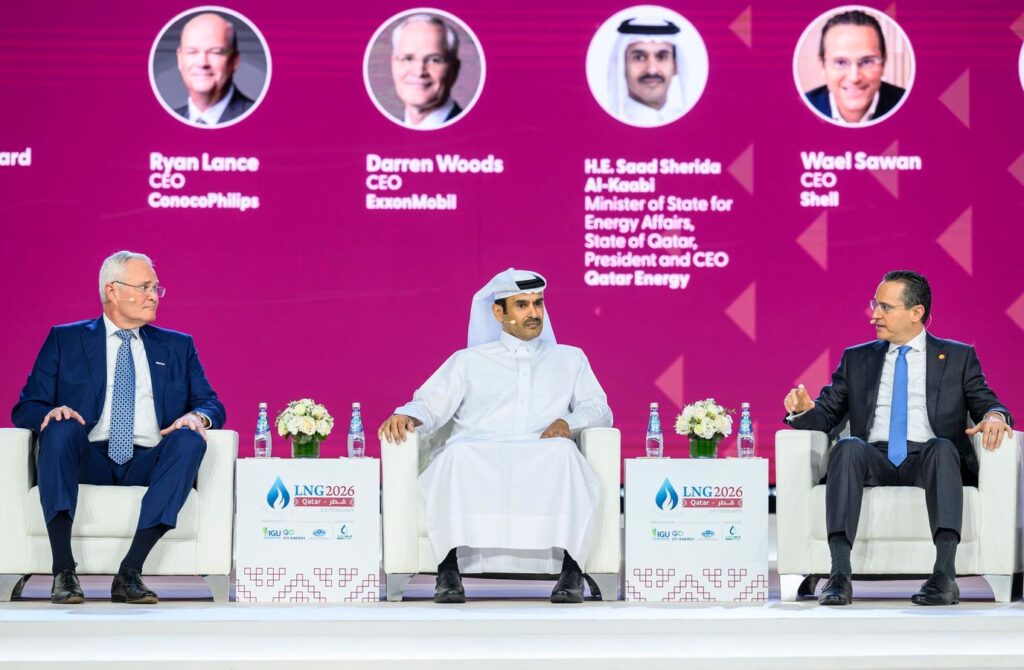
Darren Woods, Chairman and CEO of ExxonMobil, Saad Sherida Al-Kaabi, Minister of State for Energy Affairs of Qatar and President and CEO of QatarEnergy, and Wael Sawan, CEO of Shell, attend the opening plenary panel session of the 21st International Conference & Exhibition on Liquefied Natural Gas (LNG2026) at the Qatar National Convention Centre (QNCC) in Doha, Qatar, on February 2, 2026. (Photo by Noushad Thekkayil/NurPhoto via Getty Images)

NurPhoto via Getty Images

The new Shell LNG Outlook 2026 published on June 30 carries a clear message: The world’s current energy realities dictate that reliable energy infrastructure and steady policy matter more than ever. The report’s modeling analysis in the wake of a prolonged disruption of LNG flows through the Strait of Hormuz shows how quickly global energy flows can be choked and why the industry cannot afford another decade of policy whiplash and ongoing underinvestment in new supplies.

Global LNG Shows Resilience in the Face of Crisis

Shell’s outlook indicates that the result of the Middle East crisis – including the major damage suffered at Qatar’s massive Ras Laffan LNG export facilities – for 2026 could be flat or even slightly negative year-over-year LNG trade growth. That outcome would be the first contraction after more than a decade of steady expansion. The resulting spiking prices have left buyers scrambling for spot cargoes, leaving the market to rely on every flexible tool available: U.S. export surges, inter-basin diversions, huge storage draws, and fuel switching.

The system has shown remarkable resilience even under these stresses thanks to the diversity of supply sources and the growing share of term contracts. But resilience is not the same as security. As Shell pointedly states, the Hormuz disruption “highlights need for sustained infrastructure investment and policy stability.” Certainly, in the U.S. and other parts of the world, achieving either or both of these goals has proved challenging, to put it mildly.

The long-term picture in the Shell report is equally sobering. Global LNG demand is projected to rise by about 65 percent by 2050, reaching nearly 700 million tons per annum (MTPA). Asia remains the major demand engine, driven by economic growth, coal-to-gas switching in power generation, rising industrial needs, and the massive new power loads from data centers and AI infrastructure. Asia’s emerging economies alone face a structural supply gap that Shell estimates at roughly 300 MTPA already in 2025 and growing to around 400 MTPA by 2030 – continuing to widen through mid-century.

RAS LAFFAN INDUSTRIAL CITY, QATAR – MARCH 3: A picture of Qatar Energy’s operating facilities on March 3, 2026 in Ras Laffan Industrial City, Qatar. Qatar Energy announced a complete halt to liquefied natural gas (LNG) production at its Ras Laffan and Mesaieed facilities on March 2, 2026, after Iranian attacks targeted energy facilities. (Photo by Getty Images)

Getty Images

Here is where the report’s most critical warning emerges. Even with all the projects currently under construction and the record pace of U.S. final investment decisions in recent years, Shell’s modeling shows global LNG supply beginning to fall short of demand around 2037, then steadily widening thereafter. By 2050 the shortfall in various scenarios ranges from 100 to 300 MTPA depending on how aggressively new capacity is sanctioned. The result is a looming structural deficit that will lead to higher prices, greater reliance on higher emitting alternatives in some regions, and heightened geopolitical risk for importing nations.

The U.S. Is The LNG Supply Bright Spot

The United States is the clear bright spot on the supply side. The recent aggressive expansion in American LNG exports has already reshaped global trade flows, with the U.S. on track to deliver over 1,300 cargoes annually by the mid-2030s. U.S. producers and exporters stepped up during the previous crisis resulting from the 2022 Russian supply shock and have done so again in response to the current Hormuz pressures, demonstrating the value of a large, flexible, market-driven supply base.

But even U.S. growth has limits without continued policy support like that which has been provided by the Trump administration over the last 18 months. Permitting reform, predictable environmental reviews, and rejection of arbitrary “pauses” and delays like those seen during the Biden years are essential if America is to maintain its role as the world’s swing supplier of first – and last – resort.

Though not inevitable, the looming supply gap Shell projects is the predictable consequence of years in which investment signals were muddied by regulatory uncertainty, activist litigation, and unrealistic net-zero mandates that treated natural gas as a problem rather than a solution. Shell’s data makes the case that sustained demand growth requires sustained infrastructure investment. The needed massive new investment will not materialize at needed scale if developers cannot count on stable rules, timely approvals, and a reasonable expectation of earning a return.

LNG And Europe: A Cautionary Tale

Europe’s experience offers a cautionary tale. After the 2022 crisis, the continent rushed to build regasification capacity and lock in U.S. and other LNG supplies. Those terminals now sit ready, but long-term contracting and new upstream investment remain hampered by mixed policy signals on the future role of gas. Asia cannot afford the same hesitation. Countries across South and Southeast Asia are counting on affordable, reliable gas to power their economies and improve air quality. They need partners who will actually build the infrastructure rather than lecture them about timelines that ignore their development needs.

The Hormuz scenario also underscores a broader truth: energy security and climate goals are not in conflict when policy is rational. LNG is already the lowest-carbon way to move natural gas across oceans. Expanding its use displaces coal in Asia and supports the integration of intermittent renewables by providing flexible backup. The same infrastructure investments that close the projected supply gap will also deliver lower emissions intensity through better methane management and more efficient facilities.

The Looming LNG Supply Gap Won’t Close Itself

Policymakers who continue to treat LNG development as optional or temporary and make major policy decisions based on the demands of party-supporting activists play a dangerous game. The market is sending a clear signal: demand is real, it is growing, and it remains resilient even through major international crises. Supply will only keep pace if capital is allowed to flow without constant political interference. The United States, with its abundant resources and robust, dynamic private sector, is best positioned to lead that effort if Washington allows it.

PORT SULPHUR, LA – FEBRUARY 26: Shown is an aerial view of Venture Global’s Plaquemines LNG export facility on February 26, 2024 in Port Sulphur, La. (Photo by Ricky Carioti/The Washington Post via Getty Images)

The Washington Post via Getty Images

Shell’s 2026 Outlook constitutes a de facto advocacy call for energy realism. The world needs more LNG infrastructure, built on time and on budget, and doing that will require policies that accommodate rather than obstruct the buildout. The reality is that chokepoints like the Strait of Hormuz will always exist; the best defense is diversified, abundant supply backed by durable, consistently applied investment frameworks. One thing is certain: The gap which Shell’s analysis shows opening up around 2037 will not close itself.

Read the full article here

Share. Facebook Twitter Pinterest LinkedIn Tumblr Email Telegram Copy Link

Related Articles

Business

Target Plus Dials Up The Plus As New Brands Join Its Invite-Only Marketplace

July 1, 2026
Business

Why Axsome Stock Has Doubled In Nine Months

July 1, 2026
Business

Elon Musk No Longer A Trillionaire As SpaceX Stock Falls

July 1, 2026
Business

Palantir Billionaire Karp Blasts AI Industry As ‘Effing Insane’

July 1, 2026
Business

Details Slowing Leaking About Taylor Swift And Travis Kelce’s New York Wedding

July 1, 2026
Business

Trump discloses $1.4 billion crypto profits

July 1, 2026
Add A Comment
Leave A Reply Cancel Reply

Editors Picks

U.S. Manufacturing Grows Amid Strong Demand, Declining Inflationary Pressures

July 1, 2026

Democrat Nominee Chris Rabb Trashes Declaration of Independence: ‘This Is a Nation Born on Stolen Land and Stolen Labor’

July 1, 2026

How the EU uses polls to manufacture consent

July 1, 2026

The Hormuz Shock And The Coming Supply Crunch

July 1, 2026
Latest News

Nolte: Glorious AI Brings Gene Wilder ‘Back to Life’ as Willy Wonka

July 1, 2026

Greece: Five Injured in Firebomb Attacks on Homes of Governing Conservative Party Members

July 1, 2026

FCC Working to Streamline Satellite, Earth Station Licensing for ‘America’s Growing Commercial Space Economy’

July 1, 2026

Subscribe to News

Get the latest politics news and updates directly to your inbox.

The Politic Review is your one-stop website for the latest politics news and updates, follow us now to get the news that matters to you.

Facebook X (Twitter) Instagram Pinterest YouTube
Latest Articles

Four Tons of Meth Seized in Four Inspections at Texas Border Crossings in June

July 1, 2026

U.S. Manufacturing Grows Amid Strong Demand, Declining Inflationary Pressures

July 1, 2026

Democrat Nominee Chris Rabb Trashes Declaration of Independence: ‘This Is a Nation Born on Stolen Land and Stolen Labor’

July 1, 2026

Subscribe to Updates

Get the latest politics news and updates directly to your inbox.

© 2026 Prices.com LLC. All Rights Reserved.
  • Privacy Policy
  • Terms of use
  • For Advertisers
  • Contact

Type above and press Enter to search. Press Esc to cancel.