
Close Menu
The Politic ReviewThe Politic Review
  • News
  • U.S.
  • World
  • Politics
  • Congress
  • Business
  • Economy
  • Money
  • Tech
  • More Articles
Trending

Florida Democrat Frederica Wilson not running for reelection

May 29, 2026

Romania drone uproar a diversion from Zelensky’s ‘bloody terrorist attack’ in Starobelsk – Moscow

May 29, 2026

Verdict Due in Trial of Man Who Admits Plot to Attack a Taylor Swift Concert in Vienna

May 29, 2026
Facebook X (Twitter) Instagram
  • Donald Trump
  • Kamala Harris
  • Elections 2024
  • Elon Musk
  • Israel War
  • Ukraine War
  • Policy
  • Immigration
Facebook X (Twitter) Instagram
The Politic ReviewThe Politic Review
Newsletter
Friday, May 29
  • News
  • U.S.
  • World
  • Politics
  • Congress
  • Business
  • Economy
  • Money
  • Tech
  • More Articles
The Politic ReviewThe Politic Review
  • United States
  • World
  • Politics
  • Elections
  • Congress
  • Business
  • Economy
  • Money
  • Tech
Home»Economy»The Cost of Money: Coinage, Fiat Power, and the Quiet Corruption of Value
Economy

The Cost of Money: Coinage, Fiat Power, and the Quiet Corruption of Value

Press RoomBy Press RoomMay 29, 2026No Comments6 Mins Read
Share Facebook Twitter Pinterest Copy Link LinkedIn Tumblr Email VKontakte Telegram

There is something almost absurd about a government minting money at a loss. A coin—the most basic unit—becomes instead a confession, not just of inefficiency, but of a deeper fracture between what money is supposed to represent and what it has become.

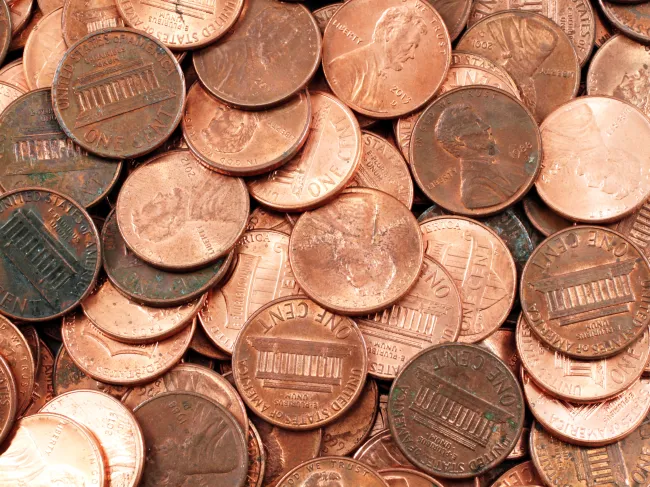
The American penny collapsed under that weight—3.69 cents for every penny minted. Thus, it cost multiples of its face value to produce—a financial contradiction sustained for years out of habit and political inertia. Now the nickel stands in the same position, costing far more to mint than it is worth. This is not a marginal accounting problem, it is a visible symptom of a system that no longer disciplines itself.

In any private enterprise, producing goods at three times their sale price would be unsustainable. In public finance, it persists year after year. The losses are absorbed, diffused across taxpayers, and hidden within a monetary system capable of expanding to cover them. The question is not why it happens once, the question is why it continues. The answer leads directly to the structure of modern money and to the role of the Federal Reserve.

Fiat currency is money by decree. It has no intrinsic value, no material anchor, no origination from market processes, no constraint beyond policy and confidence. That design offers flexibility, but it also removes the natural limits that once enforced discipline. When coins were made of silver or gold, their production costs imposed a boundary. You could debase them—as empires often did—but not without consequence. Today, the constraint is political will, and that is far easier to erode.

The result is a system where contradictions can persist indefinitely. A nickel can cost 13.78 cents to produce and still circulate as five. The gap between cost and value does not force correction because value itself is no longer grounded in cost. It is declared, maintained, and defended by institutional authority.

Historically, this gap has always been dangerous. In the later centuries of the Roman Empire, emperors reduced the silver content of the denarius until the coin became a thin veneer over base metal. The currency retained its face value in law, but not in substance. Prices rose, trust eroded, and economic life became distorted. The state responded not by restoring integrity, but by enforcing acceptance.

The United States has followed a more gradual version of this trajectory. The Coinage Act of 1965 removed silver from everyday coinage, replacing it with cheaper metals. It was a practical decision in response to rising silver prices, but it marked a turning point. Money was no longer something with inherent worth, it became something defined entirely by fiat.

Subsequent experiments only reinforced this shift. The 1974 aluminum cent experiment attempted to preserve the penny by altering its substance. The 1943 steel cent production replaced copper with steel during wartime shortages. Each move followed the same pattern. When reality pressures the system, the system adjusts the material rather than the premise. Today, even that pretense is fading. The government no longer tries to align the cost of coinage with its value, it simply produces at a loss and continues.

This is where inefficiency becomes corruption, not in the sense of hidden bribery or scandal, but in the structural sense. Incentives no longer reward correction. Politicians avoid eliminating coins because it appears trivial or risks public annoyance. Industrial stakeholders benefit from continued production. Bureaucracies preserve their mandates. No single actor needs to conspire. The system produces the outcome on its own.

The Federal Reserve does not mint coins, but it makes this environment possible. By managing liquidity, trying to absorb shocks, and expanding the monetary base when deemed necessary, it ensures that losses never force systemic change. The discipline that would exist in a constrained system is replaced by a capacity unable to limit contraction.

This is the defining feature of fiat money at scale. It can tolerate irrationality at the margins because it controls the center. It can produce coins at a loss, expand credit beyond savings, and sustain asset prices disconnected from underlying value, all without immediate collapse. But tolerance is not the same as stability, it is a delay mechanism.

The defense of this system is always the same; it provides flexibility and it prevents the illusion a crisis does not become a catastrophe. It allows intervention when their system fails. These are grotesque advantages. They come with a cost that is less visible and more cumulative. Each intervention weakens the link between price and reality. Each expansion of money supply reduces the informational value of money itself.

The nickel that costs 13.78 cents is not an isolated absurdity, it is a clear, physical example of that weakening. This exposes the gap between nominal value and real cost in a way that no policy statement can obscure.

And it reveals something else: The system no longer even attempts to resolve the contradiction. Instead of eliminating the nickel, policymakers discuss altering its composition again, repeating the familiar pattern of adjusting the substance to preserve the symbol. The form of money is protected even as its logic erodes.

This is how systems decline, not through dramatic collapse, but through the accumulation of tolerated inconsistencies: A coin that costs more than it is worth, a currency that steadily loses purchasing power, a financial structure increasingly detached from physical production. Each element is manageable. Together they form a trajectory.

The disappearance of the penny was not a bold reform, it was an admission that the arithmetic could no longer be ignored. The nickel will face the same reckoning, not because of foresight, but because the numbers will eventually force the issue.

The deeper question remains unresolved. If money can be created without cost, expanded without limit, and maintained despite contradiction, what anchors its value beyond belief, and what happens when belief begins to erode.

A small coin offers an uncomfortable answer. Money no longer measures value in market usage, it reflects a system of authority, policy, and managed perception. As long as that system holds, the contradiction can persist. When it weakens, the contradictions become visible all at once.

The nickel is not a trivial object, it carries a larger truth. When the cost of creating money exceeds its market value, the problem is not the coin, it is the definition of value itself.

Image Source: Adobe Stock

Note: The views expressed on Mises.org are not necessarily those of the Mises Institute.


Read the full article here
Share. Facebook Twitter Pinterest LinkedIn Tumblr Email Telegram Copy Link

Related Articles

Economy

Nolte: CBS Lost $40 Million on Stephen Colbert, Profits $15 Million with Byron Allen

May 29, 2026
Economy

Wasserman Schultz: People Appreciate that, Under Biden, We Passed Laws to Make Things More Affordable

May 29, 2026
Economy

GOP Rep. Huizenga Touts Gas Tax Holiday

May 29, 2026
Economy

Massachusetts Dem. Governor Protects Dangerous Migrants, Discards Young Americans

May 29, 2026
Economy

Breitbart Business Digest: Never Mind the Sentiment, Consumers Are Alright

May 29, 2026
Economy

Bessent Confirms Treasury Working on Trump $250 Bills, Congress Needs to Approve

May 28, 2026
Add A Comment
Leave A Reply Cancel Reply

Editors Picks

Romania drone uproar a diversion from Zelensky’s ‘bloody terrorist attack’ in Starobelsk – Moscow

May 29, 2026

Verdict Due in Trial of Man Who Admits Plot to Attack a Taylor Swift Concert in Vienna

May 29, 2026

Vance’s Anti-Fraud Task Force Racks Up Wins Against SNAP Fraud

May 29, 2026

Mike Johnson’s longtime chief of staff to depart in June

May 29, 2026
Latest News

Eurasia is done being managed from the outside

May 29, 2026

FIFA Under Investigation over Sky High World Cup Ticket Prices After Fan Backlash

May 29, 2026

Nolte: CBS Lost $40 Million on Stephen Colbert, Profits $15 Million with Byron Allen

May 29, 2026

Subscribe to News

Get the latest politics news and updates directly to your inbox.

The Politic Review is your one-stop website for the latest politics news and updates, follow us now to get the news that matters to you.

Facebook X (Twitter) Instagram Pinterest YouTube
Latest Articles

Florida Democrat Frederica Wilson not running for reelection

May 29, 2026

Romania drone uproar a diversion from Zelensky’s ‘bloody terrorist attack’ in Starobelsk – Moscow

May 29, 2026

Verdict Due in Trial of Man Who Admits Plot to Attack a Taylor Swift Concert in Vienna

May 29, 2026

Subscribe to Updates

Get the latest politics news and updates directly to your inbox.

© 2026 Prices.com LLC. All Rights Reserved.
  • Privacy Policy
  • Terms of use
  • For Advertisers
  • Contact

Type above and press Enter to search. Press Esc to cancel.