
Close Menu
The Politic ReviewThe Politic Review
  • News
  • U.S.
  • World
  • Politics
  • Congress
  • Business
  • Economy
  • Money
  • Tech
  • More Articles
Trending

Israel ‘sacrificing global economy’ to prolong war on Iran – professor

June 3, 2026

NBA Star Stephen Curry Signs Endorsement Deal with Chinese Company Li-Ning

June 3, 2026

Booker: Democrats Will Force Republicans to Vote on Anti-Weaponization Fund

June 3, 2026
Facebook X (Twitter) Instagram
  • Donald Trump
  • Kamala Harris
  • Elections 2024
  • Elon Musk
  • Israel War
  • Ukraine War
  • Policy
  • Immigration
Facebook X (Twitter) Instagram
The Politic ReviewThe Politic Review
Newsletter
Wednesday, June 3
  • News
  • U.S.
  • World
  • Politics
  • Congress
  • Business
  • Economy
  • Money
  • Tech
  • More Articles
The Politic ReviewThe Politic Review
  • United States
  • World
  • Politics
  • Elections
  • Congress
  • Business
  • Economy
  • Money
  • Tech
Home»World»The age of American nuclear privilege is over
World

The age of American nuclear privilege is over

Press RoomBy Press RoomJuly 22, 2025No Comments5 Mins Read
Share Facebook Twitter Pinterest Copy Link LinkedIn Tumblr Email VKontakte Telegram

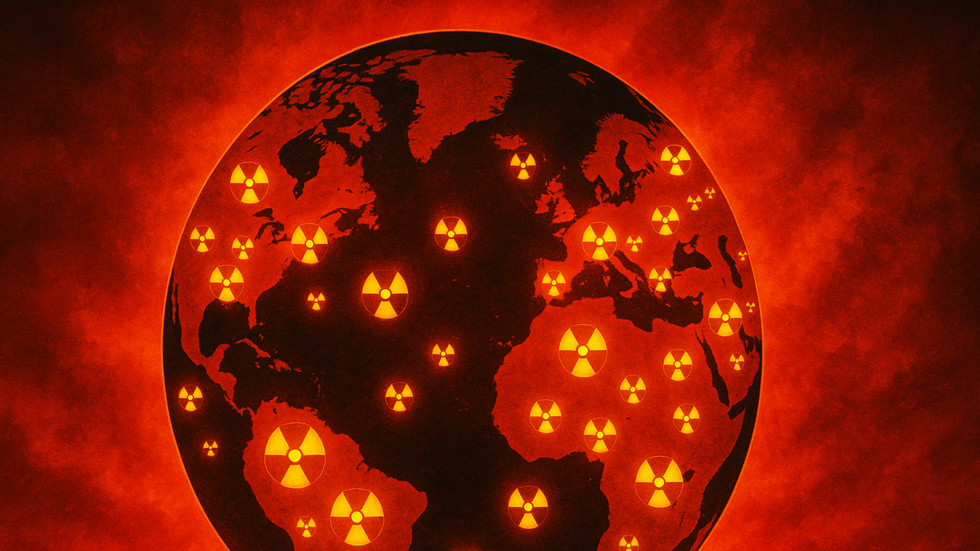
The question of nuclear proliferation is no longer hypothetical. It is happening. The only uncertainty now is how quickly it will proceed. In the not-too-distant future, we may see 15 nuclear powers instead of today’s nine. Yet there is little reason to believe this development will fundamentally upend international politics, or bring about global catastrophe.

The invention of nuclear weapons was a technological breakthrough that reshaped global affairs. More than anything else, nuclear weapons define the military hierarchy of states, creating a threat that no government can ignore.

Perhaps their most profound consequence is the emergence of states that are essentially immune to external aggression. This was never true in the long history of war. No matter how powerful a state was, a coalition of rivals could always defeat it. The great empires were vulnerable to invasion. The Enlightenment-era monarchies – including Russia – depended on a balance of power system where no single nation could dominate the rest.

But with nuclear weapons, that balance shifted. Two countries – Russia and the US – now possess such overwhelming destructive capability that neither can be seriously threatened, let alone defeated, even by a coalition. China, too, is gradually joining this exclusive tier, though its arsenal is still a fraction of Moscow’s or Washington’s.

In this sense, nuclear weapons have brought a strange kind of peace: Not from trust, but from terror. War between nuclear superpowers is not only unthinkable, it is politically irrational.

Becoming a nuclear superpower, however, is extremely expensive. Even China, with its vast resources, has only recently begun to approach the scale of Russian and American stockpiles. Few others can afford the same path.


Fortunately, most countries don’t need to. Major regional powers like India, Pakistan, Brazil, Iran, Japan, and even smaller ones like Israel, do not seek military invincibility on a global scale. Their nuclear ambitions, where they exist, are regional in nature – aimed at deterring neighbors, not conquering continents. Their limited arsenals do not upset the global balance of power.

Nor do they need to. For decades, serious scholars – Western theorists as well as Russian strategists – have argued that limited nuclear proliferation may actually enhance international stability. The reasoning is simple: Nuclear weapons raise the cost of war. Nations become far more cautious when the price of aggression could be national annihilation.

We’ve seen this play out already. North Korea, with a modest nuclear arsenal, feels emboldened in its dealings with Washington. Iran, by contrast, delayed too long and was attacked by Israel and the US in June 2025. The lesson was clear: In today’s world, non-nuclear states are far more vulnerable to attack. 

This has exposed the weakness of the current non-proliferation regime. Countries like India, Pakistan, Israel, and North Korea have all violated it, yet none have been meaningfully punished. Iran tried to comply and paid the price. It’s no wonder others are watching and drawing their own conclusions.

Japan, South Korea, Taiwan – each may be tempted to pursue nuclear weapons, either independently or with quiet American support. Washington has already shown it cares little about the long-term consequences for its East Asian allies. It is willing to provoke instability if it helps contain China.

In this context, a wave of new nuclear powers is not just likely – it is practically inevitable. But it will not mean the end of the world.


It’s time, Ukraine: Kiev braces for a final reckoning

Why? Because even with more nuclear states, the true balance of power remains intact. No emerging nuclear country will soon reach the scale of Russia and the US. Most will build modest deterrents, enough to shield themselves from invasion but not to threaten global security. Their arsenals may be enough to inflict horrific damage on a rival – but not to destroy humanity.

A regional war – between India and Pakistan, Iran and Israel, or others – would be a tragedy. Millions could die. But the catastrophe would be geographically limited. These are not world-ending scenarios. And in cases such as these, the nuclear superpowers – Russia and the US – would likely act to impose peace before escalation spirals out of control. 

Of course, this is hardly a utopia. But it is also not the apocalypse Western hawks love to predict. In fact, compared to the real nightmare – a direct nuclear conflict between Russia and the US – this multipolar nuclear world may be the lesser evil. 

Proliferation may be regrettable. It may complicate diplomacy. But it is not madness. It is a rational response by sovereign states to a system where only nuclear-armed nations can truly secure their interests. The monopoly of power enjoyed by a handful of countries is eroding. That is not a failure of the system – it is the logical outcome of it.

The strategic architecture of the post-war world has long rested on a fiction – that non-proliferation is universal, and that the West can police it indefinitely. This fiction is now collapsing. Countries are learning that treaties mean little without enforcement – and that security cannot be outsourced.

In the long run, this will require a new approach. A world with 15 nuclear powers may not be ideal, but it is manageable – especially if the dominant players act with restraint and responsibility. Russia, as one of the original nuclear powers, understands this burden well. It will not be Moscow that upends this balance.

But the West, driven by arrogance and short-term calculations, may yet provoke a crisis it cannot control. Washington’s recklessness in East Asia, its casual indifference to the risks it imposes on allies, and its determination to maintain strategic dominance at all costs – that is the real danger.

We are entering a new nuclear age. It will be more crowded, more complex, and more fragile. But it will not be ungovernable – so long as those with real power behave as custodians, not crusaders.

Read the full article here

Share. Facebook Twitter Pinterest LinkedIn Tumblr Email Telegram Copy Link

Related Articles

World

Israel ‘sacrificing global economy’ to prolong war on Iran – professor

June 3, 2026
World

NBA Star Stephen Curry Signs Endorsement Deal with Chinese Company Li-Ning

June 3, 2026
World

Members of Henry Nowak Killer Digwa’s Family Charged with Weapons Offences

June 3, 2026
World

Hezbollah’s drones soar above medieval fortress captured by Israel (VIDEO)

June 3, 2026
World

Fidel Castro’s Influencer Grandson Makes Fun of Elián González, Former Refugee Now a Communist Lawmaker

June 3, 2026
World

Missing US nuclear lab worker found dead

June 3, 2026
Add A Comment
Leave A Reply Cancel Reply

Editors Picks

NBA Star Stephen Curry Signs Endorsement Deal with Chinese Company Li-Ning

June 3, 2026

Booker: Democrats Will Force Republicans to Vote on Anti-Weaponization Fund

June 3, 2026

DOJ fund is ‘being set aside,’ Johnson says amid GOP confusion

June 3, 2026

Members of Henry Nowak Killer Digwa’s Family Charged with Weapons Offences

June 3, 2026
Latest News

Schumer shares few details on meeting with Platner

June 3, 2026

Hezbollah’s drones soar above medieval fortress captured by Israel (VIDEO)

June 3, 2026

Fidel Castro’s Influencer Grandson Makes Fun of Elián González, Former Refugee Now a Communist Lawmaker

June 3, 2026

Subscribe to News

Get the latest politics news and updates directly to your inbox.

The Politic Review is your one-stop website for the latest politics news and updates, follow us now to get the news that matters to you.

Facebook X (Twitter) Instagram Pinterest YouTube
Latest Articles

Israel ‘sacrificing global economy’ to prolong war on Iran – professor

June 3, 2026

NBA Star Stephen Curry Signs Endorsement Deal with Chinese Company Li-Ning

June 3, 2026

Booker: Democrats Will Force Republicans to Vote on Anti-Weaponization Fund

June 3, 2026

Subscribe to Updates

Get the latest politics news and updates directly to your inbox.

© 2026 Prices.com LLC. All Rights Reserved.
  • Privacy Policy
  • Terms of use
  • For Advertisers
  • Contact

Type above and press Enter to search. Press Esc to cancel.