South Korea is pouring money into its growing lobbying campaign aimed at U.S. lawmakers — an effort that’s increasingly focused on defending Korea’s discriminatory treatment of American technology companies like Coupang.
South Korea spent an estimated $37 million on lobbying the US government in 2025 alone, is reportedly seeking to hire Trump-aligned lobbying firms, and as of December, has hired dozens of high-ranking lobbyists, including former members of Congress, White House officials, and congressional staff, according to FARA records.
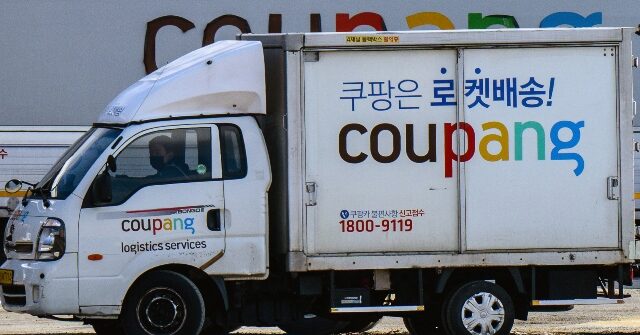
Korea’s desire to influence American officials rests across a number topics, but in recent months has been increasingly focused on defending Korea’s efforts to regulate American businesses, which US lawmakers have identified as discriminatory, and to additionally defend the Korean government’s reasoning for launching an extensive probe into Coupang, a Seattle-based, Fortune 150 U.S. tech company that has built a popular online marketplace serving Korean consumers.
The ongoing probe, which Coupang says is unfair, has included office raids, triggered investigations from at least 11 Korean government agencies and resulted in criminal charges being lobbed against company executives, some of whom are U.S. citizens.
Korea is increasingly in the hot seat with lawmakers across these issues, and it has resulted in Coupang being lobbed into the center of US-South Korea trade tensions. Vice President JD Vance recently cast the South Korean government’s crackdown on Coupang as an assault on America’s tech industry. The US House Judiciary Committee has launched an investigation into Korea’s actions. The dynamic was further stoked by Trump’s recent threats of a 25 percent tariff on Korean goods.
“The targeting of Coupang and the potential prosecution of its American executives serve as a sharp escalation of South Korea’s campaign against innovative American-owned companies and directly conflicts with its recent commitment to avoid discriminatory treatment and the creation of unnecessary barriers for U.S. digital service providers,” House Judiciary Chariman Jim Jordan wrote.
Becoming a major foreign lobby
As Korea’s treatment of US companies has increasing drawn American lawmaker scrutiny, the country’s lobbying efforts have similarly ballooned in size. Korea has quietly become one of the largest foreign spenders on lobbying in the United States, rising to become the fifth largest in the world, putting its spending in range with countries like China, which has an economy that is 10 times larger than Korea’s, according to data from Open Secrets.
In the last five years, from 2021 through 2025, the Korean government and connected entities like the Korean Embassy spent over $200 million lobbying US lawmakers, according to FARA records. This included line items like more than $85 million spent by the Korea Trade-Investment Promotion Agency (KOTRA), and an estimated $1.3 million spent by Korean entities connected to the government like the Korean International Trade Association, according to LDA records.
Retaining high-level officials
While spending has been a clear focus, retaining big-name firms, including firms with known ties to President Trump, have been a growing priority for Korea.
From 2025 into 2026, the Korean government has been increasingly pursuing or hiring major Trump-aligned DC advocacy firms, including Akin Gump, BGR, and American Global Strategies.
The Korean Embassy alone employed at least 7 major U.S. lobbying and public relations firms in 2025, including major firms like Squire Patton Boggs, Brownstein, BGR Government Affairs, DGA Group, and Mercury Public Affairs, according to LDA and FARA records. Since 2021, the Korean government and its adjacent entities have retained more than 28 outside consultants in Washington.
With those firms comes an increasingly long list of big-name lobbyists to support the effort. As of December 2025, registered lobbyists for the Korean government included former members of Congress including Ed Royce, Mark Begich, Thomas Reynolds. Former high-ranking White House and executive officials on their roster include former deputy assistant to the President Dan Greenwood, former White House official Mark Tavlarides, and former White House senior advisor Beth Viola. Former Capitol Hill and transition leaders brough on as hired guns include former Sen. John McCain chief of staff Pablo Carrillo, former Trump Presidential Transition communications director Bryan Lanza, and Trump congressional relations director Scott Mason. Korea has previously reported retaining other major GOP-connected lobbyists, including David Urban, Brian Ballard, and Joe Murray.
Official lobbying trips to DC
As tensions around trade issues and Coupagn have intensified, Korea has also ramped up the travel schedule of their top officials, paying multiple visits to Washington since January. Prime Minister Kim Min-seok recently met with Vice President JD Vance and Capitol Hill lawmakers to tamp down concerns about the Korean government’s treatment of Coupang, an issue that has contributed to stalling US-Korea trade negotiations. Korea’s top trade minister, Yeo Han-koo, has also traveled to D.C. to meet with a wide array of government officials.
In particular, Yeo’s lobbying trip may have ignited broader bilateral tensions, as evidenced by lawmaker reactions during a U.S. House Ways & Means Trade Subcommittee hearing. Multiple lawmakers noted that South Korean regulators are violating terms they agreed to in the US-Korea trade deal, which call for South Korea to stop discriminatory treatment and regulation of U.S. companies.
Despite their own lobbying efforts growing, Korean lawmakers have ironically been actively blaming Coupang’s lobbying efforts for lawmakers’ pushback in Washington, including routine activities like political donations.
While records show that Coupang’s efforts are well within normal and lawful advocacy efforts under US law, Korean media has criticized Coupang for donating to lawmakers and calls out former Hill staffers who advocate on behalf of Coupang, among other clients at various DC firms.
Lucas Nolan is a reporter for Breitbart News covering issues of free speech and online censorship.
Read the full article here