
Close Menu
The Politic ReviewThe Politic Review
  • News
  • U.S.
  • World
  • Politics
  • Congress
  • Business
  • Economy
  • Money
  • Tech
  • More Articles
Trending

Brazil’s World Cup Victory Sparks Armed Clashes in Lebanon

July 1, 2026

Dem Socialist CO Candidate: Didn’t Call Boulder Attack Antisemitism Because We’re Talking About Attacks Due to ‘Genocide’ and Conflation Between Israel, Jews

July 1, 2026

Leader of Germany’s most popular party wants to restore ties with Russia

July 1, 2026
Facebook X (Twitter) Instagram
  • Donald Trump
  • Kamala Harris
  • Elections 2024
  • Elon Musk
  • Israel War
  • Ukraine War
  • Policy
  • Immigration
Facebook X (Twitter) Instagram
The Politic ReviewThe Politic Review
Newsletter
Wednesday, July 1
  • News
  • U.S.
  • World
  • Politics
  • Congress
  • Business
  • Economy
  • Money
  • Tech
  • More Articles
The Politic ReviewThe Politic Review
  • United States
  • World
  • Politics
  • Elections
  • Congress
  • Business
  • Economy
  • Money
  • Tech
Home»World»SCOTUS Slams ‘Geofence’ Phone Surveillance – No Digital Dragnets
World

SCOTUS Slams ‘Geofence’ Phone Surveillance – No Digital Dragnets

Press RoomBy Press RoomJuly 1, 2026No Comments5 Mins Read
Share Facebook Twitter Pinterest Copy Link LinkedIn Tumblr Email VKontakte Telegram

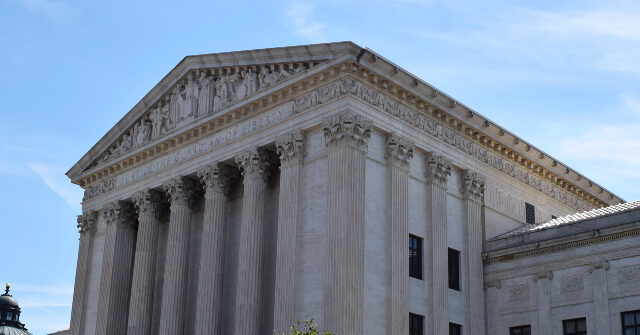
The Supreme Court ruled 6–3 on Monday that law enforcement’s use of “geofence” data constitutes a search under the Fourth Amendment. The ruling effectively ends unauthorized digital dragnets by applying protections guaranteed by the U.S. Constitution’s Bill of Rights.

Writing for the majority in Chatrie v. United States, Justice Elena Kagan rejected the government’s long-standing argument that Americans forfeit their constitutional right to privacy simply by turning on their smartphone’s location settings. The decision firmly establishes that the Bill of Rights does not have a digital expiration date and forces federal and local investigators back to traditional, individualized probable cause rather than treating everyone in a designated area as criminal suspects.

“The United States Supreme Court erected a hard constitutional fence today. Carrying a smartphone does not compromise a person’s Fourth Amendment privacy rights in their location data,” Breitbart Texas legal analyst Lana Shadwick wrote. “Proximity to a crime scene does not constitute probable cause, and any geofence warrant — including each step of a multi‑stage perimeter request — must be evaluated through the strict lens of the Fourth Amendment’s limits on lawful searches.”

Prior to this ruling, law enforcement routinely treated tech giants like Google as a time-traveling surveillance dragnet. When a crime occurred and investigators had no leads, they would draw a digital perimeter—a “geofence”—around the crime scene on a map and specify a timeframe. Law enforcement would then force the companies to search their massive databases to identify every device that was in that area.

Police would use the resulting report of “anonymized” device locations to determine a list of suspects. They would then demand the device owner’s identity to obtain the real names, phone numbers, and account details of the “targets.”

The government had argued that because cell phone users voluntarily activate location features, they forfeit their privacy rights under the decades-old third-party doctrine. But as the Court recognized, the reality of these warrants is a complete inversion of traditional policing. Instead of targeting a suspect, investigators could indiscriminately sweep up the intimate movements of hundreds of completely innocent bystanders—who just happened to be buying coffee, driving by, or living near a crime scene—before ever establishing a single shred of individualized probable cause.

In the majority opinion, justices ruled, “An individual has a reasonable expectation of privacy in records about his cell phone’s location, and police intrude on that constitutionally protected interest when they demand the information – even though for only a limited time, and from a third-party tech company.”

While the liberal bloc and traditional institutionalists focused heavily on the “expectation of privacy,” Justice Neil Gorsuch’s concurring opinion strikes the most vital chord for constitutional originalists. Gorsuch’s property-rights approach recognizes that digital location data—the intimate digital footprints of where you sleep, pray, work, and associate—constitutes modern “papers and effects” that demand strict textual protection under the Fourth Amendment.

“Mr. Chatrie had the rights to enjoy, manage, alter, dispose, and exclude others from what amounted to an electronic diary or map of his travels,” Gorsuch wrote. “He has a strong claim that the Location History data was his personal property.”

“Just as the First Amendment protects speech over the internet today no less than it did speech delivered in the town square in 1791, it should hardly come as a surprise that the Fourth Amendment might protect as personal ‘effects’ electronic diaries of one’s travels as it always has more traditional ones.”

In a sharp dissenting opinion joined by Justices Clarence Thomas and Amy Coney Barrett, Justice Samuel Alito blasted the majority for embarking on what he termed an “irresponsible escapade” that threatens to upend decades of established criminal law.

The dissenting justices argue the ruling ties the hands of law enforcement and says that the voluntariness of turning over the data means the users are “broadcasting their coordinates” to a corporate server — bypassing their absolute constitutional shield against law enforcement viewing the data. They also claim the ruling weaponizes the Fourth Amendment by shifting the balance of justice too far in favor of “tech-savvy criminals.”

By kicking the case back down to the Richmond-based Fourth Circuit Court of Appeals, the Supreme Court sets up a major battlefield over digital evidence. Because the High Court left the door open on the “good faith” exception, lower courts will now have to battle over whether existing convictions secured via geofence data should be overturned. The chaos the dissent warned about could only just be beginning.

Justice Elana Kagan authored the majority opinion. She was joined by Chief Justice John Roberts, and Justices Katanji Brown Jackson, Brett Kavanaugh, and Neil Gorsuch. Justice Samuel Alito authored the dissenting opinion. He was joined by Justices Clarence Thomas and Amy Coney Barrett.

Editor’s Note: The case is Okello T. Chatrie v. United States, No. 25-112 in the Supreme Court of the United States.

Bob Price is the Breitbart Texas-Border team’s associate editor and senior news contributor. He is an original member of the Breitbart Texas team. Price is a regular panelist on Fox 26 Houston’s What’s Your Point? Sunday morning talk show. He also serves as president of Blue Wonder Gun Care Products.  

Read the full article here

Share. Facebook Twitter Pinterest LinkedIn Tumblr Email Telegram Copy Link

Related Articles

World

Brazil’s World Cup Victory Sparks Armed Clashes in Lebanon

July 1, 2026
World

Leader of Germany’s most popular party wants to restore ties with Russia

July 1, 2026
World

BBC and CNN behind RT’s success – editor-in-chief

July 1, 2026
World

Peru: Conservative Keiko Fujimori Expected to Win Presidential Election After Slow Vote Count

July 1, 2026
World

Real-life ‘Citizen Vigilante’ in Mexico Goes Viral After Taping Up Thieves

July 1, 2026
World

Ukrainian spies likely behind Monaco bomb attack on oligarch – media (VIDEOS)

July 1, 2026
Add A Comment
Leave A Reply Cancel Reply

Editors Picks

Dem Socialist CO Candidate: Didn’t Call Boulder Attack Antisemitism Because We’re Talking About Attacks Due to ‘Genocide’ and Conflation Between Israel, Jews

July 1, 2026

Leader of Germany’s most popular party wants to restore ties with Russia

July 1, 2026

SCOTUS Slams ‘Geofence’ Phone Surveillance – No Digital Dragnets

July 1, 2026

Schiff on Chevalier: Prior Tweets Not ‘Mainstream’, I ‘Welcome’ ‘New Members’ and ‘New Ideas’

July 1, 2026
Latest News

BBC and CNN behind RT’s success – editor-in-chief

July 1, 2026

Peru: Conservative Keiko Fujimori Expected to Win Presidential Election After Slow Vote Count

July 1, 2026

ADL CEO: DSA Is Dems’ Antisemitism Problem, Mamdani’s Lying to Us

July 1, 2026

Subscribe to News

Get the latest politics news and updates directly to your inbox.

The Politic Review is your one-stop website for the latest politics news and updates, follow us now to get the news that matters to you.

Facebook X (Twitter) Instagram Pinterest YouTube
Latest Articles

Brazil’s World Cup Victory Sparks Armed Clashes in Lebanon

July 1, 2026

Dem Socialist CO Candidate: Didn’t Call Boulder Attack Antisemitism Because We’re Talking About Attacks Due to ‘Genocide’ and Conflation Between Israel, Jews

July 1, 2026

Leader of Germany’s most popular party wants to restore ties with Russia

July 1, 2026

Subscribe to Updates

Get the latest politics news and updates directly to your inbox.

© 2026 Prices.com LLC. All Rights Reserved.
  • Privacy Policy
  • Terms of use
  • For Advertisers
  • Contact

Type above and press Enter to search. Press Esc to cancel.