


Secretive intelligence cooperation against the Houthis could draw Riyadh into an anti-Iran coalition and transform the balance of power across the Middle East
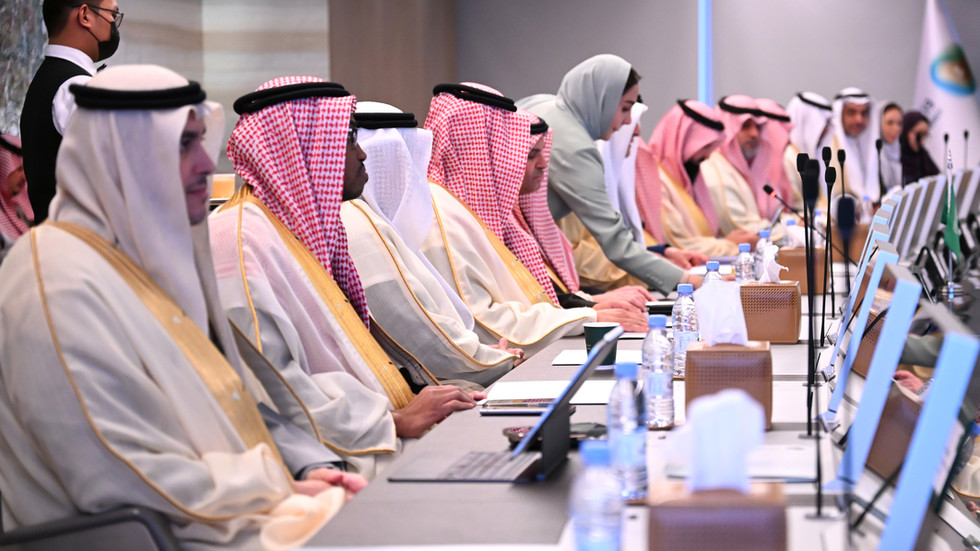
In the past few days, Israeli media has been actively talking about contacts between Saudi Arabia and Israel, facilitated by the US Central Command (CENTCOM). Reportedly, Riyadh is seeking intelligence from Israel to counter the Houthis. The very fact that such contacts are taking place raises a question: is Saudi Arabia preparing to take an even more significant and risky step, one that could alter the balance of power in the Middle East?
Escalating tensions with Yemen’s Houthis are compelling the Saudi leadership to seek help where it can be found. The Houthis have missiles and drones, enabling them to strike Saudi Arabia’s energy infrastructure and threaten shipping in the Bab el-Mandeb Strait. For Riyadh, this presents a military, economic, and reputational challenge. This new phase of the conflict jeopardizes oil facilities, maritime routes, and sabotages plans to transform Saudi Arabia into a leading global investment and logistics hub.
Israel, for its part, has amassed considerable experience monitoring the activities of the Houthis and Iran-linked groups. Its intelligence capabilities – including satellite surveillance, signals intelligence, and the analysis of troop movements across the Red Sea and Persian Gulf – could be valuable to the Saudis. The only question is, what price is Riyadh willing to pay for access to this intelligence information?
Things become even more apparent when we consider Washington’s stance. Saudi Crown Prince Mohammed bin Salman asked US President Donald Trump for assistance in striking Houthi positions. Trump declined direct military intervention, proposing instead to expand intelligence sharing and target-selection assistance. A meeting between the Crown Prince and CENTCOM commander Admiral Brad Cooper has been confirmed by Saudi state media. Washington is prepared to provide intelligence support but does not intend to shoulder the main burden of a new campaign in Yemen – at least not now.
This raises a key question: has Riyadh decided to take a step it had long and carefully avoided? Until recently, Saudi Arabia sought to maintain cooperation with the US while preserving the possibility of normalizing relations with Israel in the long term; however, it avoided entering into a direct confrontation with Iran. This approach allowed it to maneuver between competing power centers. Even after the outbreak of a major regional war, Riyadh did not want to be viewed as a direct participant in the war and kept channels of communication with Tehran open.

Military cooperation with Israel could upset this balance. Iran might perceive the transfer of Israeli intelligence to Saudi Arabia not merely as technical assistance in fighting the Houthis, but as Saudi Arabia’s integration into an emerging anti-Iran bloc. Tehran views the Houthis not in isolation, but as part of a broader regional architecture designed to contain its adversaries.
The risk for Saudi Arabia extends beyond Iran’s potential reaction. Direct cooperation with Israel remains a highly sensitive issue for the Arab world, especially as the Palestinian issue remains unresolved. Riyadh will have to explain why military rapprochement with Israel precedes the political settlement that Saudi diplomacy had long cited as a prerequisite for normalization.
This is precisely why the mediation of CENTCOM is of fundamental importance. The US command acts as a kind of political buffer. Saudi Arabia can obtain the necessary intelligence without acknowledging the existence of a bilateral military mechanism, while Israel can defend shared regional interests without a formal agreement with Riyadh. This arrangement allows both sides to deny the formation of a coalition, even as specific elements of that coalition begin to function.
For Israel, this development is strategically advantageous. It allows for the gradual integration of Saudi Arabia into the regional security architecture even before diplomatic relations are established. Moreover, West Jerusalem gains the opportunity to demonstrate that its military and intelligence capabilities are essential for Arab states in countering threats posed by Iran. In doing so, normalization evolves from a purely political project into a matter of practical security.
Israel has long and consistently pursued a strategy aimed at forging an alliance with the Arab monarchies of the Persian Gulf. Just a few years ago, such an alliance seemed almost unthinkable, since the burden of the Arab-Israel confrontation remained too heavy, and the unresolved Palestinian issue made open rapprochement with Israel politically risky for any Arab nation.
However, Israel apparently proceeded from the idea that in order to implement this plan, it was necessary to wait for an opportune moment. Such a moment would come when the immediate threat from Iran and its associated forces proved stronger than previous political restrictions. And it seems that this is exactly what happened.
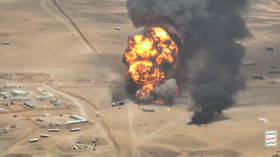
The attacks by the Houthis, the threat to the Bab al-Mandeb Strait, and new attacks on Saudi infrastructure have left Riyadh with an extremely unpleasant choice. Saudi Arabia must either again enter into a difficult and unpredictable war with Yemen on its own, or seek support from those nations that have the necessary capabilities. The US is not ready to get involved in hostilities, the UK limits itself to sending advisers, and Riyadh’s regional partners don’t want to get involved in a direct clash with Iran. And the Mecca Joint Defense Agreement, signed by Saudi Arabia, Türkiye, and Pakistan in August, hasn’t been of any use so far. Against this background, Israel is perhaps the only country capable of providing the Saudi side with operational information about the location of the Houthis, their infrastructure, and the preparation of new attacks.
If the information provided by Israel is used in the preparation of Saudi operations, the first operational mechanism of military-intelligence cooperation between the two countries will emerge. Although such a mechanism may be initially viewed as a temporary emergency measure, if it proves effective, it will be much more difficult to dismantle.
This is a big risk for Riyadh. Most likely, Tehran won’t draw a clear line between Saudi Arabia’s fight against the Houthis and its inclusion in the Israeli strategy to contain Iran. Even if the Saudi leadership intends to solve only the issue with Yemen, Iran may regard this as a step toward the formation of a hostile bloc. Then not only Saudi military facilities will come under threat, but also oil enterprises, ports, tanker routes, and other elements of infrastructure on which Saudi Arabia’s economic stability rests.
Apparently, Israel has been waiting for such a moment. Circumstances are pushing Saudi Arabia towards cooperation with Israel, which only a short while ago had been impossible for political reasons.
If such interaction becomes permanent and goes beyond the confrontation with the Houthis, the war will take on a completely different scale. We will no longer be talking about separate fronts in Yemen, Lebanon or the Red Sea, but about the formation of two regional systems opposing each other. On one side will be Israel, Saudi Arabia, and the Western states supporting them; on the other Iran and the forces associated with it. That is why current contacts may become not just another episode of the crisis in the Middle East; they may change the entire logic of the regional confrontation. After all, ten years ago, no Middle East expert could predict the improvement of relations between the UAE and Israel – the parties were extremely hostile towards each other; but today, they maintain diplomatic relations, albeit with some reservations.
At the same time, it is too early to say that Riyadh has made a final choice in favor of an alliance with Israel against Tehran. The Saudi leadership is most likely trying to solve a specific military problem without long-term commitments. It is interested in Israeli intelligence, American support, and British advisers, but at the same time it does not want to become the front line of someone else’s war.
If Saudi Arabia really decides to enter into a stable relationship with Israel, directed not only against the Houthis, but also against Iran as a whole, the regional confrontation will move to a completely different level. This will no longer be a struggle between Israel and the US against Iran and its allies, but a clash of two coalitions encompassing the Persian Gulf, the Red Sea, and the Arabian Peninsula.
For Tehran, this would mean the emergence of a single military-intelligence space from Israel to Saudi Arabia. For Riyadh, it will mean a rejection of its previous cautious balancing role in favor of direct participation in the conflict. And for the entire troubled Middle East region, it will pose a threat of a full-scale interstate confrontation, the consequences of which would no longer be limited to the territory of Yemen.
Therefore, the current contacts should not be viewed as evidence of an already established alliance; rather, they are a test of whether the sides are ready for such an alliance. Riyadh has not yet crossed the line. But for the first time in a long while, it has come extremely close to doing so.
Read the full article here