




The International Energy Agency has proposed the largest release of oil reserves in its history to bring down crude prices that have soared during the U.S.-Israel war with Iran, the Wall Street Journal reported Tuesday.
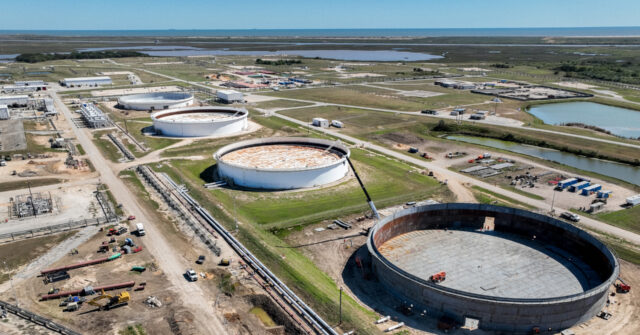
The proposed release of 400 million barrels would more than double the agency’s previous record, set in 2022 when IEA member countries released 182 million barrels after Russia’s full-scale invasion of Ukraine, according to the Journal. The proposal was circulated at an emergency meeting of energy officials from the IEA’s 32 member countries on Tuesday.
Countries are expected to decide on the proposal Wednesday. The measure would be adopted if no country objects, the Journal reported, but even a single protest could delay the plan.
French President Emmanuel Macron will host a video conference call at 10 a.m. ET Wednesday with leaders of the Group of Seven advanced economies to discuss ways to mitigate the energy situation, according to France’s Elysee Palace.
Japan has already moved unilaterally. Prime Minister Sanae Takaichi said the country would release oil from its strategic reserves as soon as March 16, drawing 15 days’ worth of supply from private-sector stockpiles and another 30 days’ worth from government reserves, according to the Journal. Germany’s Economy and Energy Minister Katherina Reiche said Berlin would participate if the IEA proposal is accepted.
The proposed release is intended to counter the near-total closure of the Strait of Hormuz, the narrow waterway connecting the Persian Gulf to global markets. Roughly one-fifth of the world’s oil supply passes through the strait daily, and the threat of Iranian attacks on tankers has brought shipments to a near standstill.
“We must send a very clear message,” French Finance Minister Roland Lescure told the Journal. “If we can’t reopen the Strait of Hormuz right away, we will replace it with other oil.”
Since Feb. 28, when the U.S. and Israel began strikes on Iran, the price of oil has soared as much as 40 percent, breaching $100 before falling this week as traders tracked statements from President Trump on the war’s duration. Oil ended Tuesday under $84, though the price of fuels such as diesel has continued to rise sharply, the Journal reported.
IEA members hold 1.2 billion barrels in public stocks, plus another 600 million in mandatory commercial inventories, IEA Executive Director Fatih Birol said Monday. That amounts to roughly 124 days of lost supply from the Gulf, by the Journal’s calculation.
Officials met on Monday and were initially reassured by oil’s decline after Trump signaled the war was nearing an end. But by Tuesday, the mood had shifted. Neil Atkinson, former head of the IEA’s oil division and now a visiting fellow at the National Center for Energy Analytics in Washington, told the Journal that the expectation ships would soon sail through the strait again had evaporated. More ships have been attacked and U.S. naval escorts do not appear to have materialized.
“The consensus is very clear this is not ending soon, the damage to the global economy and the functioning of the global economy could be significant,” Atkinson said.
Previous releases from strategic reserves have had mixed results. Two releases in quick succession after Russia’s 2022 invasion of Ukraine initially caused oil prices to rise 20 percent, as traders interpreted the action as a signal the crisis was worse than expected, the Journal reported. Analysts say the releases eventually helped bring prices down.
Read the full article here


