







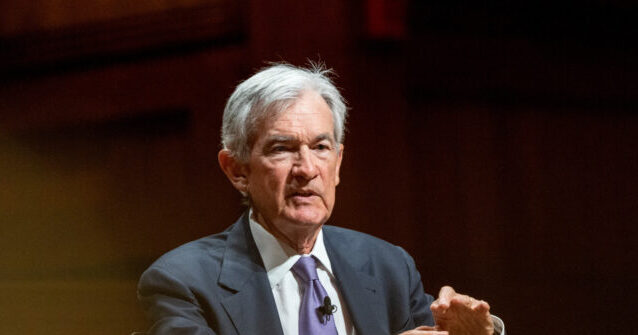
Federal Reserve Chair Jerome Powell said Monday the central bank is inclined to look past the energy shock from the war in Iran, noting that supply disruptions have historically been short-lived and that longer-term inflation expectations remain well anchored despite the conflict.
Speaking to undergraduate economics students at Harvard University, Powell said the standard central-banking response to energy shocks is to wait them out rather than react with policy changes. He said that despite the sharp rise in oil prices since the outbreak of hostilities, the public’s expectations about inflation over the longer term appear to be “well anchored beyond the short term.”
But Powell cautioned that the Fed could not take that for granted. With inflation still above the central bank’s 2% target years after the pandemic, he warned that a succession of price shocks could eventually shift the public’s outlook.
“You can have a series of these supply shocks and that can lead the public generally—businesses, price setters, households—to start expecting higher inflation over time,” Powell said. “Why wouldn’t they?”
Powell described the Fed’s current predicament as a tension between its twin goals of stable prices and maximum employment.
“There’s sort of downside risk to the labor market, which suggests keep rates low, but there’s upside risk to inflation, which suggests maybe don’t keep rates low,” he said.
Oil prices have risen sharply since the United States and Israel began military operations against Iran roughly a month ago, disrupting shipping through the Strait of Hormuz and threatening to snarl global supply chains. The Fed’s preferred gauge of underlying inflation was already trending higher before the conflict began.
Powell declined to say how the Fed would resolve the tension between its mandates if forced to choose. “We will eventually maybe face the question of what to do here,” he said. “We’re not really facing it yet because we don’t know what the economic effects will be.”
The remarks come at a turbulent moment for the central bank. The Fed held rates steady at its March 18 meeting, voting 11-1 to keep the federal funds rate in a range of 3.5 percent to 3.75 percent. Fed Governor Stephen Miran, a Trump appointee confirmed earlier this year, cast the lone dissent in favor of a rate cut.
Powell’s own term as chair expires May 15. The Senate has not yet scheduled a confirmation hearing for Kevin Warsh, the former Fed governor nominated by President Trump in January as Powell’s successor. Sen. Thom Tillis, a North Carolina Republican, has said he will block Warsh’s confirmation until a Justice Department investigation of Powell concludes. Powell said earlier this month, without evidence, that he would remain as “chair pro tempore” if no successor is confirmed by the expiration of his term. There is no precedent for a chair to remain in power after his term has expired when he has not been reappointed by the president or asked to stay while the next chair waits to be confirmed.
In the weeks since the March meeting, Fed officials have signaled that the bar for rate cuts has risen significantly. Several policymakers have indicated the central bank is likely to leave rates unchanged until the labor market shows clear signs of deterioration or inflation resumes its decline toward the 2 percent target.
Read the full article here


