




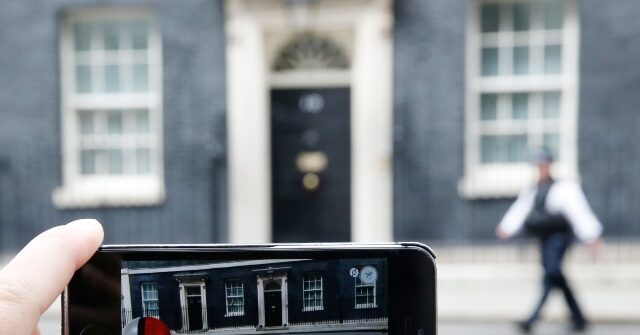
Nearly a decade after Pokémon Go transformed the real world into an augmented reality playground, the data collected from hundreds of millions of players is being repurposed to help autonomous delivery robots navigate city streets.
Popular Science reports that Niantic Spatial, part of the team behind the popular augmented reality game Pokémon Go, has announced a partnership with Coco Robotics, a company specializing in short-distance delivery robots for food and groceries. The collaboration will utilize Niantic’s Visual Positioning System, a navigation technology trained on more than 30 billion images captured by Pokémon Go users over the years, to help delivery robots navigate sidewalks and urban environments with unprecedented precision.
The Visual Positioning System can reportedly pinpoint location down to a few centimeters by analyzing nearby buildings and landmarks, offering a significant improvement over traditional GPS technology. This crowdsourced mapping effort represents one of the largest real-world data collection projects ever undertaken through a mobile gaming application, and demonstrates how user-generated content can be repurposed years after its initial collection.
“It turns out that getting Pikachu to realistically run around and getting Coco’s robot to safely and accurately move through the world is actually the same problem,” Niantic Spatial CEO John Hanke said in a recent interview with MIT Technology Review.
When Pokémon Go launched in 2016, it became a cultural phenomenon, attracting approximately 230 million monthly active players at its peak. The game prompted players to physically travel to specific locations and point their phone cameras at various angles while searching for virtual creatures superimposed onto real-world environments. While the game’s popularity has declined since its heyday, it still maintains around 50 million active users by some estimates.
The data collection effort received a significant boost in 2020 when Niantic added a feature called Field Research, which incentivized players to scan real-world statues and landmarks with their cameras in exchange for in-game rewards. Additional data reportedly came from areas designated as Pokémon battle arenas. These scans created detailed 3D models of the real world, capturing the same locations across varying weather conditions, lighting scenarios, angles, and heights.
Unlike GPS, which relies on satellite signals to determine location, the Visual Positioning System identifies where someone is based on their surrounding environment. This approach addresses a critical weakness in current GPS technology, which often struggles in urban areas with tall, densely packed buildings that can interfere with satellite signals and cause location accuracy to drift.
“The promise of last-mile robotics is immense, but the reality of navigating chaotic city streets is one of the hardest engineering challenges,” Hanke said in a statement.
Coco’s delivery robots will use the Visual Positioning System in conjunction with four cameras mounted around the machine to obtain precise readings of their surroundings. This technology aims to help the robots deliver food and groceries on time, addressing problems that have plagued other autonomous delivery systems tested on college campuses, where robots have been known to get lost or struggle to cross streets.
The Pokémon Go data repurposing exemplifies a growing trend where information collected for one purpose is quietly reused for entirely different applications years later. Google’s CAPTCHA tests, which ask users to identify images of bicycles or traffic lights to verify they are human, have long been suspected of training artificial intelligence vision models. Similarly, law enforcement has allegedly accessed or purchased user-generated content from the consumer mapping tool Waze to assist police investigations.
Read more at Popular Science here.
Lucas Nolan is a reporter for Breitbart News covering issues of free speech and online censorship.
Read the full article here


