


Voting security is always a hot topic around election time, but manipulation of our electoral system is a bigger problem that we have to worry about all the time.
On the most recent episode of The Drill Down podcast, we are not talking about stolen ballots, “ballot harvesting,” or other shenanigans that can happen during an election, but about how congressional districts are both drawn and apportioned. Two things recently in the news raise questions about how we do those things, and whether it’s still the best way.
As host Peter Schweizer asks, “What if an election can be rigged before the first ballot is even cast?”
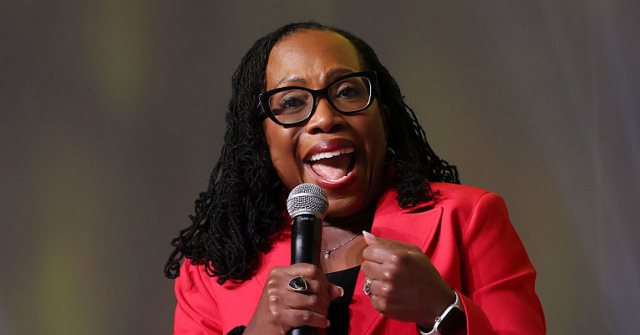
Supreme Court Justice Ketanji Brown Jackson recently likened the drawing of “minority-majority” congressional districts to requiring accessibility for disabled people, arguing the Americans with Disabilities Act (ADA) didn’t assume there was ongoing discrimination against people with disabilities, only that buildings had to fix it wherever possible. Likewise, she said, congressional districts that are drawn specifically to maximize minority group voting power need not show that those groups are currently discriminated against. Pressing the metaphor, she went as far as calling Black voters “disabled.”
Schweizer summed up the counterargument to minority-majority districts as: “We shouldn’t create an injustice now because of an injustice in the past.”
The High Court is set to rule on a case challenging congressional apportionment on racial grounds, which could set off a political shockwave. Schweizer explains that minority-majority districts are different from gerrymandering, which specifically tries to maximize the power of one political party, but since Black voters tend to vote for Democrats, it amounts to the same thing. The difference is written into the 1965 Voting Rights Act, which required some states to create congressional districts in which Black voters dominated, to redress past Jim Crow — era discrimination in Southern states.
As of the 119th Congress, there are 148 majority-minority districts in the U.S. House of Representatives, which represent approximately 34 percent of the total 435 districts. Not all of these districts are the result of specific drawing to increase minority group voting power, it must be noted. Yet, overall, Democrats represent 122 of these districts, while Republicans represent only 26.
Republicans have argued for years that minority-majority districts should no longer be required because the past discrimination they were meant to eliminate no longer happens. Schweizer says the case raises the question: “How relevant is our history to the way we apportion congressional seats today?”
And that raises another news story involving the 2020 Census. The decennial census is supposed to be a literal count of every person in the U.S., although statistical estimates have long been used for practical reasons to achieve that count, which determines each state’s total share of the 435 seats in Congress, as well as its share of federal funds under various programs.
The former director of the Census Bureau, John Abowd, introduced an algorithm called “Differential Privacy” for the 2020 Census, and the Bureau itself revealed in 2022 that this algorithm caused overcounting in several Democratic states and undercounting in Republican states. Blue states including Delaware, Massachusetts, New York, Minnesota, and Rhode Island were overcounted. States like Florida and Texas were undercounted. Republicans believe the miscount led to their party having nine fewer seats than should have been apportioned.
This forms the context for the efforts now happening in Texas and California to redraw their state’s districts. Texas is allowed to do this under the state’s constitution; California Gov. Gavin Newsom is asking voters through referendum to temporarily suspend the state’s constitution so that the legislature can re-draw California’s congressional districts and offset Texas’s move. Currently, California sends 43 Democrats to Congress and just 9 Republicans.
“In California, if Republicans were a race, people would be crying racism!” says co-host Eric Eggers.
The Census Bureau has acknowledged that the “Differential Privacy” algorithm it used, which remains secret, caused errors. The irony, as Eric Eggers notes, is that Florida was undercounted despite having one of the largest populations of Black people in the nation.
That undercount affected not only how seats in Congress were assigned, but each state’s share of federal funds that are allocated based on population as well. Estimates are that Republican states lost out on about $90 billion in federal funding formulas because of the miscount in the 2020 Census.
Schweizer admits not being a statistics nerd but notes there must be greater transparency when the Census Bureau tweaks the ways it estimates population since a complete physical headcount is not possible. The way it was done in 2020, he says, “leads you to believe there was an attempt to skew the result for political advantage.”
Both stories have a common assumption, that Black voters are somehow “disabled,” which Eggers says is “incredibly insulting to them.”
Schweizer says that at least gerrymandering is done by state politicians who were elected, and he believes it might be better than relying on a formula cooked by a bureaucrat in Washington.
“Let’s just go back to the brazen, bareknuckle politics” that was used before, he says.
For more from Peter Schweizer, subscribe to The DrillDown podcast.
Read the full article here