
Close Menu
The Politic ReviewThe Politic Review
  • News
  • U.S.
  • World
  • Politics
  • Congress
  • Business
  • Economy
  • Money
  • Tech
  • More Articles
Trending

Christians Killed in Democratic Republic of Congo and Across Africa in Recent Days

August 20, 2026

Chinese Company Seeks $1.5 Billion in Damages over Panama Canal Port Ouster

August 20, 2026

Kim Jong-un’s Sister Mocks South Korea, Confirms Brother’s Relationship with Trump Is ‘Excellent’

August 20, 2026
Facebook X (Twitter) Instagram
  • Donald Trump
  • Kamala Harris
  • Elections 2024
  • Elon Musk
  • Israel War
  • Ukraine War
  • Policy
  • Immigration
Facebook X (Twitter) Instagram
The Politic ReviewThe Politic Review
Newsletter
Thursday, August 20
  • News
  • U.S.
  • World
  • Politics
  • Congress
  • Business
  • Economy
  • Money
  • Tech
  • More Articles
The Politic ReviewThe Politic Review
  • United States
  • World
  • Politics
  • Elections
  • Congress
  • Business
  • Economy
  • Money
  • Tech
Home»News»Oil Embargos Are Squeezing the Iranian Economy
News

Oil Embargos Are Squeezing the Iranian Economy

Press RoomBy Press RoomAugust 20, 2026No Comments5 Mins Read
Share Facebook Twitter Pinterest Copy Link LinkedIn Tumblr Email VKontakte Telegram
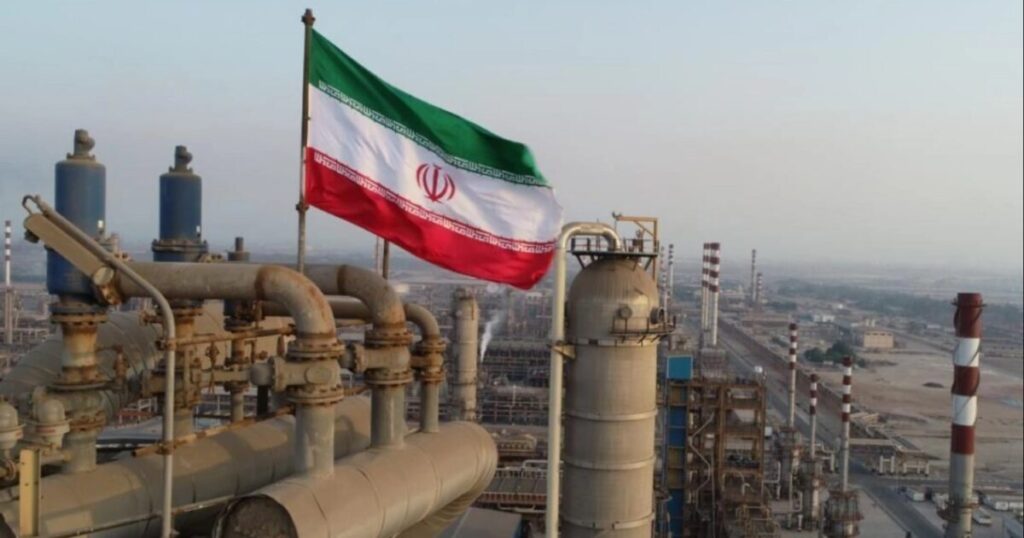
Cutting off Iran’s oil exports is dealing a financial blow to the IRGC. Photo courtesy of The Caspian Post.

The United Arab Emirates announced an indefinite trade and financial embargo on Iran on August 19, after its Defense Ministry said it detected two ballistic missiles fired from Iran toward “maritime traffic” in the Gulf, one of which fell inside Emirati waters. The UAE Foreign Ministry said the move came in light of “escalations that undermine peace and security in the region,” and confirmed that all trade, commercial exchanges, and financial transactions with Iran have been halted until further notice.

Retired U.S. general and former assistant secretary of state Mark Kimmitt told Al Jazeera that “the embargo being put on by the UAE is even more significant than the embargo being put on by the United States.”

Dubai has functioned for years as Iran’s most important re-export hub and financial workaround, allowing Tehran to absorb some of the impact of Western sanctions by routing goods and money through Emirati intermediaries. This allowed Iran to continue importing goods and moving money through the international financial system even while largely cut off from direct Western trade and banking channels. Now, that workaround is closed.

According to World Trade Organization figures from 2024, the UAE supplied more than 30 percent of Iran’s imports, worth roughly $21 billion, and received nearly 13 percent of Iran’s exports, worth about $7 billion, putting UAE-Iran trade at close to $28 billion for the year. Losing that channel compounds the strain on an Iranian economy already facing severe pressure. The International Monetary Fund is forecasting near-70 percent inflation in Iran this year alongside a 5.4 percent contraction.

The embargo comes amid a conflict that has run for nearly six months. A ceasefire and June memorandum of understanding briefly reopened the Strait of Hormuz and lifted the U.S. naval blockade, but the agreement unraveled after renewed Iranian attacks on shipping. The blockade was reimposed on April 13 and has imposed significant costs on Iran.

A 60-day window set under the memorandum for negotiating a broader peace deal expired on August 17 without an agreement. Trump wrote that there were “no talks or conversations going on, or scheduled, with the Islamic Republic of Iran,” and that the naval blockade “remains in full force and effect.” He has also floated declaring the Strait of Hormuz U.S. territory and threatened to bomb Oman if it interferes with U.S. operations there.

The Defense Department calculated the cost of the blockade to Iran at $4.8 billion as of May 1, roughly two and a half weeks after it was reimposed. That figure reflects the estimated market value of 31 tankers carrying 53 million barrels of Iranian crude that were stranded in the Gulf, unable to reach buyers because of U.S. interdiction. Further estimates suggest that the blockade has cost Iran $500 million per day.

The UAE’s embargo is likely to compound Iran’s isolation by closing off its last major sanctions-evasion channel. It also raises the odds of renewed direct confrontation between Iran and the UAE, since Tuesday’s missile strike was the first to reach Emirati territory since May and follows accusations that Iran attacked two Abu Dhabi National Oil Company vessels in the Strait of Hormuz days earlier.

The UAE is the only country to have severed all trade and financial dealings with Iran outright, but it is not acting in isolation. Reports indicate Saudi Arabia, Kuwait, and Bahrain have also struck targets inside Iran in retaliation for Tehran’s attacks on the Gulf, though those governments have largely declined to confirm it.

Iran’s armed forces chief of staff, Ali Abdollahi, responded by warning that any Gulf state assistance to US forces “amounts to participation in the US military operation.”

In addition to the UAE sanctions, U.S. and EU sanctions on Iran remain in place. The State Department’s Office of Economic Sanctions Policy and Implementation has issued a near-continuous string of designations through 2026, including actions in July and August targeting Iran’s shadow banking networks, digital-asset exchanges, and shipping tied to sanctioned oil sales.

The Treasury Department has separately targeted intermediaries connected to China’s independent “teapot” refineries, which have become a key outlet for discounted Iranian crude moving around the formal embargo. On August 15, the Treasury imposed additional sanctions on Iranian currency exchange houses and financial facilitators, saying the goal was to cut the financial lifelines that sustain Iran’s ruling elite.

The European Union has maintained its own Iran sanctions regime since 2012 over the country’s nuclear program and human rights record, and has layered on additional measures tied to Iran’s military support for Russia’s war in Ukraine. As of August 18, the EU had published new statements on third-country alignment with its Iran sanctions, with Albania, Bosnia and Herzegovina, Iceland, Liechtenstein, Moldova, Montenegro, and North Macedonia all moving to match Brussels’ restrictions.

Switzerland’s state secretariat for economic affairs made five amendments to its own Iran sanctions rules the same week, and Canada added five individuals to its Iran sanctions list under its Special Economic Measures Act.

The Iranian economy was already weak before the war began and was the cause of the initial protests in Tehran, which led to the regime killing an estimated 30,000 to 40,000 protesters. The U.S. blockade, combined with U.S., EU, and now UAE sanctions, is further restricting the IRGC’s sources of revenue. Whether these measures will bring about the fall of the regime or an end to the conflict, however, is a separate matter.

Ad block users: Some site features may not work correctly while an ad blocker is enabled, because they break scripts and content this website depends on. If you can’t see comments below, for example, please disable your ad blocker.

Read the full article here

Share. Facebook Twitter Pinterest LinkedIn Tumblr Email Telegram Copy Link

Related Articles

News

Christians Killed in Democratic Republic of Congo and Across Africa in Recent Days

August 20, 2026
News

Omega4America Interview: Wisconsin’s Francesca Hong Voter Anomalies Investigated by Republican Lawyer Dan Eastman (Video)

August 20, 2026
News

Nutty WNBA Coach Cheryl Reeve Says She Doesn’t Want to Give XX-XY Crowd Any More Oxygen Because “People Are Buying into It” (VIDEO)

August 20, 2026
News

Seventh Circuit Upholds Wisconsin’s Special Exemption from Federal Voter Transparency Law – State Can Keep Charging Up to $12,500 and Redacting Birth Dates on Voter Rolls

August 20, 2026
News

The False Moderates, Part 3: Dems Want to Turn Iowa into Illinois, And They’ve Found the Perfect Candidate

August 20, 2026
News

WATCH: Terrifying Moment Deck COLLAPSES Beneath U.S. Marshals During Missouri Raid on Convicted Sex Offender — Nine Officers Plunge to Ground

August 20, 2026
Add A Comment
Leave A Reply Cancel Reply

Editors Picks

Chinese Company Seeks $1.5 Billion in Damages over Panama Canal Port Ouster

August 20, 2026

Kim Jong-un’s Sister Mocks South Korea, Confirms Brother’s Relationship with Trump Is ‘Excellent’

August 20, 2026

Oil Embargos Are Squeezing the Iranian Economy

August 20, 2026

Goldman Sachs Finds Job Growth in Some Fields Slowed by 39% Due to AI

August 20, 2026
Latest News

Japan ‘playing with fire’ over nuclear ambitions – China

August 20, 2026

Omega4America Interview: Wisconsin’s Francesca Hong Voter Anomalies Investigated by Republican Lawyer Dan Eastman (Video)

August 20, 2026

Expert Witness Caught Red-Handed Using ChatGPT to Create Report for 3M Explosion Lawsuit

August 20, 2026

Subscribe to News

Get the latest politics news and updates directly to your inbox.

The Politic Review is your one-stop website for the latest politics news and updates, follow us now to get the news that matters to you.

Facebook X (Twitter) Instagram Pinterest YouTube
Latest Articles

Christians Killed in Democratic Republic of Congo and Across Africa in Recent Days

August 20, 2026

Chinese Company Seeks $1.5 Billion in Damages over Panama Canal Port Ouster

August 20, 2026

Kim Jong-un’s Sister Mocks South Korea, Confirms Brother’s Relationship with Trump Is ‘Excellent’

August 20, 2026

Subscribe to Updates

Get the latest politics news and updates directly to your inbox.

© 2026 Prices.com LLC. All Rights Reserved.
  • Privacy Policy
  • Terms of use
  • For Advertisers
  • Contact

Type above and press Enter to search. Press Esc to cancel.