


Donald Trump’s foreign policy is not a temporary deviation, but a sign of what is to come
By Igor Zevelev, political analyst
US President Donald Trump’s approach to foreign policy is often dismissed as chaotic or erratic. In reality, it reflects a deeper shift that is unlikely to disappear when he leaves office. Beneath the surface lies a consistent worldview, one shaped by populism and nationalism, that’s steadily gaining ground, both within the United States and globally.
This shift is already reshaping long-standing institutions. Nowhere is this more visible than in Washington’s relationship with its European allies.
For decades, US foreign policy rested on a simple premise: alliances, above all NATO, were the foundation of American power and influence. That consensus held across party lines for nearly 80 years. Today, it’s breaking down.
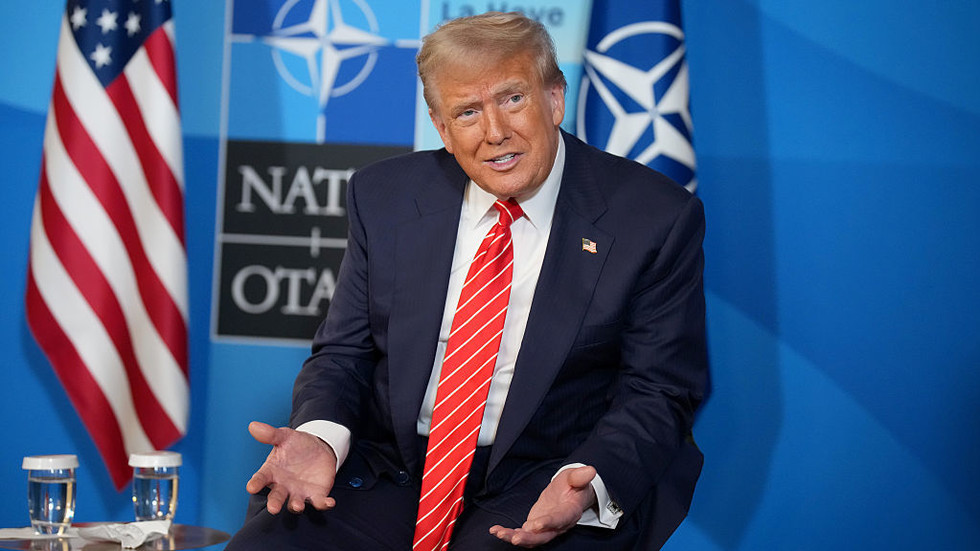
Trump is not merely skeptical of alliances, he openly questions their value. His reaction to the refusal of European allies to support US and Israeli military action against Iran was telling. Writing on Truth Social, he described NATO as a “paper tiger” and accused American allies of cowardice. “Everyone agrees with us, but they don’t want to help. And we, as the United States, must remember this,” he said.
The message is blunt: if allies don’t act when Washington calls, then their status as allies is called into question.
This doesn’t mean the United States is about to withdraw from NATO. What is unfolding is more gradual, and arguably more significant – a quiet dismantling of the alliance’s traditional structure.
There are growing signs of this shift: sharper rhetoric, fewer high-level engagements, and plans to reduce the American role within NATO’s command system. This is no longer just political theater.
Even when constrained by Congress, as in the decision to block a rapid reduction of US troops in Europe, the administration has adjusted tactics rather than abandoning its objective. The restriction on cutting troop levels below 76,000 slows the process, but doesn’t change its direction. The broader aim remains clear: shifting responsibility onto Europe.
A key element of this strategy is the gradual transfer of operational control. Reforms to NATO’s integrated command structure are already underway. Soon, all three of the alliance’s operational commands will be led by Europeans. This marks a significant step towards transforming NATO into a European-led organization.
If the United States relinquishes its central role in force planning and command, the consequences will be profound. NATO may remain intact in form, but its substance will change. Washington will no longer lead the alliance in the way it once did.
This isn’t simply a matter of one president’s preferences. Trump reflects a broader shift in American public opinion.
There’s growing fatigue in the United States with the idea of underwriting the security of others. Years of costly conflicts in the Middle East, rising national debt, and pressing domestic concerns have made the traditional role of global guarantor increasingly unpopular.
Don’t mistake it for isolationism. The recent strikes on Iran demonstrate that Washington remains willing to use force when it chooses. The change is more subtle, and more consequential.
The United States no longer wants to be bound by obligations.
Alliances and institutions that once defined American leadership are now seen as constraints. The emerging model is one of leadership without commitments: the ability to act freely, without being tied to the interests or expectations of partners.
That is a fundamentally different approach to international relations. It leaves NATO in an uncertain position, still formally intact, but increasingly hollowed out.
In time, the alliance may survive. But it will no longer be the same organization that defined the transatlantic relationship for generations.
And it’s far from clear that Europe is ready for what comes next.
This article was first published by Kommersant, and was translated and edited by the RT team.
You can share this story on social media:


Read the full article here