

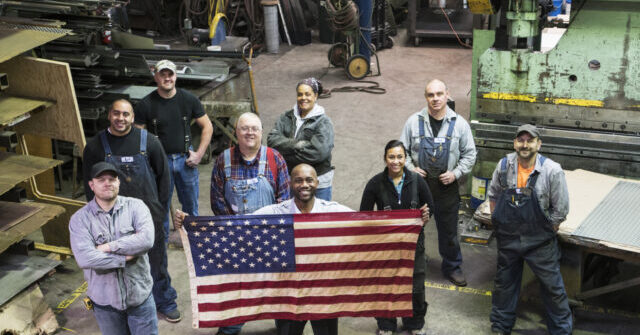
Job openings at U.S. factories rose in July to the highest level since January 2023, boosted by a surge in durable goods manufacturers looking for workers.
Available positions in manufacturing rose to 580,000 from 501,000 in June, data from the Labor Department’s Job Openings and Labor Turnover Survey showed Tuesday. A year ago, manufacturers were looking to fill 428,000 positions.
Vacancies in durable goods manufacturing climbed to 429,000, up from 353,000 in June and 255,000 a year ago.
The figures suggest surging demand for U.S. manufactured goods. Last week, the Commerce Department said durable goods orders at U.S. factories rose 1.1 percent, more than twice what was expected. Reports from the Federal Reserve banks of Kansas City, Dallas, New York, and Philadelphia have recently indicated strong growth in the manufacturing sector.
Fed chairman Kevin Warsh has recently suggested that the labor market is near full employment, with the unemployment rate historically low at 4.1 percent and jobless claims at the lowest in over four decades. The number of layoffs fell to 1.666 million, one of the lowest figures on record excluding the immediate post-pandemic period. The rate of layoffs ticked down to one percent, also one of the lowest on record apart from the pandemic rebound.
Labor force growth has slowed significantly in the past year and a half thanks to the Trump administration’s crackdown on unauthorized immigration. As well, aging baby boomers are exiting the labor force at a pace matching or exceeding the entrance of younger workers.
This may be weighing on hiring, as businesses struggle to find workers. Despite the rise in openings in July, hiring in manufacturing fell to 288,000 from June’s extraordinarily high 330,000. In durable goods, hiring fell to 177,000 from June’s strong 208,000. Even after the declines, July was a solid month for manufacturing hiring by historical standards.
Total job openings across the economy rose to 7.3 million from 7.2 million and hiring fell to 5.05 million from 5.33 million. Openings rose in healthcare and social assistance, financial activities, and information, while hires declined in each sector. Retail openings were flat, and hiring fell.
The number of quits, a measure of workers leaving their jobs voluntarily, changed little at 3.1 million and the rate ticked down to 1.9 percent over the month. The steady number of quits could imply that workers lack confidence that they can find better work. Alternatively, it may indicate that employers are doing a better job at retention, given the difficulty of hiring in the current full-employment labor market.
Read the full article here