




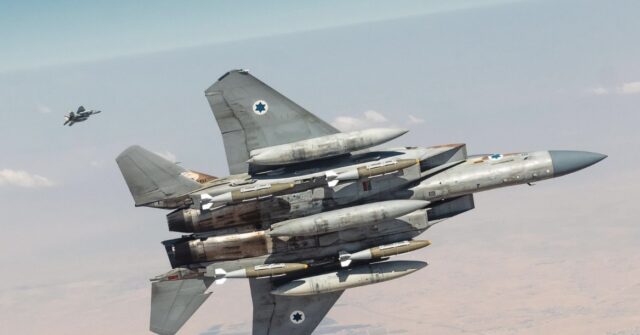
Israel’s parliament, the Knesset, approved a record $45.8 billion defense budget Monday as the war in Iran entered its second month.
The Israeli military has certainly earned its keep, performing with distinction during a string of crises: the savage October 7, 2023, attack by Hamas; the ensuing Gaza War; responding to attacks from Hezbollah in Lebanon; the instability created by the fall of Syrian dictator Bashar Assad; and now the war in Iran.
Since the beginning of Operation Epic Fury and Operation Roaring Lion a month ago, Israeli airstrikes have eliminated Iran’s Supreme Leader Ayatollah Ali Khamenei and numerous other top officials of the theocratic regime and its military – many of them directly responsible for authorizing terror attacks on Israeli civilians.
Coalition whip Ofir Katz said:
This is a budget with good tidings for the State of Israel and its citizens — in defense, welfare, education, health, for reservists, for residents of border communities and more. We’re stable, we’re strong and we will continue to work for the citizens of Israel until the coalition completes its term.
The total budget for fiscal 2026 was around $271 billion. Opposition leaders blasted the high defense budget, plus heavy spending on projects favored by the administration of Prime Minister Benjamin Netanyahu.
Opposition leader Yair Lapid posted a string of infuriated comments on social media platform X, slamming the budget as “entirely for the corrupt” and vowing to reverse everything he saw as a payoff to special interests in the “next government.”
“Whoever got a job because they’re connected will fly home. Whoever got a budget because of proximity to the trough, we’ll take the money from them aggressively and without batting an eye,” he vowed. “Whoever is corrupt will be gone from our lives. Whoever dodges service won’t get a single shekel from the state.”
The latter comment was directed at the Haredim, an ultra-Orthodox Jewish community in Israel. Lapid and like-minded colleagues frequently criticize them for refusing to enlist in the Israel Defense Forces (IDF).
In October, Lapid suggested stripping the Haredim of their right to vote unless they begin enlisting for military service. To get the budget passed on Monday, Netanyahu had to scuttle a bill that would have given the Haredim a permanent exemption from military service. The Orthodox parties decided to stick with Netanyahu even after the bill was withdrawn.
Opposition leaders were furious at funding for ultra-Orthodox institutions in the new budget, with Lapid denouncing it as the “greatest theft in the history of the state.”
One reason for the opposition’s incandescent anger was that roughly $255 million in funding for ultra-Orthodox programs was added in a surprise move by the governing coalition late into the marathon budget debate, which took longer than usual due to opposition filibusters and periodic air-raid alerts due to Iranian missile attacks.
Some opposition lawmakers said they voted for this funding by mistake, prompting a bit of mockery from the majority coalition for their failure to carefully read the bills they were voting on.
Netanyahu was eager to get the budget passed not only to finance Israel’s military endeavors in Iran and Lebanon, but also because failure to pass a budget by March 31 would have caused his government to collapse and triggered early elections. The next election is currently scheduled for October, although Netanyahu said this month that they could be held in September.
Finance Minister Bezalel Smotrich praised the budget that passed the Knesset on a 62-55 vote on Monday as “a budget that takes care of everyone and fights the cost of living.”
“We are passing this budget under a right-wing government that will serve out its full term and complete its mission in security, the economy, and in reforming the judicial system,” he said before the vote was held.
“Anyone who votes against the budget is voting against Israel’s security, against tax relief for working people in Israel, and against taxation of the banks,” he said.
Smotrich said the additional military funding would help to “dramatically improve our geopolitical and diplomatic standing” and “dismantle and rebuild the Middle East.”
Read the full article here


