




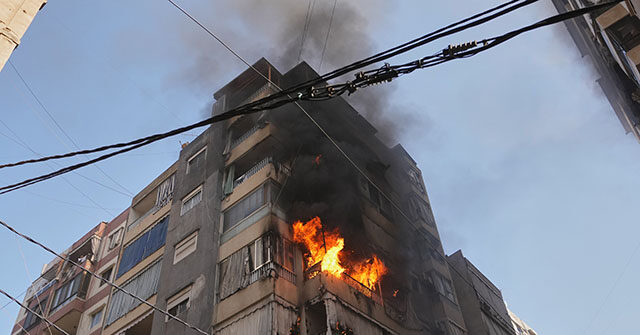
Israel is reportedly planning a “massive” ground invasion of Lebanon to eliminate Hezbollah’s weapons and push the terror group away from the border, so that it can no longer shower Israeli cities with rockets. The Lebanese government said a million people have already been displaced from the conflict zone.
Israel issued evacuation orders two weeks ago for all Lebanese civilians living south of the Litani River, an area that comprises about one-eight of Lebanon’s territory. Hundreds of thousands of civilians responded to the order, but some refused to leave their homes, including some Christian villagers who felt they should have no part in Israel’s conflict with Hezbollah. Hezbollah militants have been known to lurk around Christian villages, viewing them as safe havens from Israeli airstrikes.
On Monday, Lebanon’s Ministry of Social Affairs said the number of civilians displaced by the conflict has grown to over one million, including over 132,000 who have registered as refugees. The wave of evacuations has reached all the way to the outskirts of Beirut.
“Before this attack we were ready for a ceasefire in Lebanon, but after it there is no way back from a massive operation,” an Israeli official said, referring to the swarm of over 200 rockets Hezbollah launched at northern Israel last Wednesday in coordination with Iran.
The Israel Defense Forces (IDF) on Tuesday warned Israeli citizens to expect heavier-than-normal rocket barrages from Lebanon. The IDF said Hezbollah had been planning to launch up to 600 rockets in a massive onslaught, but the Israeli military disrupted that plan by destroying many of the terror group’s weapons with preemptive strikes.
The IDF faced some criticism for not warning civilians in advance of Hezbollah’s heavy attack last Wednesday. The IDF said that issuing a public warning would have tipped its hand to the enemy and betrayed the quality of its intelligence, and by not doing so, it was able to destroy a large number of Hezbollah’s launchers both before and after the attack.
Hezbollah was not supposed to have hundreds of rocket launchers within range of Israeli towns because the ceasefire agreement that ended the last conflict in 2023, when Hezbollah joined Hamas in the Gaza War, obliged the Lebanese military to disarm Hezbollah.
Israel consistently criticized Lebanon for failing to meet that obligation, and the scope of the attacks launched by Hezbollah over the past week would seem to vindicate that criticism. Israel has been cooled toward new ceasefire proposals from Lebanese President Joseph Aoun because it doubts he can honor any promise he makes to seize Hezbollah’s weapons.
Aoun and other Lebanese officials have been more openly critical of Hezbollah than ever since last week, railing against the Iran-backed terror group for hijacking Lebanon’s foreign policy and dragging the country into another punishing conflict with Israel, but the Israelis are skeptical that Aoun can match his words with comparably tough action.
“This is only the beginning, and the Lebanese government and the Lebanese state will pay an increasing price through damage to Lebanese national infrastructure that is used by Hezbollah terrorists,” Israeli Defense Minister Israel Katz said Saturday.
“The Lebanese government, which misled and did not fulfill its commitment to disarm Hezbollah, will pay increasing prices through damage to infrastructure and the loss of territory, until the central commitment of disarming Hezbollah is fulfilled,” he said.
The IDF said on Tuesday that “limited and targeted ground operations” were already under way in Lebanon, including assaults on “key Hezbollah strongholds.”
“This activity is part of broader defensive efforts to establish and strengthen a forward defensive posture, which includes the dismantling of terrorist infrastructure and the elimination of terrorists operating in the area, in order to remove threats and create an additional layer of security for residents of northern Israel,” the IDF said.
The IDF said Hezbollah is bringing in hundreds of fighters from its Radwan Force, essentially Hezbollah’s special operations group, which has been trained to operate in small, mobile cells to escape Israeli airstrikes. According to Israeli media reports, three full divisions of Israeli troops are moving into southern Lebanon to meet them.
Lebanese officials said at least 886 people have been killed by Israeli attacks so far, including 111 children. The IDF said two Israeli soldiers have been killed so far during combat in southern Lebanon. Several Lebanese paramedics have reportedly been killed while responding to damage from airstrikes, although the IDF has accused Hezbollah of using ambulances to move its forces around.
The Washington Post reported on Wednesday that public anger against Hezbollah is rising in Lebanon, including among the Shiite Muslims that Hezbollah and Iran claim to represent.
The backlash could be strong enough to deprive Hezbollah of the support it needs to function as a political party in Lebanon, rather than just another Iran-backed Shiite terrorist gang. Hezbollah’s political ally, the Amal Movement, took the unprecedented – but so far purely symbolic – step in early March of voting to outlaw Hezbollah’s military activities on Lebanese soil.
Some Lebanese Shiites who spoke to the Washington Post said they were baffled by Hezbollah’s decision to drag Lebanon into the Iran war, seemingly without a thought for the plight of civilians, during Islam’s holiday of Ramadan. Even some outspoken Hezbollah supporters said they were angry that the group was acting as an obvious puppet of Iran, unlike previous conflicts where Hezbollah claimed to be fighting for Lebanese Shiites or Palestinians.
In fact, Lebanese Shiites bitterly noted that even Hamas was unwilling to sign up for Iran’s war this time around and is urging its “brothers in Tehran” to halt their wanton attacks on neighboring countries.
Read the full article here


