
Close Menu
The Politic ReviewThe Politic Review
  • News
  • U.S.
  • World
  • Politics
  • Congress
  • Business
  • Economy
  • Money
  • Tech
  • More Articles
Trending

Spanish government blacklists Palantir – media

July 3, 2026

‘Indirect’ Qatar Talks with Iran Conclude Quietly, with No Breakthrough on Strait of Hormuz

July 3, 2026

Former U.S. Olympic Canoeist David Hearn Indicted for Alleged Vandalism to D.C. Reflecting Pool

July 3, 2026
Facebook X (Twitter) Instagram
  • Donald Trump
  • Kamala Harris
  • Elections 2024
  • Elon Musk
  • Israel War
  • Ukraine War
  • Policy
  • Immigration
Facebook X (Twitter) Instagram
The Politic ReviewThe Politic Review
Newsletter
Friday, July 3
  • News
  • U.S.
  • World
  • Politics
  • Congress
  • Business
  • Economy
  • Money
  • Tech
  • More Articles
The Politic ReviewThe Politic Review
  • United States
  • World
  • Politics
  • Elections
  • Congress
  • Business
  • Economy
  • Money
  • Tech
Home»World»Is the populist right about to take over Australia?
World

Is the populist right about to take over Australia?

Press RoomBy Press RoomJuly 3, 2026No Comments8 Mins Read
Share Facebook Twitter Pinterest Copy Link LinkedIn Tumblr Email VKontakte Telegram

One Nation recently shot to the top of the country’s political ratings – but its program is disruptive and unrealistic

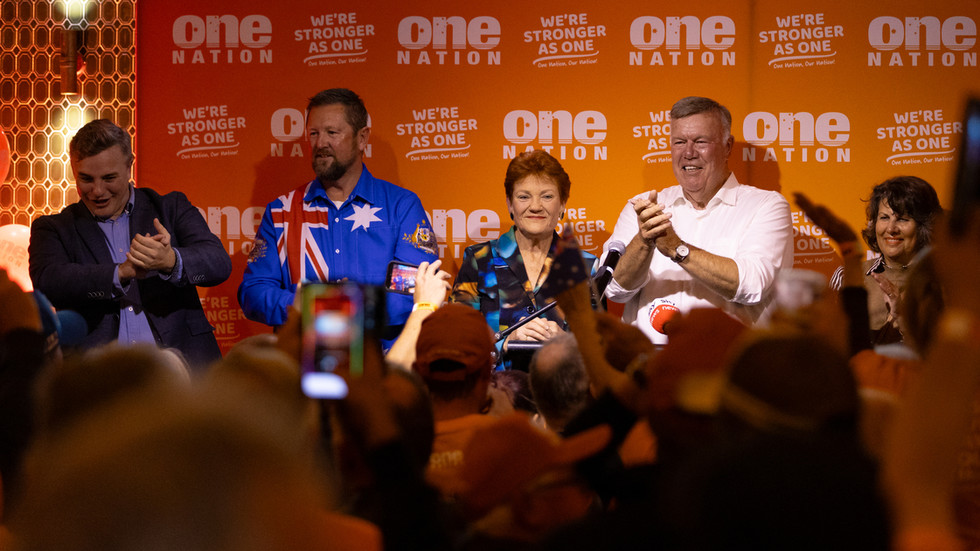
Recent opinion polls make clear that the populist One Nation Party has experienced a dramatic surge in popularity amongst Australian voters in the past few months.

Last week, Newspoll – Australia’s most respected and accurate political opinion poll – disclosed that One Nation was the most popular party in the country, with 31% of voters supporting it.

Support for the Labor Party, which currently governs federally and in all but one of the six Australian states, was at 30%, while backing for the conservative Liberal/National Party coalition had plummeted to a meagre 18%, with the Greens remaining steady at 11%.

These poll figures revealed an extraordinary recent increase in popularity for One Nation. At the last federal election, in May 2025, One Nation obtained just 6.4% of the primary vote, and it currently holds only two seats in the House of Representatives, together with four seats in the Senate.

One Nation, founded in the late 1990s by its current leader Pauline Hanson, was until recently a right-wing fringe party that had never posed a significant threat to the mainstream Labor and conservative Coalition parties that have taken turns in governing Australia since the late 1940s.

One Nation’s recent surge in popularity is akin to that of Nigel Farage’s Reform Party, and Australian politics is now following a similar trajectory to UK politics – the conservative Coalition is disintegrating, the Labor party is coming under increasing electoral pressure, and a significant number of disaffected voters appear willing to contemplate, for the first time, a right-wing populist party winning government.


And last week Pauline Hanson was invited to speak at the National Press Club in Canberra for the first time ever – proof positive that One Nation has now become a significant political force in Australian politics.

How is One Nation’s unprecedented surge in popularity to be explained?

Last week’s Newspoll made it clear that disenchantment with both mainstream parties is the most significant factor behind One Nation’s recent upturn in popularity. Almost 70% of voters polled were of the view that the mainstream parties “who built this mess aren’t going to fix it” and that “Australian politics is overdue for a big shake-up”.

Such voter dissatisfaction is perfectly understandable. The conservative coalition was in power for over a decade before losing office to the Labor party in 2022 – and both mainstream parties have singularly failed to alleviate the cost-of-living crisis that has pauperised large numbers of Australians over the past two decades.

Both mainstream parties have, for almost two decades, remained firmly committed to elite, and increasingly unpopular, polices such as net zero, mass immigration, multiculturalism, transgender rights and support for America’s wars of foreign aggression – policies that have exacerbated the cost-of-living crisis and shattered social cohesion within the Australian community.

In the circumstances, it is not surprising that a populist party that promises to scrap net zero, end mass migration, reverse elite culture wars policies and restore cultural unity should have become increasingly popular.

The collapse of the conservative coalition as a viable party of government has also fuelled One Nation’s popularity.  The coalition has for more than a decade been deeply divided over net zero, mass immigration and a raft of culture wars issues. The coalition is now, of course, even more bitterly divided over whether it should attack Hanson’s policies or embrace them with a view to forming some kind of electoral alliance with One Nation.


Nigel Farage’s ‘White Britain’: A misguided fantasy built on his enemies’ logic

As a result of these intractable divisions, progressive coalition voters have deserted the Liberal Party in favour of Teal politicians firmly committed to elite policies like net zero – who have in recent elections won seats in wealthy, formerly safe Liberal electorates. At the same time, conservative coalition voters (including those in outer suburban working class electorates) have shifted their allegiance to One Nation and its populist agenda.

And as the conservative coalition has bled votes to both the left and the right, and suffered one electoral setback after another, wealthy donors, who had supported the coalition for decades, have increasingly redirected their funds into One Nation’s now overflowing coffers.

Gina Rinehart, the Trump-worshipping billionaire mining magnate, is now One Nation’s most generous financial backer – and she recently purchased a private jet for Pauline Hanson to use on the campaign trail.

One Nation now has more than sufficient funds, for the first time in its chequered history, to mount a nation-wide campaign to win seats in the federal House of Representatives.

In her recent address to the National Press Club this Pauline Hanson set out a wide-ranging populist program for winning government. It included the following specific policies:

  • abolishing multiculturalism, and turning Australia into a “monocultural” society;
  • abolishing the Human Rights Commission;
  • abolishing the government-funded ethnic television station SBS;
  • scrapping net zero and subsidies for renewables;
  • ending mass immigration;
  • promoting nuclear energy and the exploitation of coal and gas reserves;
  • passing more restrictive abortion laws;
  • opposing wage rises for ordinary workers, and abolishing workers’ rights;
  • abolishing transgender rights.

This is a much more comprehensive policy program than One Nation has put forward previously, and aspects of it are commendable – but much of it amounts to sheer “magical thinking” and is incapable of being implemented by any government, let alone one led by Pauline Hanson.


The future belongs to strong states, not post-national fantasies

How, for example, is Hanson going to turn Australia, a country in which the majority of citizens come from migrant backgrounds, into a “monocultural’ society – whatever that term means? And such a misguided policy can only alienate the large migrant vote.

By politicising abortion, which has never been a political issue in Australia, Hanson has also alienated the powerful female vote – and one of her senators, a day after her National Press Club address, made the position worse by calling for a complete ban on abortion.

And by turning her back on ordinary workers – who have suffered most under the cost-of-living crisis – Hanson has alienated precisely that large segment of the electorate that One Nation must win over if it is to have any realistic prospect of winning government.

Not surprisingly, this week’s Newspoll shows a slight decline in One Nation’s popularity from 31% to 29% – and a slight rise in Labor’s popularity from 30% to 33%.

On the latest Newspoll figures One Nation could expect to win approximately 50 seats in the 150-seat House of Representatives if an election were held today – not enough to form a government, but perhaps enough to form a coalition government with the Liberal and National parties.

Talk about One Nation winning government in its own right is, therefore, premature in the extreme.

The next federal election is not due to be held until September 2028, and it will be interesting to see if One Nation’s popularity increases beyond its current 31% figure in the next two and a half years.

Hanson has always ruled her party in and authoritarian fashion, and it has been characterised by chronic internal instability since it was founded – with defections by its parliamentarians occurring on a regular basis.


From war hero to war criminal: One man’s fate is breaking a country’s politics in half

One Nation has also consistently attracted rank extremists to its ranks. Just a few years ago, for example, a One Nation senator campaigned for the reintroduction of the ‘White Australia’ policy. Whether Hanson can control the large lunatic fringe element within her own party remains a very much an open question.

In fact, it is impossible to imagine the ramshackle collection of inept politicians that currently make up One Nation, including the unstable and ambitious former National Party leader and deputy Prime Minister Barnaby Joyce, ever winning government – let alone being able to govern the country in a competent manner.

Hanson has never been anything more than a political disrupter – and, in my view, her party, under its current leadership, is intrinsically incapable of making the transition from being a right-wing fringe party to becoming a mainstream party capable of winning government in its own right.

In the circumstances, what is Australian politics likely to look like over the next few years?

The hopelessly divided conservative coalition will continue on its downward spiral towards complete political irrelevancy. Labor will continue to ward off the One Nation challenge – and its popularity may well continue to decline. It must be said, however, that the Labor Party in Australia is much more professional, ideologically unified and disciplined than the divided, unstable and disintegrating UK Labour Party.

And One Nation will obviously continue to be a powerful disruptive and divisive political force – putting forward specious remedies for acute political and economic problems that it is utterly incapable of solving.

In short, politics in Australia will become even more unstable and chaotic than it is at present. In other words – it will be politics as usual for the foreseeable future.

The statements, views and opinions expressed in this column are solely those of the author and do not necessarily represent those of RT.

Read the full article here

Share. Facebook Twitter Pinterest LinkedIn Tumblr Email Telegram Copy Link

Related Articles

World

Spanish government blacklists Palantir – media

July 3, 2026
World

‘Indirect’ Qatar Talks with Iran Conclude Quietly, with No Breakthrough on Strait of Hormuz

July 3, 2026
World

China Claims Pilot Who Flew into Beijing’s Tallest Building Was Suicidal Divorcee

July 3, 2026
World

Republican’s ‘let them eat lobster’ comment leaves sour taste

July 3, 2026
World

Kenyan Prosecutors Charge Schoolgirls with Murdering 16 Classmates in Fire

July 3, 2026
World

White students in minority at nearly one in five UK universities – Telegraph

July 3, 2026
Add A Comment
Leave A Reply Cancel Reply

Editors Picks

‘Indirect’ Qatar Talks with Iran Conclude Quietly, with No Breakthrough on Strait of Hormuz

July 3, 2026

Former U.S. Olympic Canoeist David Hearn Indicted for Alleged Vandalism to D.C. Reflecting Pool

July 3, 2026

Is the populist right about to take over Australia?

July 3, 2026

China Claims Pilot Who Flew into Beijing’s Tallest Building Was Suicidal Divorcee

July 3, 2026
Latest News

Mamdani the Fraud: New York Cuts Power During Heat Wave to Bronx Jewish Neighborhood

July 3, 2026

Republican’s ‘let them eat lobster’ comment leaves sour taste

July 3, 2026

Kenyan Prosecutors Charge Schoolgirls with Murdering 16 Classmates in Fire

July 3, 2026

Subscribe to News

Get the latest politics news and updates directly to your inbox.

The Politic Review is your one-stop website for the latest politics news and updates, follow us now to get the news that matters to you.

Facebook X (Twitter) Instagram Pinterest YouTube
Latest Articles

Spanish government blacklists Palantir – media

July 3, 2026

‘Indirect’ Qatar Talks with Iran Conclude Quietly, with No Breakthrough on Strait of Hormuz

July 3, 2026

Former U.S. Olympic Canoeist David Hearn Indicted for Alleged Vandalism to D.C. Reflecting Pool

July 3, 2026

Subscribe to Updates

Get the latest politics news and updates directly to your inbox.

© 2026 Prices.com LLC. All Rights Reserved.
  • Privacy Policy
  • Terms of use
  • For Advertisers
  • Contact

Type above and press Enter to search. Press Esc to cancel.