


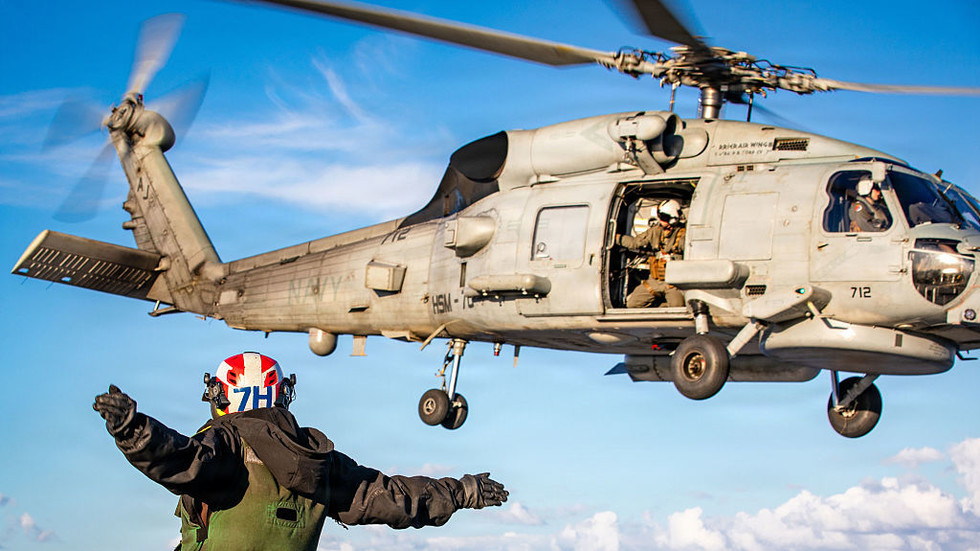
The outcome of the war with Iran will determine America’s capabilities on the world stage for years to come. That is what makes the current conflict in West Asia so consequential, far beyond the region itself.
US policy toward Iran has become increasingly erratic. Rather than focus on the president’s shifting rhetoric, it is more useful to examine the logic underpinning the confrontation. Washington appears to have convinced itself that the moment is right to act decisively against Tehran, exploiting what it perceives as a window of vulnerability.
The objective, viewed in isolation, has a certain cold rationality. A single, well-executed strike could, in theory, achieve several long-standing goals at once: settle the historical grievance of the 1979 embassy crisis, remove a regime seen as hostile to Israel, gain leverage over key energy resources and transport routes, and weaken emerging Eurasian integration projects. Advisers appear to have presented this as a rare opportunity. The president accepted the argument.
But such ambitions rest on a fundamental miscalculation. Iran is not Iraq in 2003, nor Afghanistan in 2001. Its military capabilities are far more substantial than those of any adversary the US has confronted directly in recent decades. It is a large, resilient state with deep strategic depth and a capacity to inflict serious disruption on global trade and energy flows.
This last point is critical. Iran’s geographic position gives it leverage that few countries possess. Even limited escalation can threaten shipping routes and economic stability far beyond the Middle East, directly affecting the interests of the US and its allies. That reality alone complicates any attempt at a quick, clean victory.
Moreover, the political context is very different from past US interventions. The current display of force, lacking even the formal justifications that accompanied earlier campaigns, has unsettled Washington’s partners. Allies that might once have felt compelled to support the US are now more hesitant, weighing the risks of involvement against uncertain outcomes.
The original assumption appears to have been that Iran would capitulate quickly. What that capitulation would look like was never entirely clear: regime collapse, coerced compliance along the lines of Venezuela, or a negotiated settlement sharply limiting Tehran’s power. In any case, a prolonged conflict was not part of the plan.
Now that the conflict has dragged on, a more fundamental question has emerged: what exactly constitutes success?
This dilemma reflects a broader shift in American foreign policy. America First is often interpreted as isolationism or restraint. In practice, it has meant something else entirely, the pursuit of US objectives without responsibility and, ideally, without cost. The underlying principle is simple: achieve maximum benefit while minimizing commitments.
For a time, this approach appeared to work. In his first year, Donald Trump managed to pressure partners into accepting American terms, often by leveraging overwhelming economic power. But that strategy depends on the absence of meaningful resistance. It becomes far more dangerous when applied to a situation that cannot be controlled.
Creating a major geopolitical crisis and expecting others to absorb the consequences while Washington extracts advantages is a different proposition altogether. It risks destabilizing not just adversaries, but the entire system in which the US itself operates.
In earlier decades, US leadership was framed in terms of a “liberal world order,” where advancing American interests was presented as beneficial to all. The concept of a “benevolent hegemon” emerged from this period. Trump’s worldview rejects that premise. Instead, it assumes that US prosperity must come at the expense of others, and that it is time to reverse the old balance.
This shift carries profound implications. A hegemon that no longer seeks to provide stability must rely more heavily on coercion. But coercion, to be effective, requires credibility. The dominant power must demonstrate clearly that it can impose its will when necessary.
Iran has become the test case.
The US has, in effect, chosen this challenge for itself. The stakes are therefore exceptionally high. A failure to achieve a decisive outcome would not simply be another setback, it would call into question Washington’s ability to act as a global power under the new rules it is attempting to establish.
This is what distinguishes the current conflict from previous campaigns. Iraq and Afghanistan ended without clear victories, but they were fought under a different strategic paradigm. Today’s confrontation is more openly transactional, more explicitly about power projection, and less constrained by legal or ideological considerations.

That makes defining victory both more urgent and more difficult. In a war of choice, the criteria for success are not fixed in advance. Yet certain outcomes would clearly fall short. It is difficult to imagine, for example, that any operation could be considered successful if Iran retains effective control over the Strait of Hormuz, a chokepoint of global significance.
The longer the conflict continues without a clear resolution, the more the pressure on Washington will grow. Ambiguity is not an option for a power seeking to redefine its role in the international system.
The conclusion is stark. The US now needs a decisive victory. The alternative, a drawn-out conflict with no clear outcome, would undermine its position not only in the Middle East, but globally.
At the same time, the likelihood of a negotiated settlement appears low. The demands on both sides remain too far apart. That leaves escalation as the most probable path forward.
The risks are obvious. But for Washington, the cost of failure may be even greater.
This article was first published by Rossiyskaya Gazeta, and was translated and edited by the RT team
Read the full article here