




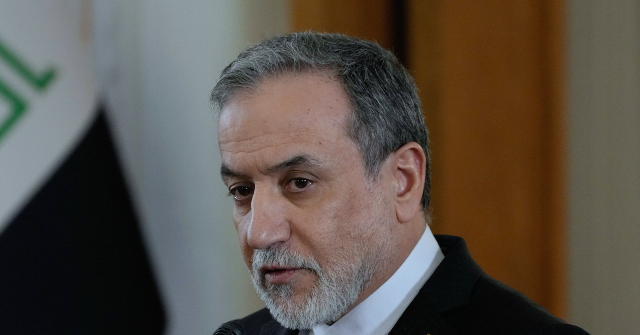
Atomic Energy Organization of Iran chief Mohammed Eslami on Monday wrote a letter to International Atomic Energy Agency (IAEA) director Rafael Grossi that accused the IAEA of ignoring the danger from U.S. and Israeli airstrikes near Iran’s nuclear sites, including its operational nuclear reactor at Bushehr.
Eslami told Grossi that Bushehr has been attacked four times during Operation Epic Fury, most recently on Saturday.
Eslami denounced the attacks as breaches of international law, claimed they could inflict “irreparable consequences” on civilians and the environment by damaging the reactor, and criticized the “lack of decisive action” by Grossi and his agency.
Iranian Foreign Minister Abbas Araghchi wrote a similar letter to Grossi and U.N. Secretary-General Antonio Guterres on April 3, denouncing U.S. and Israeli strikes on Iran’s “peaceful” nuclear infrastructure as “unlawful” and “extremely alarming.”
As with Eslami’s letter, Araghchi said Grossi and Guterres “flatly failed from even condemning the illegal attacks, let alone undertaking effective measures within their mandate to prevent their recurrence.”
Araghchi wrote:
I reiterate my warning that, should the United Nations Security Council and the Board of Governors of the IAEA remain indifferent in the face of manifest illegal attacks against Iran’s safeguarded nuclear facilities, the Member States may lose confidence in the United Nations, the Agency, and the broader non-proliferation regime will be further eroded.
“The consequences of such inaction would not be confined to Iran,” he threatened.
Araghchi also sputtered with outrage at Grossi for demanding more oversight of Iran’s supposedly “peaceful nuclear program,” and for criticizing Iran’s lack of compliance with IAEA inspectors, which ultimately led to the U.S. and Israel using force to dismantle Iran’s nuclear program.
Contrary to Eslami’s letter of complaint, Grossi did say on Monday that airstrikes near the Bushehr nuclear plant “pose a very real danger to nuclear safety and must stop.”
Grossi warned that continued airstrikes near Bushehr “could cause a severe radiological accident with harmful consequences for people and the environment in Iran and beyond.”
“A nuclear facility and surrounding areas should never be struck,” he declared.
U.N. Secretary-General Antonio Guterres said on Monday he was “alarmed” by President Donald Trump’s threat to strike Iranian “power plants, bridges, and other infrastructure, should Iran not agree to a deal.”
“Once again, the Secretary-General reaffirms that it’s high time for the parties to stop this conflict, as there is no viable alternative to the peaceful settlement of international disputes,” Guterres spokesman Stephane Dujarric said.
“Any attack on civilian infrastructure is a violation of international law, and a very clear one,” Dujarric said.
World Health Organization (W.H.O.) Director-General Tedros Adhanom Ghebreyesus also criticized U.S.-Israeli strikes near Iran’s nuclear reactor on Sunday.
“I join the International Atomic Energy Agency [IAEA] in raising the alarm again over the safety of nuclear facilities in Iran. The latest incident involving the Bushehr nuclear power plant is a stark reminder: a strike could trigger a nuclear accident, with health impacts that would devastate generations,” he said.
Russia’s state nuclear power company, Rosatom, said it evacuated 198 of its staffers from the Bushehr nuclear plant after the most recent airstrike.
Read the full article here


