
Close Menu
The Politic ReviewThe Politic Review
  • News
  • U.S.
  • World
  • Politics
  • Congress
  • Business
  • Economy
  • Money
  • Tech
  • More Articles
Trending

US threatens sanctions over payments to Iran for Hormuz passage

May 4, 2026

Reap What You Sow: Farage’s Reform Party Promises to Place Deportation Centres in Green Party Areas

May 4, 2026

Tillis on Comey Indictment: No Evidence ‘86’ Is Used as a Call for Violence

May 4, 2026
Facebook X (Twitter) Instagram
  • Donald Trump
  • Kamala Harris
  • Elections 2024
  • Elon Musk
  • Israel War
  • Ukraine War
  • Policy
  • Immigration
Facebook X (Twitter) Instagram
The Politic ReviewThe Politic Review
Newsletter
Monday, May 4
  • News
  • U.S.
  • World
  • Politics
  • Congress
  • Business
  • Economy
  • Money
  • Tech
  • More Articles
The Politic ReviewThe Politic Review
  • United States
  • World
  • Politics
  • Elections
  • Congress
  • Business
  • Economy
  • Money
  • Tech
Home»Congress»Investigate them or shame them? Inside the debate over how to deal with creeps in Congress
Congress

Investigate them or shame them? Inside the debate over how to deal with creeps in Congress

Press RoomBy Press RoomMay 4, 2026No Comments7 Mins Read
Share Facebook Twitter Pinterest Copy Link LinkedIn Tumblr Email VKontakte Telegram

Two recent lawmaker resignations over sexual misconduct allegations have Congress wrestling with a familiar challenge: How can it encourage survivors of abuse to come forward in one of America’s most sensitive workplaces?

Former Reps. Tony Gonzales (R-Texas) and Eric Swalwell (D-Calif.) were both accused of sexual misconduct with staff, putting a fresh spotlight on Capitol Hill’s apparent culture of exploitation — nearly a decade after the #MeToo movement sparked a bipartisan push to improve the reporting process.

Now current and former members are reckoning with the shortcomings of those efforts.

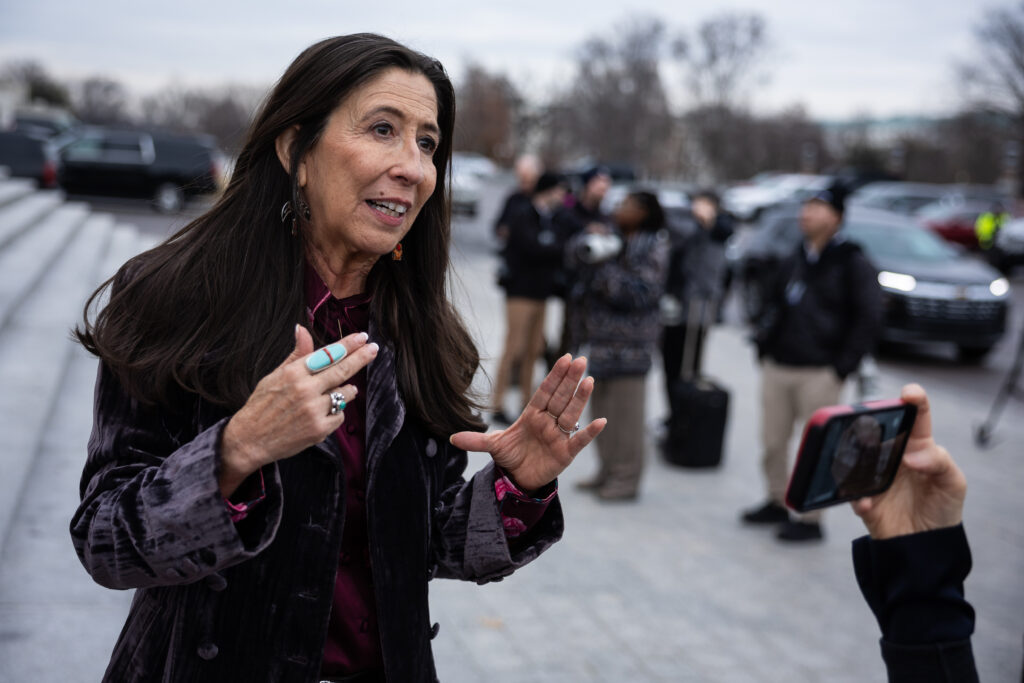
“What we know is that the process is not working, because women staffers are not coming forward with the allegations, the accusations,” Rep. Teresa Leger Fernández (D-N.M.) said in an interview. “They’re not telling us what happened to them.”

In Swalwell’s case, four women did come forward — to the media. They spoke to the San Francisco Chronicle and CNN to accuse the then-congressman and California gubernatorial candidate of misconduct ranging from sending unsolicited explicit photos to rape.

Within days of the reports publishing, Swalwell withdrew his campaign for governor and resigned from the House. He has denied any wrongdoing, saying he stepped away from public life to fight the allegations, which have sparked a criminal investigation in New York.

The swift results Swalwell’s accusers saw from the court of public opinion stand in stark contrast to what Capitol Hill denizens have come to expect from the congressional ethics process.

There is no traditional human resources department on Capitol Hill, where lawmakers run their offices as fiefdoms with total control. And employees of the legislative branch are not covered by federal whistleblower protection laws like federal workers in the executive branch.

The House Ethics Committee can take months to issue any formal decisions or disciplinary recommendations, sowing doubt among lawmakers that it is the best means for survivors of misconduct to seek justice.

The Gonzales case helped fuel that skepticism. A wave of media reports alleged misconduct with a female staffer who later committed suicide. Facing rising social media pressure and flagging polling numbers, Gonzales publicly confessed in March to a sexual relationship with the woman and withdrew his reelection bid. He resigned in April.

Before he left, the independent Office of Congressional Conduct concluded in a confidential report there was “substantial reason to believe” Gonzales violated House rules, and the Ethics Committee opened an investigation. That probe was closed with Gonzales’ resignation and did not result in punishment.

Some lawmakers want to offer survivors a similar path to shaming their alleged abusers out of office.

Rep. Lauren Boebert (R-Colo.), for instance, has asked any congressional staffers experiencing mistreatment or misconduct to bring their allegations directly to her office. Boebert has pledged to keep accusers anonymous as she uses her media platforms to publicize any credible allegations.

While Boebert said in an interview that she hasn’t written off the official channels completely, other options have to be open.

“Whatever actually holds people accountable,” she said. “I mean, that’s what it’s all about — holding creeps accountable.”

Currently, workers on Capitol Hill have multiple official avenues for reporting sexual misconduct, including filing civil claims through the Office of Congressional Workplace Rights. House employees can use the “file a complaint” portal on the House Ethics Committee website and seek support from the chamber’s Office of Employee Advocacy. Senate employees can similarly file with the Senate Ethics Committee, though the guidance is complex and the panel is notorious for its inaction.

The tension between the formal ethics process, with its emphasis on due process, and Boebert’s push to simply throw back the curtains on allegations of sexual malfeasance is not new. The dynamic was central to the 2018 #MeToo debates, which resulted in an overhaul of Congress’ largely opaque workplace-harassment reporting process.

Under those changes, victims are no longer required to go through mediation for their complaints and are permitted to work remotely while the investigation process plays out. The Office of Employee Advocacy was created in the 2018 revamp to offer legal support to complainants.

But with sexual misconduct back in the headlines — and rumors of more bad behavior running rampant — some lawmakers including Reps. Anna Paulina Luna (R-Fla.) and Nancy Mace (R-S.C.) are seeing new wisdom in Boebert’s name-and-shame strategy.

The clash of philosophies about how Congress should police itself presents a challenge for reform-minded lawmakers. Some want to simply better enforce existing law, and there are bipartisan concerns about preserving some semblance of due process without letting it become a perpetual shield for workplace predators.

“We cannot let allegations and rumors and Twitter posts lead to expulsions,” said Leger Fernández.

Other changes made in 2018 under the ME TOO Congress Act included ending the longstanding practice of using taxpayer dollars to pay out harassment settlements against lawmakers, instead requiring members to pay out of pocket.

Even with those changes, survivors still fear retaliation and being “blackballed” out of a career in politics or public service if they report their bosses. And victim advocates say the official processes remain lengthy and burdensome — all of which has weighed on a key architect of the 2018 law.

“Why, after we … provided so many more protections to the victims, that these women didn’t feel they could come forward?” former Rep. Jackie Speier (D-Calif.), who was victim of sexual assault during her own time as a staffer, said in an interview.

In the eight years since the last update to Capitol Hill’s sexual misconduct laws, few lawmakers have been subjected to a full Ethics inquiry regarding sexual misconduct. Multiple members who faced public allegations, however, opted to leave Congress before the panel could release a report, including Rep. Katie Hill (D-Calif.) in 2019 and Rep. Tom Reed (R-N.Y.) in 2021.

House Minority Leader Hakeem Jeffries said he has empowered Leger Fernández, who chairs the Democratic Women’s Caucus, to lead Democrats on “ensuring that we have the type of accountability and system in place that treats victims and staffers with the dignity and respect that they deserve.”

She plans to pursue bipartisan legislation this Congress that refines the 2018 reforms and identified Rep. Bryan Steil (R-Wis.), chair of the House Administration Committee, as a likely partner.

But Steil has his own ideas for how to address sexual misconduct in Congress, telling POLITICO in a statement his panel is “always looking at ways we can improve compliance with existing laws.” He referenced the Congressional Accountability Act, a 1995 law which applied some federal labor laws to Congress and was the underlying statute updated in 2018.

Speaker Mike Johnson has also signaled he wants to focus on enforcement, though he said he is eager to hear proposals to encourage more reporting. He cited his desire to protect his two daughters who work on Capitol Hill as committee aides.

“I’m a father, not just the speaker of the House,” he told reporters last month. “If there are ways to tighten the rules, if there are suggestions, we’re seeking that from all members. We’re open to that.”He also suggested party operatives need to be more discerning in whom they recruit for office: “We don’t need people running for Congress because they see this as some opportunity for their own individual endeavors. I’ll leave it at that.”

Speier offered one jesting suggestion for dealing with predatory men.

“Maybe we need to put padlocks on their zippers when they first get to Congress,” she said. “I don’t know, but it’s got to be fixed, and we’ve got to do something bold.”

Read the full article here

Share. Facebook Twitter Pinterest LinkedIn Tumblr Email Telegram Copy Link

Related Articles

Congress

Republicans’ faith in Mike Johnson is fading fast

May 1, 2026
Congress

Maxwell’s former boyfriend testifies in House Epstein probe

May 1, 2026
Congress

Spy-powers law gets a six-week reprieve

May 1, 2026
Congress

Anthropic, OpenAI back Warner-Budd workforce data bill

April 30, 2026
Congress

Trump signs DHS legislation, ending record-breaking shutdown

April 30, 2026
Congress

GOP unity cracks with latest Iran war vote

April 30, 2026
Add A Comment
Leave A Reply Cancel Reply

Editors Picks

Reap What You Sow: Farage’s Reform Party Promises to Place Deportation Centres in Green Party Areas

May 4, 2026

Tillis on Comey Indictment: No Evidence ‘86’ Is Used as a Call for Violence

May 4, 2026

Trump rejects Iranian peace offer

May 4, 2026

Pirro: It Is ‘Definitively’ WHCD Shooter’s Bullet that Hit Secret Service Agent

May 4, 2026
Latest News

Investigate them or shame them? Inside the debate over how to deal with creeps in Congress

May 4, 2026

Adam Schiff: Trump ‘Absolutely Not’ Following War Powers Law

May 4, 2026

Mallory McMorrow: There Are Parallels Between Nazi Germany and Trump

May 4, 2026

Subscribe to News

Get the latest politics news and updates directly to your inbox.

The Politic Review is your one-stop website for the latest politics news and updates, follow us now to get the news that matters to you.

Facebook X (Twitter) Instagram Pinterest YouTube
Latest Articles

US threatens sanctions over payments to Iran for Hormuz passage

May 4, 2026

Reap What You Sow: Farage’s Reform Party Promises to Place Deportation Centres in Green Party Areas

May 4, 2026

Tillis on Comey Indictment: No Evidence ‘86’ Is Used as a Call for Violence

May 4, 2026

Subscribe to Updates

Get the latest politics news and updates directly to your inbox.

© 2026 Prices.com LLC. All Rights Reserved.
  • Privacy Policy
  • Terms of use
  • For Advertisers
  • Contact

Type above and press Enter to search. Press Esc to cancel.