
Close Menu
The Politic ReviewThe Politic Review
  • News
  • U.S.
  • World
  • Politics
  • Congress
  • Business
  • Economy
  • Money
  • Tech
  • More Articles
Trending

Shooting triggers panic at Times Square (VIDEOS)

June 19, 2026

Sen. Josh Hawley Presses MLB on ‘Pattern of Discrimination’ Against Christian Players

June 19, 2026

Mamdani boosts congressional slate ahead of primary election

June 19, 2026
Facebook X (Twitter) Instagram
  • Donald Trump
  • Kamala Harris
  • Elections 2024
  • Elon Musk
  • Israel War
  • Ukraine War
  • Policy
  • Immigration
Facebook X (Twitter) Instagram
The Politic ReviewThe Politic Review
Newsletter
Friday, June 19
  • News
  • U.S.
  • World
  • Politics
  • Congress
  • Business
  • Economy
  • Money
  • Tech
  • More Articles
The Politic ReviewThe Politic Review
  • United States
  • World
  • Politics
  • Elections
  • Congress
  • Business
  • Economy
  • Money
  • Tech
Home»Economy»Inflationary Pressures Ease in Manufacturing Sector as Private Surveys Clash
Economy

Inflationary Pressures Ease in Manufacturing Sector as Private Surveys Clash

Press RoomBy Press RoomNovember 3, 2025No Comments5 Mins Read
Share Facebook Twitter Pinterest Copy Link LinkedIn Tumblr Email VKontakte Telegram

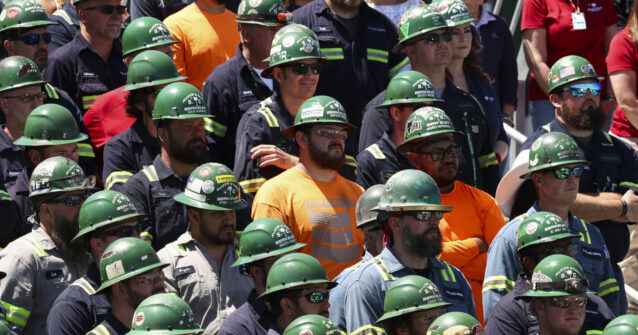
U.S. manufacturing surveys released Monday showed welcome signs of easing inflationary pressures, with both major purchasing managers’ indexes reporting slower rates of price increases in October—a potentially encouraging signal for Federal Reserve policymakers as official government economic data remains unavailable due to the ongoing federal shutdown.

The price moderation emerged as a rare point of agreement between two surveys that otherwise painted starkly different pictures of the manufacturing sector’s health.
Inflation Cooling Despite Tariff Pressures

The Institute for Supply Management’s Prices Paid Index fell to 58.0 in October from 61.9 in September, indicating input costs are still rising but at a significantly slower pace. Similarly, S&P Global reported that while input price inflation remained “historically elevated,” October marked the lowest rate since February.

Both surveys attributed ongoing cost pressures primarily to tariffs, but the deceleration suggests some relief may be emerging in supply chains.

With the federal government shutdown continuing, private sector surveys like the ISM and S&P Global PMI reports have taken on heightened significance for businesses, investors, and policymakers seeking real-time economic intelligence in the absence of official Census Bureau, Bureau of Labor Statistics, and other government data releases.

Beyond the inflation picture, however, the two surveys diverged sharply on the overall state of U.S. manufacturing.  The ISM Manufacturing PMI fell to 48.7 from 49.1, marking the eighth consecutive month of contraction (readings below 50 indicate declining activity). The index missed economist expectations of 49.3.

“In October, U.S. manufacturing activity contracted at a faster rate, with contractions in production and inventories,” said Susan Spence, chair of the ISM Manufacturing Business Survey Committee. Production notably fell back into contraction after a brief improvement in September.

Only two of the six largest manufacturing industries—food, beverage and tobacco products, and transportation equipment—expanded during the month. ISM reported that 58 percent of the manufacturing sector’s GDP contracted in October.

The S&P Global US Manufacturing PMI registered 52.5, up from 52.0 in September, indicating a third consecutive month of expansion. The survey reported production increasing at a “solid pace” and new orders growing at their fastest rate in 20 months, driven primarily by domestic demand.

New export orders declined in both surveys. S&P Global reported exports declined for a fourth consecutive month and to the greatest degree since July, with sales falling to key markets including Canada, China, Europe and Mexico. The survey explicitly attributed the decline to tariffs, stating “tariffs reportedly remained the primary driver behind the drop in exports.”

S&P Global’s Chris Williamson noted that “tariff policies being increasingly blamed both on rising export losses and import supply chain disruptions.”

Business confidence remained subdued in both surveys. S&P Global reported optimism falling to its lowest level since April, with “US trade policy uncertainties” cited as “a big factor in dampening business spirits.”

ISM respondents also described challenges related to trade policy. “Business continues to remain difficult, as customers are canceling and reducing orders due to uncertainty in the global economic environment and regarding the ever-changing tariff landscape,” said one ISM respondent from the chemical products sector.
The ISM report noted that tariffs and their impact on prices and demand “feature highly in respondents to the survey.”

Both surveys showed weak labor market conditions in manufacturing, with ISM’s employment index at 46.0 (contraction) and S&P Global reporting only “modest” hiring growth for a third successive month.
A closer examination of S&P Global’s survey reveals potential concerns beneath its expansion reading. The report documented an unprecedented surge in finished goods inventories—the steepest increase in over 18 years of survey history.

Chris Williamson, Chief Business Economist at S&P Global Market Intelligence, called this “the most worrying” development in the report, noting it was “widely linked to weaker than anticipated sales to customers, especially in export markets, which could trigger a downshifting of production in the coming months unless demand revives.”

Williamson added that “companies have also become less optimistic about the year ahead, with sentiment back down close to the gloomy levels seen around the April tariff announcements.”

He noted particular weakness in consumer-focused industries: “Business confidence among producers of consumer goods is now down to its lowest for two years as firms growing increasingly worried about household spending in the US and falling sales to consumers in export markets.”

This inventory buildup—where production exceeds sales—often presages future production cuts, potentially explaining why ISM’s data already shows production contracting.

The Momentum Question

ISM’s Spence noted that while there had been “a chain reaction of one-month index improvements” starting with new orders in August and flowing to production in September, “these short gains have not appeared to translate into sustained growth for the sector, a reflection of continuing economic uncertainty”

The ISM data showed that October’s reading “corresponds to a change of plus 1.8 percent in real gross domestic product (GDP) on an annualized basis,” suggesting the manufacturing sector, while contracting, is not dragging down the broader economy, which requires a PMI reading below 42.3 to indicate overall economic contraction.
The sharp divergence between the surveys reflects differences in sampling and methodology. S&P Global surveys approximately 600 manufacturing firms, while ISM polls over 400 companies. The different industry compositions, geographic distributions, and weighting methodologies may explain the conflicting signals.
With inflationary pressures moderating but demand uncertainty persisting, manufacturers face a challenging environment navigating trade policy impacts, weakening exports, and economic uncertainty.

The restoration of government economic data releases would provide additional clarity, but until then, these private surveys—despite their differences—offer the most timely glimpses into the manufacturing economy’s direction.

Read the full article here

Share. Facebook Twitter Pinterest LinkedIn Tumblr Email Telegram Copy Link

Related Articles

Economy

Breitbart Business Digest: Kevin Warsh and the End of Monetary Policy Story Hour

June 19, 2026
Economy

Nolte: 37-Year-Old James ‘God Is Nonbinary’ Talarico Shares His Only Checking Account with Mommy

June 18, 2026
Economy

Feds Indict Eight Illegals Who Used Stolen Social Security Numbers to Work in Kentucky

June 18, 2026
Economy

Wall St. Journal: Illegal Migration Drains Public Support for Legalized Migration

June 18, 2026
Economy

Jobless Claims Fall, Signaling Ongoing Strength in Labor Market

June 18, 2026
Economy

Gasoline Drops Below $4 A Gallon

June 18, 2026
Add A Comment
Leave A Reply Cancel Reply

Editors Picks

Sen. Josh Hawley Presses MLB on ‘Pattern of Discrimination’ Against Christian Players

June 19, 2026

Mamdani boosts congressional slate ahead of primary election

June 19, 2026

US Secretary of War blasts ‘shameful’ NATO (VIDEO)

June 19, 2026

Hungarian Parliament Approves Constitutional Amendment to Ban Orbán From Returning to Power

June 19, 2026
Latest News

WATCH: Knicks’ Jose Alvarado Speaks on Possibility of White House Visit After NBA Finals Win

June 19, 2026

Australia to Begin Mass Aerial Slaughter of Wild Horses from Helicopter Gunships

June 19, 2026

Breitbart Business Digest: Kevin Warsh and the End of Monetary Policy Story Hour

June 19, 2026

Subscribe to News

Get the latest politics news and updates directly to your inbox.

The Politic Review is your one-stop website for the latest politics news and updates, follow us now to get the news that matters to you.

Facebook X (Twitter) Instagram Pinterest YouTube
Latest Articles

Shooting triggers panic at Times Square (VIDEOS)

June 19, 2026

Sen. Josh Hawley Presses MLB on ‘Pattern of Discrimination’ Against Christian Players

June 19, 2026

Mamdani boosts congressional slate ahead of primary election

June 19, 2026

Subscribe to Updates

Get the latest politics news and updates directly to your inbox.

© 2026 Prices.com LLC. All Rights Reserved.
  • Privacy Policy
  • Terms of use
  • For Advertisers
  • Contact

Type above and press Enter to search. Press Esc to cancel.