


Privacy advocates have tried again and again over the past decade to rein in a major U.S. spy program that targets foreigners but also sweeps up data on Americans — and each time, they have fallen short.
They believe 2026 might be different.
The surveillance program in question, known as Section 702, expires in mid-April. Its critics, who believe it too easily allows Americans’ private communications to get caught up in government dragnets meant to ensnare overseas targets, are readying a major push to rewrite the law — and they are hoping they have a crucial new ally in President Donald Trump.
The president has long had an antagonistic relationship with the intelligence community, and some of his closest allies in Congress are among Section 702’s fiercest critics. But persistent lobbying from national security officials and backing from top congressional leaders has been enough to save the program in the past, including during Trump’s first term.
Some of its congressional backers aren’t seeing the same level of engagement this time — at least not yet.
“I spent the last week shaking cages with IC leaders saying, ‘You know, this is going to be a heavy lift,’” said Rep. Jim Himes of Connecticut, the top Democrat on the House Intelligence Committee. “When we reauthorized it last time, Cabinet secretaries were taking random members of Congress out to Starbucks, and I don’t see that effort. So I’m very concerned.”
The bipartisan coalition seeking a sweeping overhaul of the surveillance authority has reasons to be optimistic that Trump might ultimately back their efforts, overruling intelligence officials who have long warned that requiring a warrant to search for any Americans’ data and putting in place other safeguards critics seek would make the program unworkable.
“I think a lot of the rationale that was used against us has just basically dissipated,” said Rep. Andy Biggs (R-Ariz.), who has long pushed for the warrant requirement and continues lobbying various factions for it. “So I think we’re real close to getting some agreements, but right now it’s the warm-up phase.”
Even those who want to keep the current spy authorities intact recognize the president’s potential to swing the debate at the 11th hour.
Trump is “the 800-pound gorilla in the closet,” said one Democratic congressional aide, granted anonymity because they were not authorized to speak publicly about the coming reauthorization fight.
As president in 2020, Trump helped upend three unrelated surveillance programs, all of which ultimately expired, after back-channeling with privacy hawks and breaking with his then-attorney general, Bill Barr.
During the last reauthorization debate in 2024, then-candidate Trump urged Congress to “kill” the Foreign Intelligence Surveillance Act, the larger spy law that Section 702 is nested under. Trump’s decision frustrated supporters of the program — in part because they believe he conflated the foreign-target spy program with the broader surveillance law that was not up for reauthorization.
A crucial Biggs-sponsored House amendment that would have added a warrant requirement for any communications involving Americans failed on a 212-212 tie, with Speaker Mike Johnson casting a rare and decisive vote to kill it.
Now the spy powers fight is a major headache for Johnson, who infuriated privacy hawks with his 2024 amendment vote after having advocated for more surveillance guardrails as a former member of the Judiciary Committee.
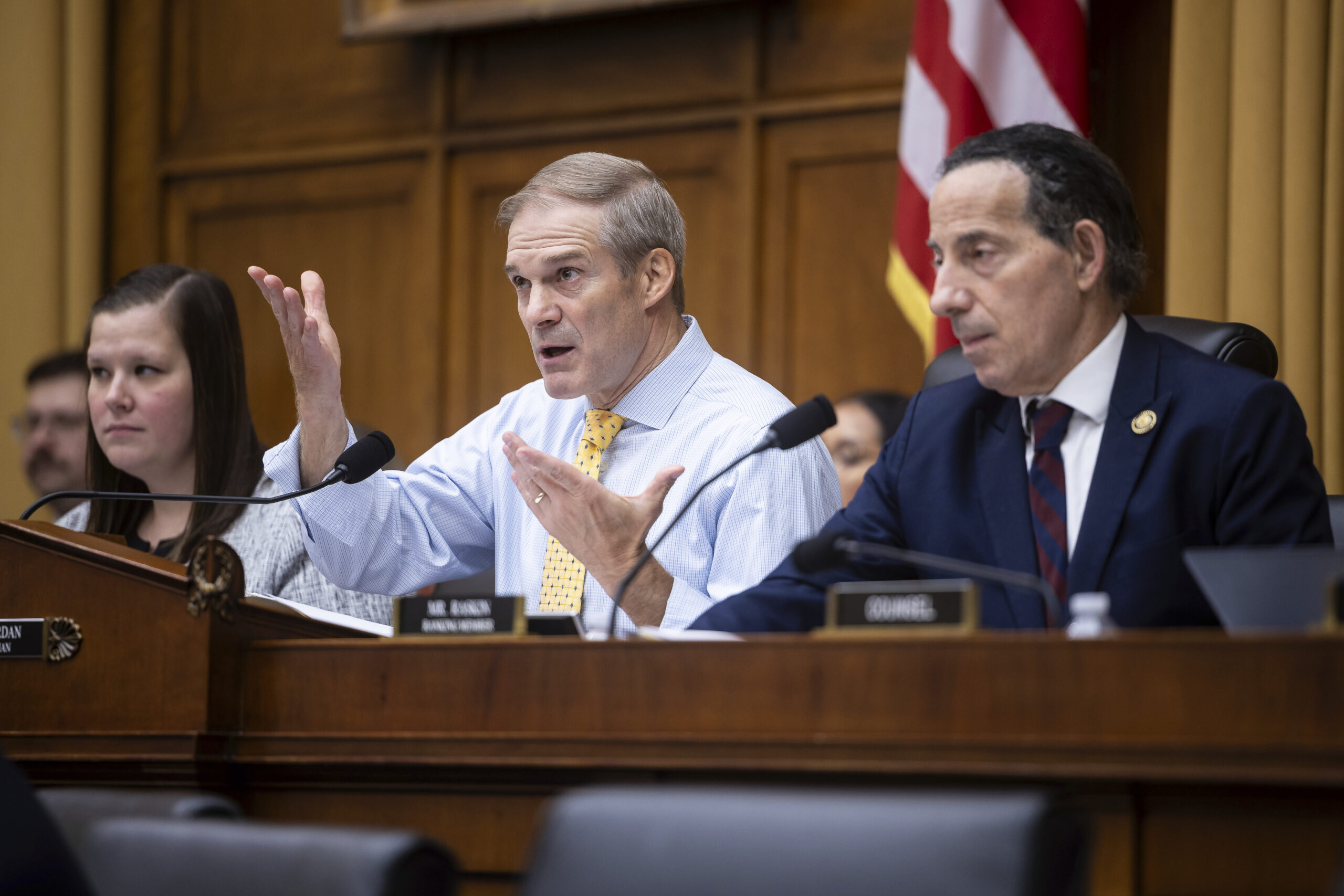
Judiciary Committee Republicans — led by Rep. Jim Jordan of Ohio, a close Trump ally — have started discussing how to approach the reauthorization during their weekly meetings. Jordan said in an interview he is again hoping to impose a warrant requirement for searches involving Americans as well as a ban on data brokers selling consumer information to law enforcement.
He said he has “had some discussions over this past year with some members of the administration” on this issue and plans to meet alongside House Intelligence Committee Chair Rick Crawford (R-Ark.) with White House officials on the matter early next year.
Lawmakers on both sides of the debate are carefully watching Crawford, who opposed the warrant requirement in 2024 — along with every other House Intelligence Committee Republican. But Johnson has since added five Republicans to the panel who each voted for the Biggs amendment.
A committee spokesperson said Crawford is working with House leadership, Jordan, the Senate and the administration “to determine the best way forward to extend 702 authority.”
There are still, however, a majority of Intelligence Committee Republicans who are working to extend the program without adding a warrant requirement — and they are hoping administration officials whom they view as allies, including Vice President JD Vance, CIA Director John Ratcliffe and Secretary of State Marco Rubio, will be able to sway Trump.
“Ultimately the president is going to have to make the decision on it, but I think the people weighing in have a record of not supporting the warrant requirement and knowing it jeopardizes national security,” Rep. Darin LaHood (R-Ill.), an Intelligence Committee member, said in an interview.
Spokespeople for the CIA, National Security Agency and the FBI declined to respond to questions about whether they are in contact with the White House, if they support a clean reauthorization of the current bill, and whether they have engaged with Congress on the issue. The Justice Department, White House and Office of the Director of National Intelligence did not respond to a request for comment.
Some House Republicans are privately hoping that the Senate takes the lead, believing it would be easier to get an extension without major changes across the finish line there. That, they believe, would ease its path to passage on the House side.
Senate Intelligence Committee Chair Tom Cotton (R-Ark.) is quietly pitching an 18-month extension of the authority, effectively punting the surveillance fight until the end of 2027, according to House and Senate Intelligence Committee Republicans. His panel and the Senate Armed Services Committee are expected to hold hearings early next year on Lt. Gen. Joshua Rudd’s nomination as commander of U.S. Cyber Command and director of the National Security Agency.
Those hearings could be the first real indication of how some key lawmakers are approaching the impending reauthorization fight. While some Democrats such as Oregon Sen. Ron Wyden have been longstanding critics of warrantless surveillance, others have generally been more sympathetic to intelligence officials.
But now, with Trump instead of Joe Biden in the White House, that could be changing. For instance, Rep. Jamie Raskin of Maryland was among the majority of Democrats who voted against the warrant requirement amendment in 2024. But during a Judiciary subcommittee hearing this month, Raskin referred to “an assault on the FBI’s internal guardrails against abuse of Section 702 authorities” during Trump’s second term.
“There is an inherent number [of House Democrats] that will reject their ‘yes’ vote and switch just because of Donald Trump,” the Democratic congressional aide said about the warrant requirement. Privacy hawks have also already polled first-term GOP lawmakers to gauge how they might come down, according to one person granted anonymity to discuss the private effort.
Jordan predicted his pro-warrant coalition will “get more Democrat votes this time, and I’m hopeful that we can keep all the Republican votes we had last time.”
Read the full article here