


Art is not a form of propaganda, it is a form of truth”
—John F. Kennedy (Remarks at Amherst College, October 26, 1963)
A string of recent psyop campaigns by leading military, intelligence and globalist “philanthropic” foundations underscores the emergence of the “next generation warfare” targeting members of GenZ across the West.
A notable example is the Fort-Bragg 4th Psychological Operations Airborne division’s latest recruitment video.

https://www.facebook.com/watch/?ref=embed_video&v=826882020239092
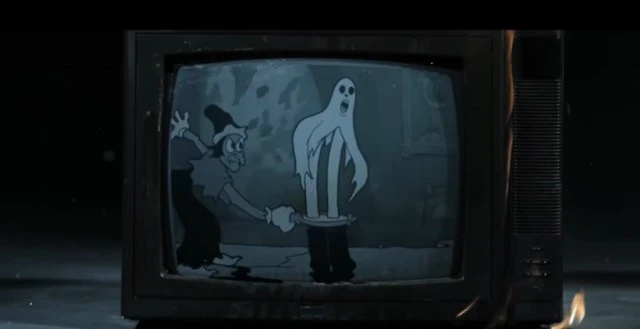
A paint brush layers a thick glob of black paint onto a blank canvas; a light shines on a chess piece; a sequence of dancing ghost cartoons and battlefields flash across the screen. “There is another force applied in combat that we genuinely don’t think of as a weapon of war. That weapon is words. Words are weapons,” declares the narrator against a backdrop of suggestive cartoons, war footage, and reels of ambiguous images.
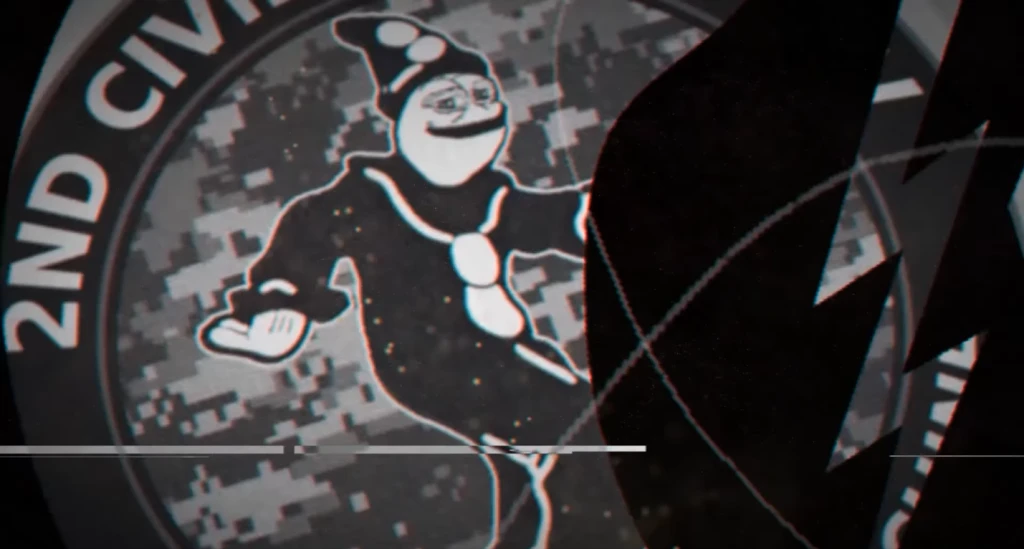
Even the famous Pepe the Frog dressed as a clown makes an appearance in the new ad. Pepe’s cameo is likely a suggestive nod to the younger alt-right and young MAGA communities. Or perhaps it’s an invitation to the young Q-Anon community to join the latest “white hat” conspiracy in the military industrial complex’s revamped psychological warfare department?
The “Ghost Army” depicted in the video references a top secret unit that “was capable of simulating two whole divisions—approximately 30,000 men—and used visual, sonic, and radio deception to fool German forces during World War II’s final year.”
“Ghosts in the Machine” Part I & Part II harken back to the hackneyed Cold War Communism vs. the Free World narrative, artistically re-imagined with images of Communist China contrasted with recordings from JFK speeches and quotes from famous writers, including William Shakespeare and John Steinbeck. The videos feature state-of-the-art visuals and an aesthetic reminiscent of intros from the Call of Duty video game franchise.
In his article “Ghosts in the Machine: Irregular recruitment for an irregular force” Sgt. 1st Class Tim Beery described the challenges which prompted the new series of recruitment videos:
“You’re an Army Psychological Operations officer. Faced with a recruiting challenge, you’ve been given the unenviable task to package and market a military specialty that is based on an abstract skillset to the next generation of Army soldiers. You must develop an appropriate means to reach Gen Z recruits who are not usually interested in planes, tanks, or guns. What do you do?”
The article describes the latest attempts to connect with members of GenZ and recruit its gifted young individuals to less conventional forms of modern warfare ie. psywar:
“The challenge there is how do you sell an intangible art form,” said Gray… “I mean, Special Forces has (recruiting) easy,” he continued. “You show some guys on a plane, or in a halo jump, or on a stack and there’s an infinite amount of ways to make that look appealing. With an intangible concept, you do it through art,” he explained.
The role of art in both psychological operations and ideological warfare campaigns is not new. Afterall, as Frances Stonor Saunders documented in her ground-breaking book The Cultural Cold War: The CIA and the World of Arts and Letters, intelligence agencies have long been enmeshed in the world of arts and letters.

From popularizing the Modern Art movement to the Pentagon’s huge and extensive influence over Hollywood films, the latest psychological warfare recruitment programs are a reminder that the world of art and culture is anything but a neutral ground of ideas and creativity. In fact, as the new Ghosts in the Machine series makes clear, ideas and creativity are increasingly viewed as a strategic weapon next generation warfare.
[Embed: Video 2 to embed – Ghosts in the Machine II]
Overall, the videos invite curiosity and elicit our emotions in both sophisticated and artistically interesting ways, making them perfect examples of where modern psychological operations are headed—and who they’re targeting.
Penetrating decentralized social media ecosystems like TikTok with traditional media narratives and tactics has proved ineffective, making the Zoomers surprisingly resilient to much of the traditional and mainstream media control of public opinion.
The challenges encountered by the political establishment and intelligence agencies was succinctly—and hilariously—described by comedian Tim Dillon in his recent comedic rant:
“Because young people are realizing they’re being propagandized at a level that older people gladly accepted. It was normal. It was fine. Older people were okay with being propagandized as long as they got a few things out of it. The young people are getting nothing out of it… If you’re doing something, you want to get something out of it. If you were going to delude yourself, and believe the bullshit on the news, you have to get a little bit out of it.”
Younger generations are being asked to believe increasingly ludicrous narratives without receiving any of the material benefits reaped by previous generations. They can’t buy a house; the gig economy seldom offers secure or lasting employment; expensive degrees no longer translate into successful careers; and the entertainment and culture complex has lost the magic of its Hollywood heyday—leaving today’s generations with little to distract them from the stark realities of the modern world.
The problem being experienced by mainstream and traditional narrative gatekeepers and their propaganda outlets is aggravated by the fact that highly edited news coverage and curated narratives can’t compete with the raw, direct nature of instant social media feeds, including on-the-ground coverage of war zones and authentic human interactions.
For these reasons, the establishment is still trying to decode Gen Z.
Next Generation Storytelling?
The new partnership between the Rockefeller Foundation and MrBeast is yet another example of the evolving nature of the ideological warfare being deployed against young people everywhere.
In his announcement on Twitter, Dr. Shah wrote:
“Proud to announce our partnership with @BeastPhilanthr, bringing together a storied history of advancing billions of lives with next-gen storytelling that ignites action. With
@MrBeast we’ll show that when kindness goes viral, big change is possible.”
These developments highlight the growing importance of storytelling and the power of myth in twenty-first century psywars.
In light of the latest attempts to capture the imagination of young generations, one could argue that today’s information wars won’t be won by those with the most information, but those who tell the better stories.
As Plato recognized over 2000 years ago, stories and myths have the power to shine light on the hidden reality of things, or conceal the very same reality.
Whether the truth is buried under a pile of contradictory narratives or emerges largely depends on the kinds of stories that are allowed to proliferate in the culture.
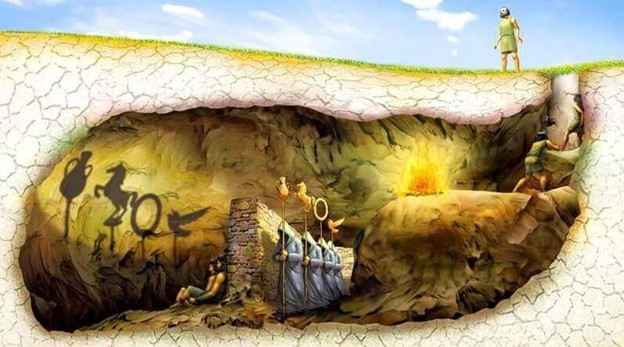
Perhaps no myth captures this reality more powerfully than Plato’s own allegory of the cave. For those who have never seen the source of light generating the shadows on the cave wall, the shadows are themselves treated as the primary reality. But the mind who dares to form his own hypotheses and decides to willingly wrestle with the paradoxes inherent in his sensory experience becomes capable of conceptualizing a higher causality—a reality for which the shadows on the cave wall are but dim reflections—or distortions.
Plato’s central message was that ideas rule the world—not tyrants, might or money. Or to quote Ghosts in the Machine, “Words are weapons.” Tyrants, might and money will do everything they can to suppress ideas that threaten their dominion, but that only underscores the importance of ideas and the lengths to which evil goes to suppress, demoralize, or deceive citizens from interacting with authentic and potent ideas. Developing the appropriate metaphors and stories through art and poetry becomes no longer an option, but a necessity if truth is to prevail in our politically polarized society.
Predictive Programming Revisited
In modern times, perhaps no medium has exploited the power of modern myth and storytelling more effectively than film. With the ever-evolving world of predictive programming, mass audiences have been routinely subjected to rehearsals of “fictional” scenarios, catastrophic events and glorified myths portrayed through the seemingly endless stream of dystopian movies and Hollywood thrillers. From The Day After Tomorrow’s global natural disaster narrative to Civil War’s imagined dissolution of the United States, Minority Report’s “precrime” to Gattaca’s eugenics (or Utopia’s deadly viruses), audiences have been subconsciously primed for decades under the guise of entertainment and “science fiction.”
Today, the lines between science fiction, state-sponsored simulations, and real-world events have become ever more illusive—often serving more as artistically re-imagined predictions, rather than pure fiction.
So, Britain’s latest pandemic simulation imagines the outbreak of a new virus that specifically targets children and teenagers.
According to the Telegraph, “Exercise Pegasus imagined a virus deadly to children spreading around the world from an island in Southeast Asia.” Concluding in October 2025, it was “the biggest pandemic simulation the country has ever held,” the article noted.
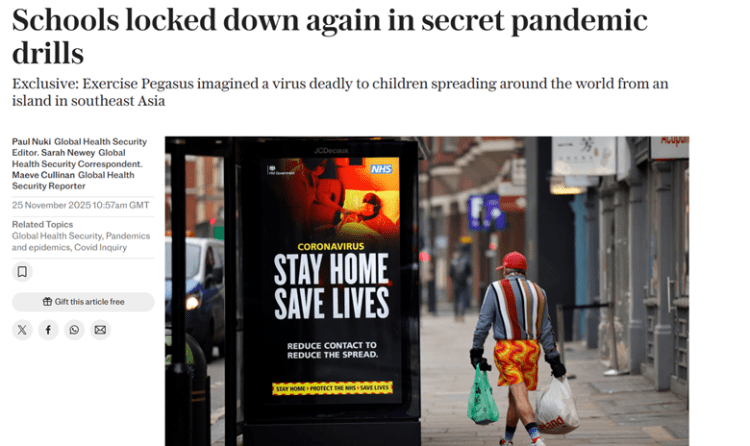
The exercise even involved cabinet ministers who participated in a “wargame” that involved handling fictional street protests over social distancing, according to the Telegraph’s sources. The article also mentions an NHS briefing document that described the exercise’s purpose as simulating “a realistic pandemic scenario, and is the first of its kind in nearly a decade.”
Of course, anyone who saw the original British Utopia series (2013-2014) or its 2020 American remake will marvel at the uncanny resemblance between the Utopia plot and the real-life covid scenario that unfolded shortly after.
The plot of the series is summed up as follows:
“The Harvest orchestrate an outbreak of a supposed flu, spread via kids visiting a traveling petting zoo, which is inevitably lethal. Based on this, parents and others begin clamoring for a vaccine, which supposedly Christie Labs has the exclusive rights too. In truth, the “flu” is actually a different virus entirely and the vaccine contains instead a compound which will sterilize anyone who is injected with it.”
But hey, don’t worry, it’s only fiction.
Conclusion
As long as the stories governing our lives are not our own, and as long as we fail to question our own narratives, or imagine alternatives to those prescribed by the modern myth-makers of our age, we shouldn’t be surprised if our story continues to read like a work of dystopian fiction.
The stories we play out in our lives are themselves often a combination of myth and reality. Our reality inevitably has a quality of myth to it and our myths inevitably contain some germ of truth. So today, rather than self-fulfilling prophecies, perhaps the constant rehearsals of catastrophic natural disasters, civil wars and disease outbreaks aren’t so much a sign of those inevitable things to come as a reminder Plato’s own psycho-mythic wisdom about the power of stories in our society.
As we stand at the threshold of a next generation warfare, maybe it’s time we get our stories right?
Watch the full film
Read the full article here