


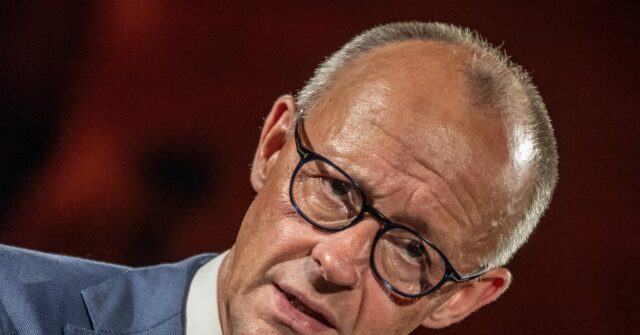
During a meeting with science students, German Chancellor Friedrich Merz openly derided the principle of freedom of speech and defended the need for the state to “protect” citizens from American-style libertarianism on the internet.
What would have typically been an unremarkable photo-op for the increasingly unpopular German leader drew condemnation over a major gaffe (read: accidentally revealing his true feelings) as Merz held court at the Chancellery with the winners of the ‘Youth Researchers’ competition on Tuesday.
When pressed by a young student on whether his plans to end online anonymity would impede personal liberties, Chancellor Merz reacted indignantly, declaring: “Please, no one comes to me with free speech… That has nothing to do with free speech anymore.”
The supposedly conservative politician — who made sure to use English when repeating the phrase “free speech” as if to mock the very concept — said that he rejects the “libertarian understanding of politics,” which he claimed emanates from the United States.
Merz said that his vision of a liberal society was rather one in which the state steps in to protect citizens “from false information, from personal degradation, from discrimination” on the internet.
The Chancellor complained that in the “analogue world” of his youth, German newspapers were liable to face legal action for spreading false claims, but this is no longer possible with the advent of anonymous social media profiles, and thus the media landscape lacks “hygiene”.
He also asserted that anonymity allows the proliferation of bot-generated messages, which he claimed were instrumental in helping the Alternative for Germany (AfD) trounce his globalist Christian Democrats in the Saxony-Anhalt state elections earlier this month.
Yet, it is doubtful that any amount of censorship from Berlin would bolster the Chancellor’s faltering coalition government, which rumours suggest may be on its last legs.
Indeed, following the embarrassing defeat in Saxony-Anhalt — which may yet result in the AfD taking control of a state government for the first time in its history — Merz’ popularity fell to an all-time low, with the latest RTL/ntv trend barometer finding that just 10 per cent of Germans approve of the Chancellor’s performance, compared to a staggering 88 per cent disapproval rate.
The comments from Merz were roundly criticised as a mask-off moment for the embattled Chancellor. Tichys Einblick columnist Sofia Taxidis remarked: “The tighter the noose closes around him, the more aggressively and irrationally he lashes out. It’s a good thing it’s coming to an end. The man is becoming increasingly agitated and increasingly dangerous for democracy.”
Die Welt’s influential Chief reporter Anna Schneider quipped that the German public is not in need of Merz to protect them from the internet, but rather of being able to have a “train ride without worrying about knives in the chest”.
The draconian speech restrictions have become a major fault line between Berlin and the United States, with Vice President JD Vance criticising Germany and other European states in his landmark address at the Munich Security Conference last year for failing to live up to Western principles of liberty.
Follow Kurt Zindulka on X: Follow @KurtZindulka or e-mail to: [email protected]
Read the full article here