


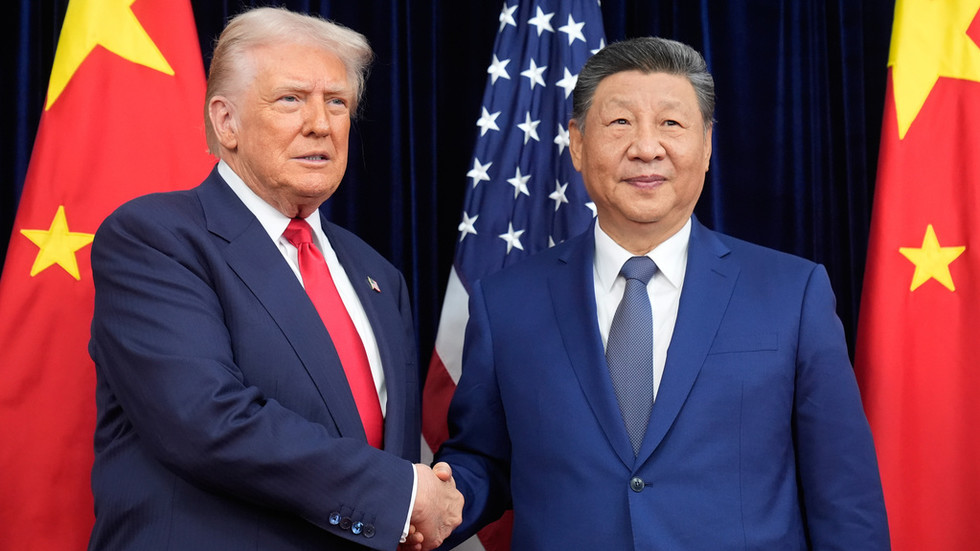
The well-worn business phrase “push and pull” neatly captures the essence of today’s US–China relations. What once looked like a competitive partnership has hardened into a contest of wills, power, and identity. One that will shape the global order for years to come.
For much of the late 20th century and the first decade of the 21st, the dominant Western assumption was that the world was moving toward a liberal, universal order. Economic interdependence, global markets and single rule-sets were supposed to smooth away historical grievances and cultural differences. In that vision, civilizational identities – the deep structures of tradition, culture, and worldview – were treated almost as relics.
That era is over. The liberal order began to crack long before Donald Trump entered the White House, but his arrival made the rupture visible and irreversible. As the old framework faltered, the pendulum swung back toward identity, difference, and civilizational self-assertion. The question now is not whether this shift is happening, it clearly is, but how the world will function within it.
The Trump effect
George W. Bush once promised “compassionate conservatism.” Barack Obama framed power in eloquent multilateral terms. Trump dispensed with such packaging. In less than a year in office, he changed not only American diplomacy but the global expectations surrounding it. Washington, under Trump, rediscovered a bluntness that previous generations tried to bury under layers of institutional polish.
Part of this is personal theater: his brusqueness, his disregard for protocol, and his habit of airing grievances and demands in public. His supporters view this as refreshing authenticity, a break from the professionalized hypocrisy of the establishment. His critics call it dangerous. Either way, it has been effective in forcing other players to adjust.
Form dictates substance. “Peace through strength,” long a core American formula, now translates into coercive bargaining, tariff threats, open blackmail, and public humiliation of rivals and allies alike. The administration has embraced this as a governing philosophy. Diplomacy is a battlefield; hesitation is weakness; and courtesy is optional.
In a cultural sense, Trump resurrects a caricature Europeans once drew of Americans: brash, self-assured, contemptuous of nuance, convinced that power is the most honest argument. The “farmer republic” instincts that 19th-century observers attributed to America – confidence in one’s rightness, suspicion of subtlety – are back on display. Trump is proud of this. And whether one likes it or not, he remains leader of the most powerful country on earth. Everyone must factor that reality into their strategies.
There is a paradox here: Trump’s bluntness, while abrasive, can be easier to deal with than Washington’s more polished double-speak. As President Vladimir Putin has implied, it is simpler to negotiate with someone who states his demands plainly than with a smiling technocrat who buries intent under abstractions. But bluntness without proportion is dangerous, and Trump often treats diplomacy as if it were a television stage. Where escalation is drama rather than consequence.
A different civilization
The most revealing contrast to this style is China. In raw capacity, Beijing has either reached parity with Washington or will soon do so. That makes it America’s primary geopolitical rival. A structural fact that transcends personalities.
Culturally, the two powers could not be more different. Where Trump prizes dominance and spectacle, Beijing values continuity, disciplined patience, face-saving compromise, and a belief in gradual, managed evolution. China entered the global system expecting mutual benefit and predictable rules. It did not expect, and doesn’t particularly like, the American turn toward open intimidation.
During Trump’s first term, Chinese officials hoped this was a passing phase. Trump’s second term disabused them. The pressure is heavier, the confidence greater, and the provocations more deliberate. China has responded in kind, abandoning its previously understated posture for sharper language and reciprocal signaling.
Beijing is learning to answer bluntness with bluntness, though it does so reluctantly. It is still culturally uncomfortable with open confrontation. Yet the leadership understands that the era of polite strategic ambiguity is gone. This phase – coercion versus resolve, threat versus counter-threat – is no temporary disruption. It is the new normal.
Push, pull, and the new order
The future of US–China relations will follow a rhythm familiar to business negotiators: pressure, pause, partial deal, breakdown, repeat. Each side will test how much harm it can threaten without tipping into disaster. Washington will push first. That is Trump’s instinct. Beijing will push back, no longer willing to absorb blows silently.
This is not a new Cold War. It is something more fluid and unpredictable. Today’s world is not bipolar; it is a system in which other major actors – from Russia and India to regional coalitions in the Middle East, Eurasia, and Latin America – will assert themselves. But the central axis of the transformation is US–China divergence. The symbiosis of interests that defined the last forty years has ended. Interdependence is now a battlefield, not a stabilizing force.
After Trump?
Trump will not remain president forever, and China itself is evolving. A calmer phase may follow, or tensions may sharpen even further. The decisive variable will not be ideology but power distribution. Civilizational identity adds depth to the contest; economics and technology give it urgency; leadership styles determine the tempo.
The only certainty is that we are witnessing a structural shift, not a passing quarrel. Globalization’s most ambitious phase is over. A world of civilizational players – sometimes cooperating, often competing – has arrived. And the relationship between the United States and China will define its contours more than any other single factor.
Read the full article here