



We can no longer expect the international system – whether global or Eurasian – to reproduce the “ideal” models of order known from history. The world has changed too profoundly. Yet if the nations of Greater Eurasia wish to coexist securely, we must begin defining our own principles of legitimacy and mutual respect.
Any student of international politics knows that mutual recognition is the foundation of legitimacy in relations between states. It is what allowed the great powers of Europe to maintain a degree of peace from the defeat of Napoleon in 1815 until the catastrophe of 1914. In simple terms, legitimacy meant that the major players accepted each other’s right to decide their internal arrangements and recognised that their systems rested on broadly similar principles. Because they shared this understanding, they could view one another’s security as part of their own.
When revolutionary France refused to recognize the monarchies of Europe, war became inevitable. Napoleon’s empire, built on the energy of destruction, could not live in peace with regimes whose legitimacy it denied. But once the coalition of Russia, Austria, Britain and Prussia defeated him, they were able to reach agreement at the Congress of Vienna, because they did recognize one another’s right to exist. For a century thereafter, Europe’s balance of power rested on this shared acceptance of legitimacy.
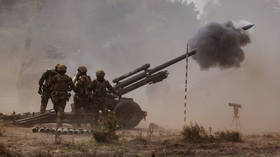
Since that time, the world has not known another order in which legitimacy played so central a role. During the Cold War, the West never truly recognised the Soviet Union as legitimate. The so-called “mutual respect” that later historians like to invoke was really just an acknowledgment that nuclear war would be suicidal. The struggle continued — economic, ideological, cultural — until the socialist system itself collapsed.
The same was true of China. Washington’s rapprochement with Beijing in the 1970s did not mean the United States accepted the Communist Party’s permanent right to rule. Once competition revived, the old hostility quickly returned. And so it has been with Russia. The West’s rejection of our political path long pre-dated any battlefield confrontation; the conflict merely exposed it. Even if the fighting were to subside, it is hard to imagine a return to the consensual European order of more than a century ago.
The lost ideal of mutual recognition
The idea of mutual recognition as the basis of legitimacy, then, remains an admirable relic — a model from a different age. It may inspire, but it cannot be replicated under present conditions. Today, that idea survives mainly among those seeking a new balance of power outside the Western world: organizations such as BRICS and the Shanghai Cooperation Organization.
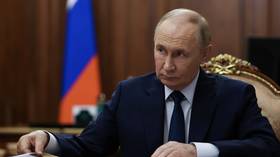
At the SCO summit in Tianjin this September, members again stressed respect for sovereignty as the foundation of secure and universal development. It is a reminder that the process must begin at home. Eurasian states must learn to stabilize their own region on the basis of legitimacy, not dependency.
Many still practise what they call “multi-vector” diplomacy — cultivating ties with powers whose policies toward Russia or China are at best unfriendly. But sooner or later, the Western refusal to acknowledge the sovereignty of its main competitors will force these partners to make choices. They will face political or economic risks if they continue to resist American pressure. For Eurasia to stand on its own feet, it must accept that legitimacy starts with mutual recognition among ourselves.
Historical limits of Western models
The classic European model of legitimacy arose from conditions that no longer exist. In the early 19th century, the world’s fate rested in the hands of five powers — Russia, Britain, Austria, Prussia, and France — two of them vast empires. The gulf between those states and the rest of humanity was so immense that their dealings effectively were international politics.
A few decades after Vienna, Britain alone could humble the great Qing Empire in the Opium Wars. With such limited participants, building a shared political principle was relatively simple. Today, dozens of states possess serious economic or military weight, and weapons of mass destruction make conflict between them infinitely more dangerous.
Nor was the 19th-century peace as perfect as nostalgic accounts suggest. The Crimean, Austro-Prussian, and Franco-Prussian wars all occurred within that supposedly “legitimate” system. They were limited in scope, but real nonetheless. In an age of nuclear deterrence, we can no longer assume that limited wars will stay limited — or that legitimacy can prevent catastrophe.
Toward an authentically Eurasian order
Equally unrealistic is the notion that nations with profoundly different histories, cultures and religions can ever fully “accept” one another’s domestic arrangements. Diversity is a permanent feature of Eurasia. What we can and must do instead is reaffirm the older, simpler meaning of sovereignty — the freedom to pursue one’s own foreign policy without external interference.
This approach, already visible in the conduct of many Eurasian powers large and small, offers far more realistic prospects for stability. Yet it also raises difficult questions. How do we provide mutual guarantees of non-aggression in a world where temptation and threat are growing side by side? How do we prevent outside actors from exploiting our differences?
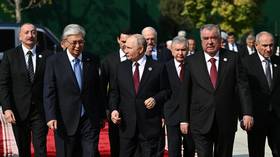
The answer lies not in romantic dreams of 19th-century concert systems, but in building trust and interdependence among Eurasian states themselves — through trade, infrastructure, security cooperation, and shared diplomatic institutions. Legitimacy in this context will not mean sameness, but reciprocal restraint: the understanding that no nation’s sovereignty should be used as a weapon against another’s.
Defining legitimacy for the 21st century
We should not expect any global or regional order to resemble the tidy models of the past. What Eurasia requires is a new definition of success — criteria for coexistence that fit our realities rather than Europe’s nostalgia. Those criteria must safeguard, above all, the principle of state sovereignty, which remains the cornerstone of peace and independence for every nation on the continent.
The West may continue to deny this principle in practice, using its economic power to question the right of others to chart their own course. But Greater Eurasia now has the chance to prove that legitimacy can once again rest on mutual recognition — not as imitation of 1815 Vienna, but as a modern, plural, post-Western alternative.
Only when Eurasian states accept each other’s sovereignty as inviolable will we begin to restore the legitimacy of international order —not as Europe once knew it, but as a system shaped by our own history, geography, and civilization.
Read the full article here