
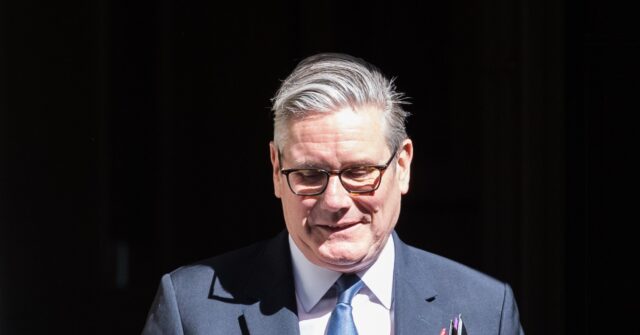
Sir Keir Starmer has announced that he will be standing down as a Member of Parliament a little over a month after being ousted from Downing Street in favour of Prime Minister Andy Burnham.
The former Prime Minister told the Camden New Journal on Tuesday that he will be stepping down as the MP for Holborn and St Pancras after representing the London constituency for over 11 years.
In a statement, Sir Keir said that it had “been a huge honour and privilege to represent the best constituency in the country” but that it was time to “pass the baton to a successor”.
“I will now focus on other things and that will be international affairs including defence, security, trade and technology in a fast-changing world.
“I will also continue, as I have done for a long time now with others, to work on combating violence against women and girls; that is an issue that matters to me hugely.
“It’s work I started before I became an MP and it’s work I’m keen to continue after I’m an MP. So international affairs on the one hand, and continuing my work on violence against women and girls on the other.”
After having served as the Director of Public Prosecutions (DPP) for the Crown Prosecution Service (CPS) from 2008 to 2013, Sir Keir was first elected to the House of Commons at the 2015 general election for the left-wing Labour Party, then led by radical socialist Jeremy Corbyn.
Although Starmer had himself been involved in radical socialist politics as a younger man and had served in Corbyn’s Shadow Cabinet, he would go on to purge Corbyn and many of his far-left allies after taking control of the party in 2020.
The ousting of his former leader and his cohort from the party came amid a supposed campaign to rid Labour of antisemitism; however, it has been reported that the scheme was developed by longtime Starmer ally and anti-Breitbart censorship activist Morgan McSweeney to make the party more electable and allow Starmer to ascend to the premiership.
The strategy appeared to pay off, with Labour sweeping to a historic victory in the 2024 general election, ending 14 years of Conservative Party governance, which was reduced to the smallest vote share of any majority government since at least 1830.
However, it soon became clear that Starmer and Labour’s victory was more of a protest vote against the Tories’ failures than a positive mandate for the new left-wing government, having won just over 33 per cent of the vote, the lowest share of any governing party on record.
Less than a month after coming to power, cities and towns across England and Northern Ireland erupted in riots following the mass stabbing at a Taylor Swift dance party in the sleepy seaside town of Southport by second-generation Rwandan Axel Rudakubana, who brutally murdered three young British girls and injured ten others.
In an apparent bid to demonstrate his toughness, Starmer waged a systematic arrest campaign against those involved, even tangentially, with the riots, which he described as “far-right thuggery”.
However, many of the areas with the most violence were in the so-called Red Wall, working-class regions in the north of England, which have traditionally supported the Labour Party but have become disaffected as the left-wing party shifted its focus to urban, elitist, and often foreign concerns.
To make matters worse, in order to jail the thousand-plus people supposedly involved in the riots — which included people who made comments on social media — the Starmer government decided to enact an early release scheme to allow criminals to be set free to make room. Unsurprisingly, many quickly re-offended.
Meanwhile, the migrant crisis in the English Channel continued to rage under the Starmer government. Although the former top prosecutor had insisted that a “smash the gangs” law enforcement campaign against people smuggling networks was the answer, over 72,000 illegals reached British shores by boat under his watch, the most of any prime minister on record.
The Starmer government also faced heavy criticism and international pressure, particularly from Elon Musk and his X platform, over the issue of child rape grooming gangs. Starmer had initially attempted to deflect calls for a national inquiry — which would likely implicate many Labour officials — claiming that those demanding an inquiry were jumping on the “bandwagon of the far-right”.
But following a report from Dame Louise Casey, which confirmed that such grooming gangs were predominantly made up of Pakistani Muslims typically preying on young white girls, Starmer was forced to relent.
International relations were initially a bright spot for the prime minister, who had apparently forged a good, working relationship with U.S. President Donald Trump, resulting in the UK receiving favourable tariff treatment compared to the European Union. However, relations began to sour last year after it was revealed that Starmer’s selection for Washington Ambassador, Lord Peter Mandelson, had close ties to Jeffrey Epstein and had kept close with the paedophile financier even after his first child sex conviction.
Relations with President Trump further deteriorated after Starmer refused to allow joint UK-U.S. bases to be used for attacks on the Islamist regime in Iran, before later only allowing “defensive” actions from the U.S. military.
The final straw for Starmer’s government came in May, when his party suffered a disastrous defeat in local elections — dubbed Britain’s mid-terms — to Nigel Farage’s insurgent Reform UK. After the embarrassing defeat, Starmer insisted that he wanted to remain in office.
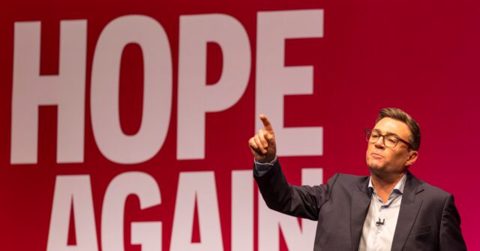
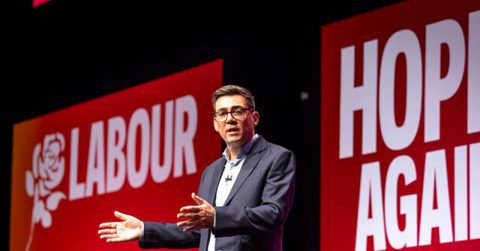
Yet members of his cabinet and the backbenches ultimately forced Starmer to resign in favour of Manchester Mayor Andy Burnham, who was installed in a bloodless coup in July.
Commenting on Starmer’s resignation, Mr Farage told GB News: “We promised in May that if you vote Reform, we will get Starmer out. Promise made, promise kept.”
Follow Kurt Zindulka on X: Follow @KurtZindulka or e-mail to: [email protected]
Read the full article here