
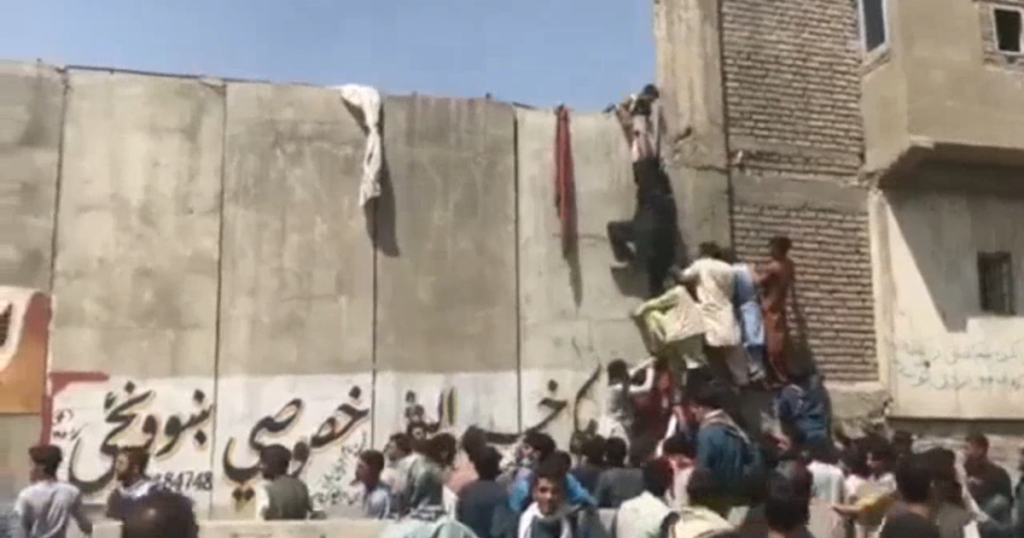
This month marks the five-year anniversary of the United States completing its tumultuous military withdrawal from Afghanistan, bringing the two-decade-long conflict to an abrupt end.
The timeline of the exit is as follows: On August 15, 2021, the Taliban seized control of Kabul, resulting in the swift disintegration of the Afghan government. A devastating ISIS-K suicide bombing on August 26 at the airport’s Abbey Gate claimed the lives of 13 U.S. service members and approximately 170 Afghan civilians. The official conclusion of the withdrawal was marked by Major General Chris Donahue boarding a C-17 aircraft, reportedly the last military transport to depart from Hamid Karzai International Airport in Kabul on August 30, 2021.
From August 16-30, a massive and disorganized airlift operation ensued, evacuating over 120,000 Americans, third-country nationals, and Afghan allies. However, it must not be forgotten that tens of thousands of Afghan allies—including interpreters and others who had worked closely with U.S. forces—were left behind, highlighting a poignant and troubling shortfall in America’s commitment to its allies.
Ahmad Ehsan, one of the allies left behind, spoke to The Gateway Pundit under a pseudonym to protect his identity. Here’s an X post featuring a video that showcases the chaos at the airport in Kabul:
This month marks the five-year anniversary of the U.S. military withdrawal from Afghanistan, which ended a 20-year war but left many Afghan allies in peril due to their association with U.S. forces. Despite meeting the criteria for a Special Immigrant Visa, an interpreter I’ve… pic.twitter.com/MWqrZuXkFx
— J.M. Phelps (@JMPhelpsLC) August 19, 2026
In the years following the withdrawal, Ehsan has been striving to secure a Special Immigrant Visa (SIV).
Despite meeting the program’s criteria, he has faced two visa application rejections from the U.S. State Department. The most recent denial, in 2025, was attributed to an unsuccessful polygraph test, which, as reported by The Epoch Times in 2023, is complicated by “extenuating circumstances.” These circumstances include that the lie detector test was given to Ehsan just one hour after he returned from a patrol and a contractor from Mission Essential Company (MEC), whom he had never encountered before, deemed him “suspicious.” Subsequently, the “faithful and valuable nature” of his service was questioned.
For three years, Ehsan had been employed by the U.S. Army as an interpreter and cultural advisor until January 2021, never once raising any suspicion while aiding in the fight against the Taliban—something that would have led to his torture and death had he been captured. For him, it was a period dedicated to serving a greater cause that many Americans have never personally undertaken.
In his appeal, which was examined by the author, Ehsan cited multiple awards in recognition of his service, including a Certificate of Appreciation from a senior officer and a Certificate of Achievement from the Department of the Army. The appeal also included letters of support from his advisors and colleagues which stated that he played “a crucial role” in operations, significantly contributed to mission success, and “bravely continued his work” despite threats to his safety, and that of his family. One letter concluded with the statement, “I know that [Ehsan] will be a great citizen of the USA when given the chance.”
In addition to their expressions of support and clarifying that his opinions do not represent the Department of War or the Department of the Army, The Gateway Pundit also spoke to Army Staff Sergeant Peter Bates, who has been in the military since 2001. Ehsan once served alongside Bates in a nine-month deployment in Afghanistan. “He was assigned to our platoon, was willing to do whatever missions needed, and once saved our butts,” he recounted.
Regarding the circumstances that led to Ehsan’s dismissal, SSG Bates said, “Tensions are always high coming off of patrol, even if you don’t make any contact [with the enemy]. You can’t fault him for that. Lives are always in danger.”
“I think it was very misleading for them to fire him off a polygraph that’s not actually admissible anywhere in the world,” he argued.
“What we did to these interpreters in Afghanistan was a huge disservice to each of them and their families, because we’ve essentially turned our backs on them, closing out a chapter without actually completing all the tasks. America has a hard enough time projecting a positive image around the world, and they just leave our allies high and dry?”
Despite continued efforts to assist him, five years later, Ehsan still lives in constant fear of torture or death. Because the U.S. turned its back on the Afghan people, Ehsan reluctantly confessed that the struggle for democracy was not worth the effort. “Since being left behind,” he lamented, “I remain in a dire situation while also feeling betrayed because I supported the U.S. Army day and night, risking my own life and the lives of my family. I didn’t expect to be left behind like this.”
He stated that those like himself who backed the U.S. and NATO mission, “They have completely removed themselves from society, [rendering them] unable to earn even a single dollar a day.” This sense of isolation weighs heavily on him, as he continued, “I am living somewhere safe, but I am scared to leave my house and my region because someone might report that I worked as an interpreter for the U.S. Army and I and my family will be killed for it.”
Due to executive orders, presidential proclamations, and policy choices made during the Donald Trump administration, the relocation of Afghans and the issuance of visas have effectively come to a halt. As the country reflects on the five-year anniversary of the U.S. withdrawal, we must confront the uncomfortable question: Is this truly how we should treat our Afghan allies, who risked their lives in support of American democracy and values?
Ad block users: Some site features may not work correctly while an ad blocker is enabled, because they break scripts and content this website depends on. If you can’t see comments below, for example, please disable your ad blocker.
Read the full article here